Timestamp
3D Printing
CAD
FEA
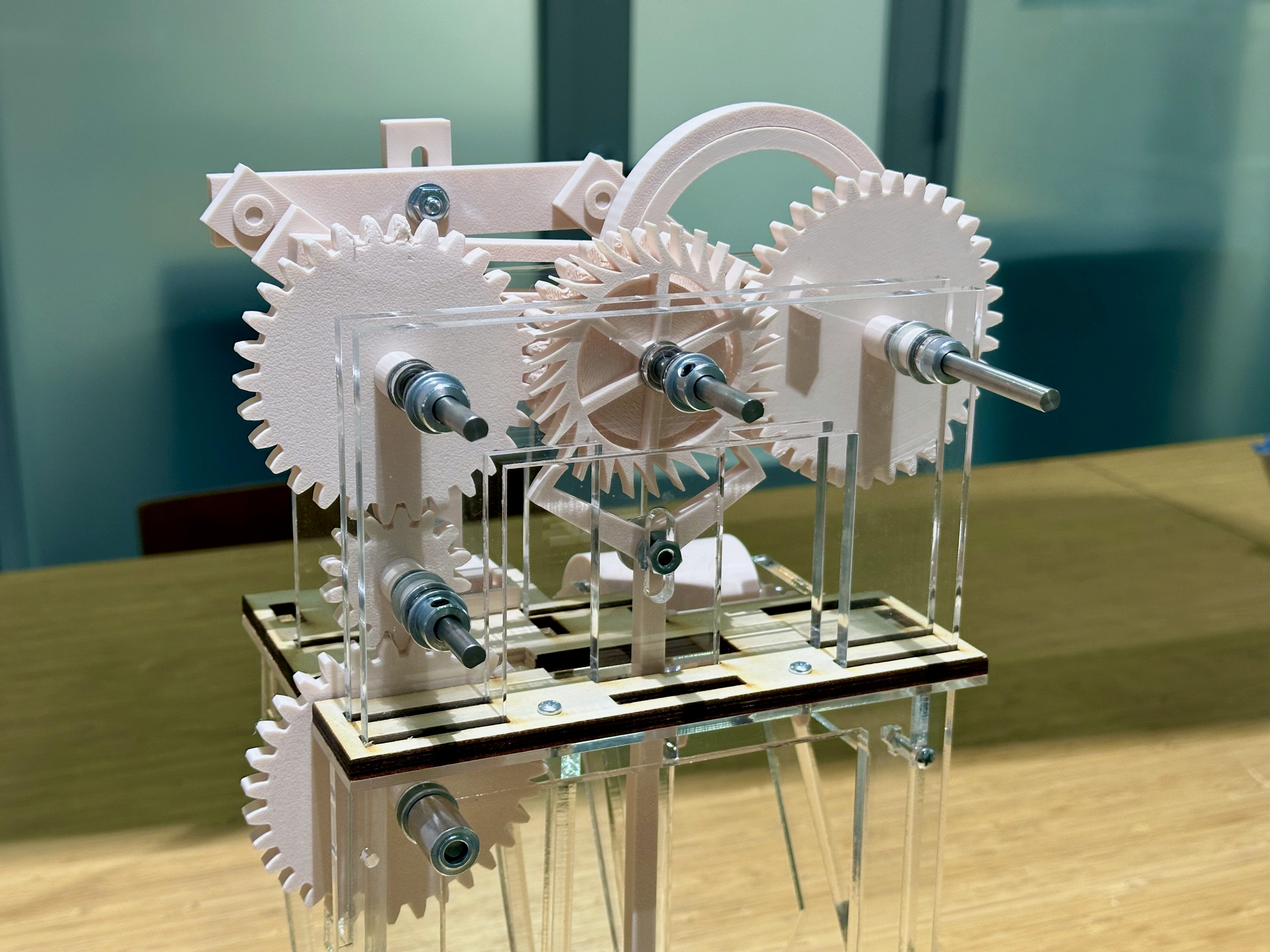
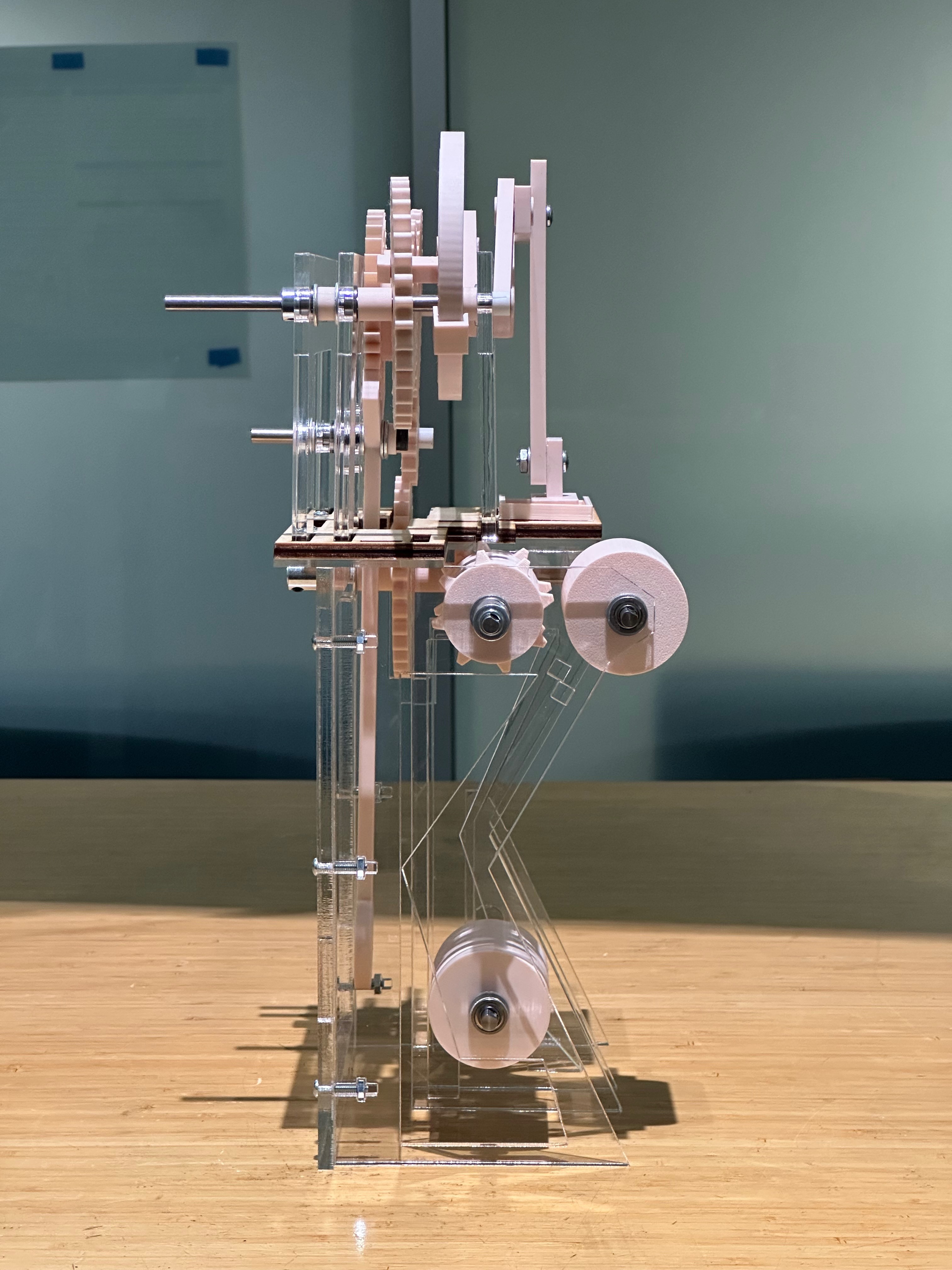
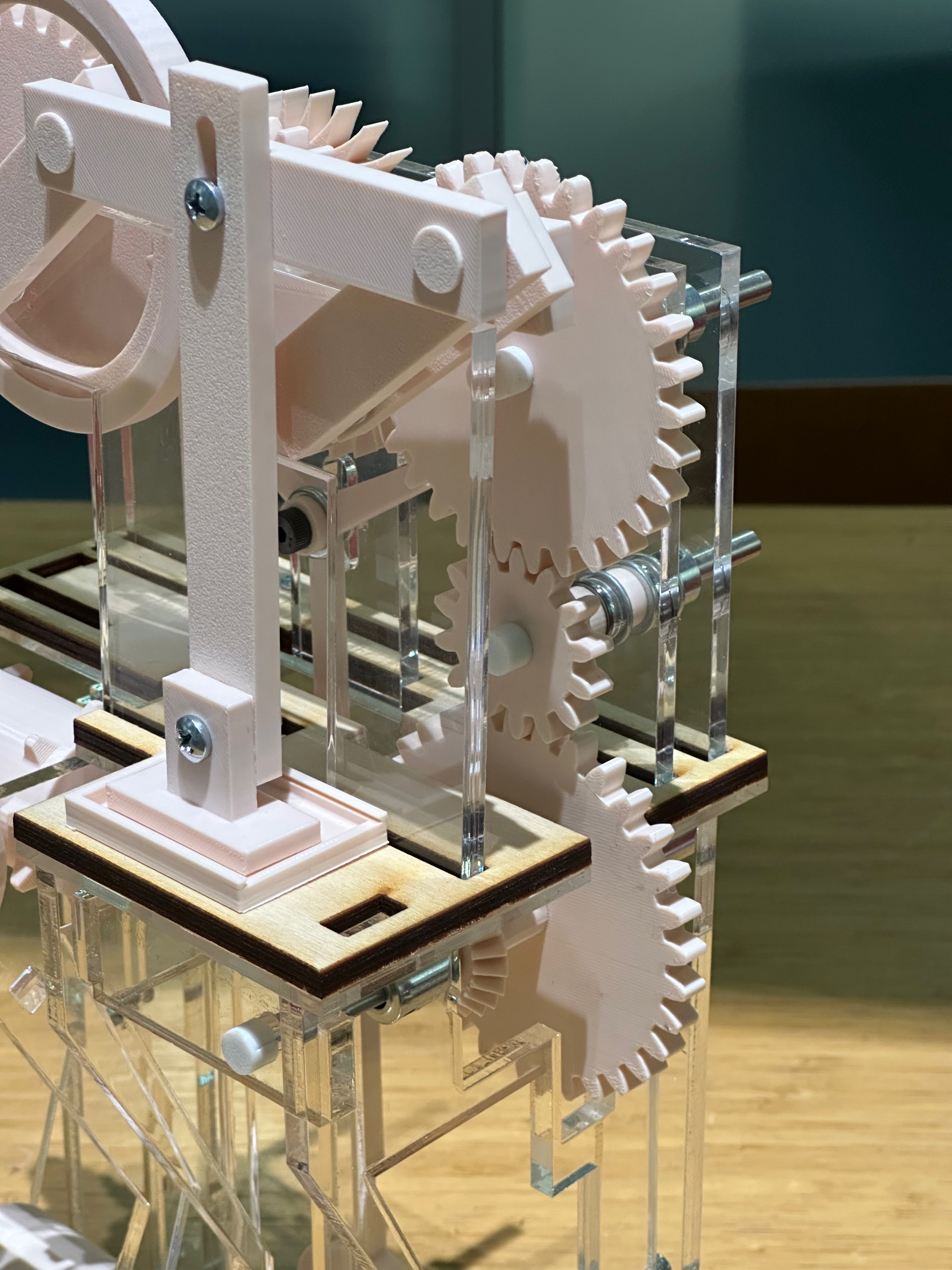
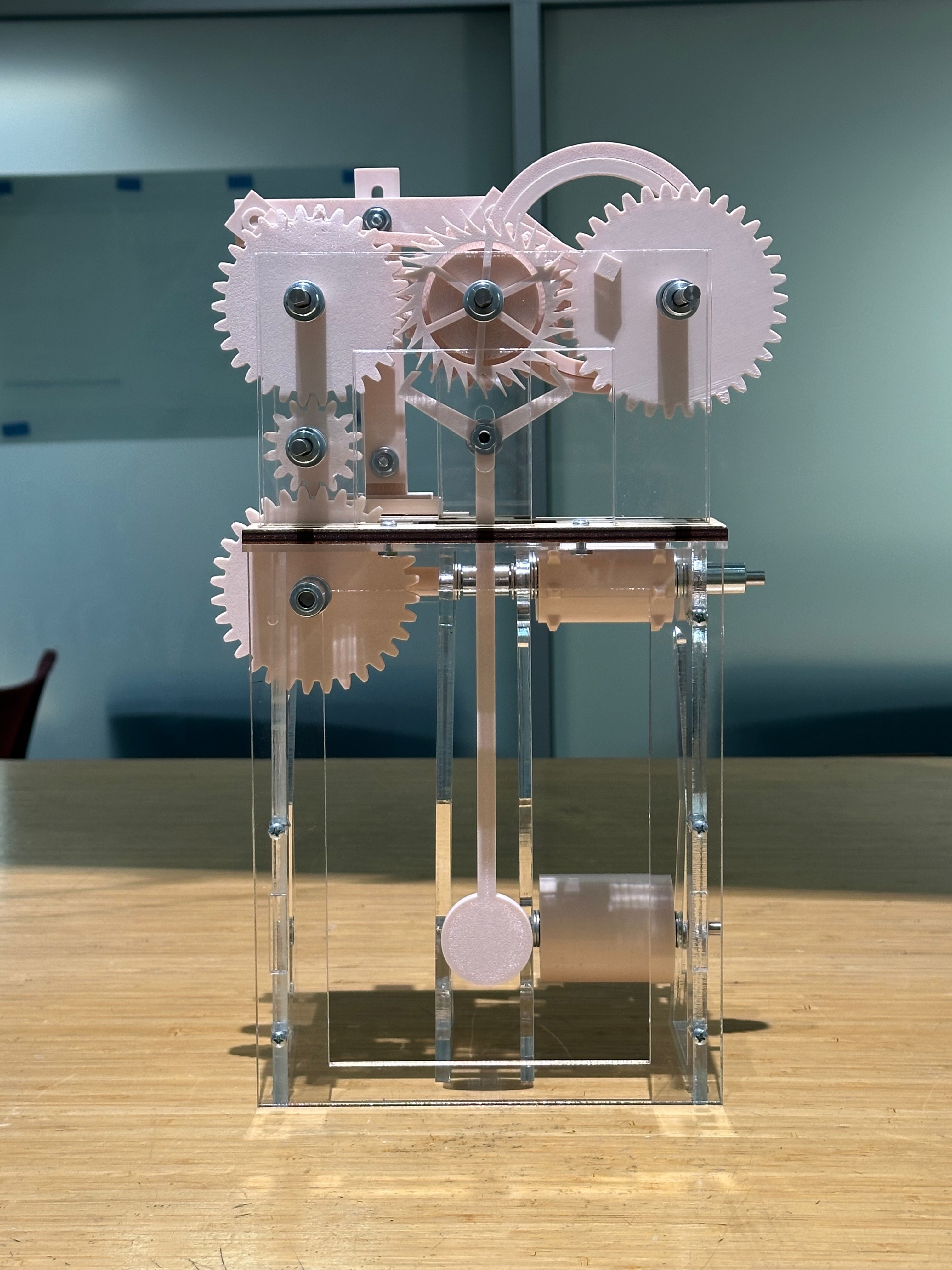
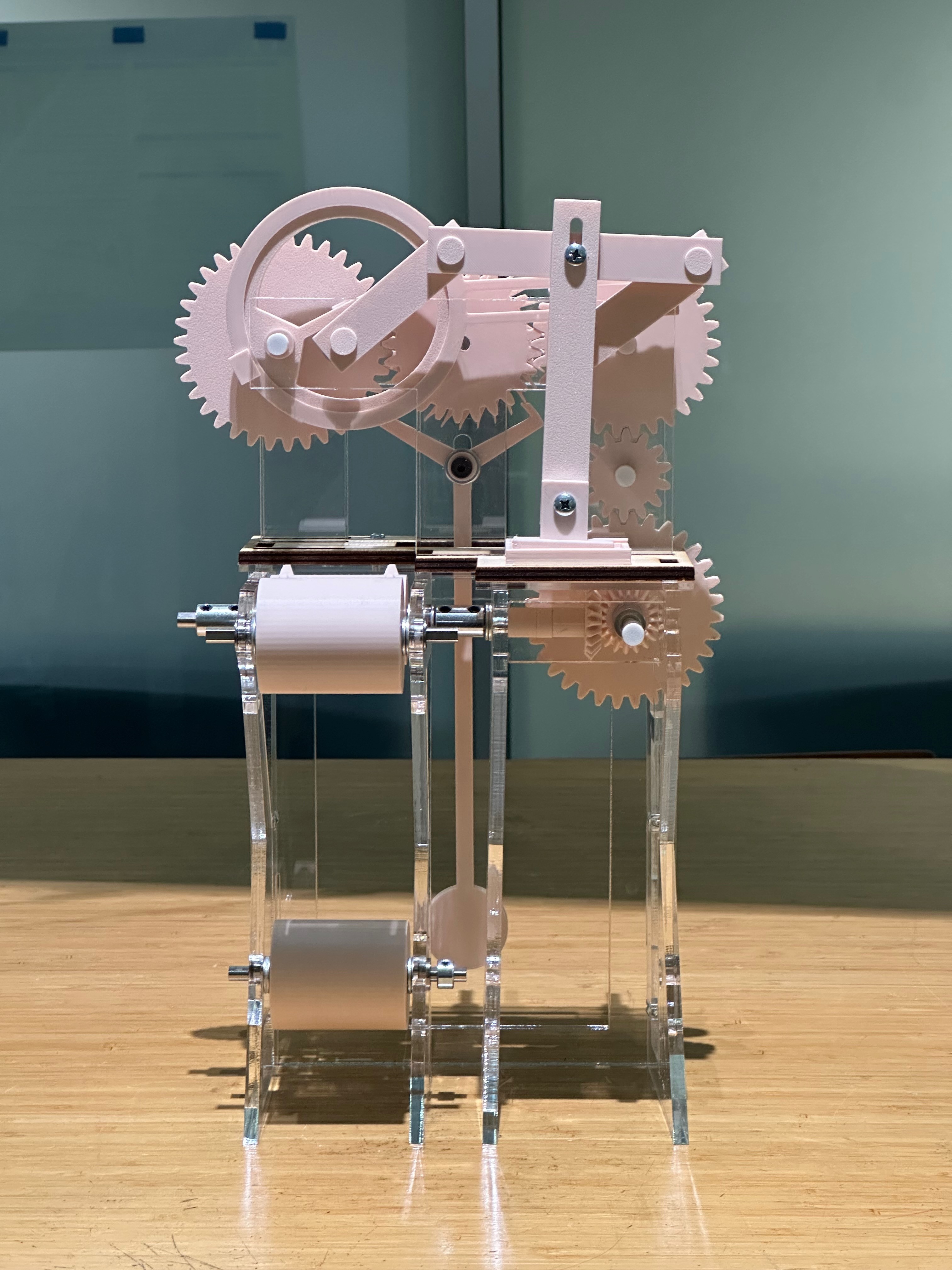
A gravity-powered machine that tracks the passing of time through a moving stamp. As time passes, the stamp slowly saturates a rotating belt with ink. Created through a combination of 3D-printing and laser cutting, in collaboration with 4 other students.
Ideation
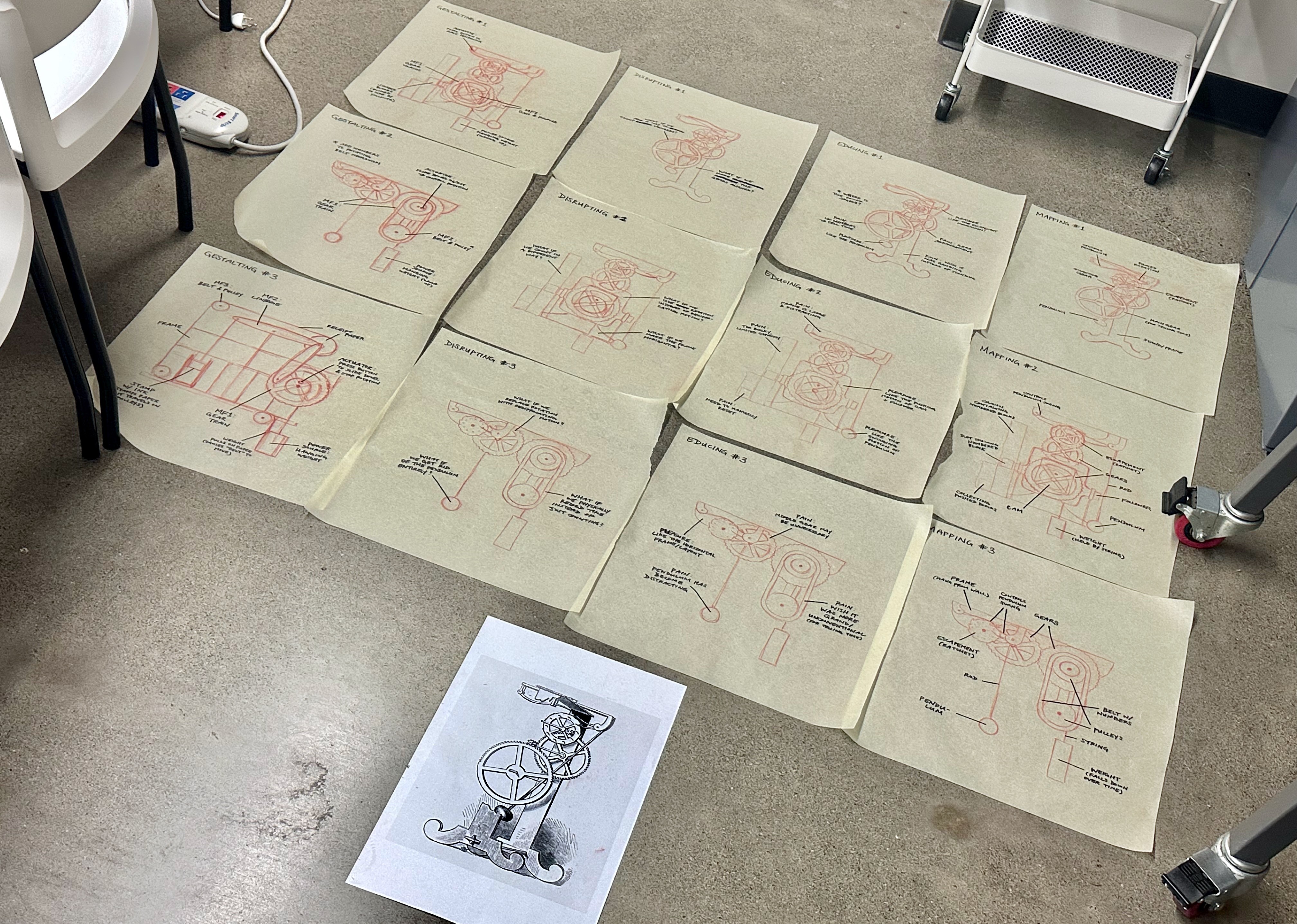
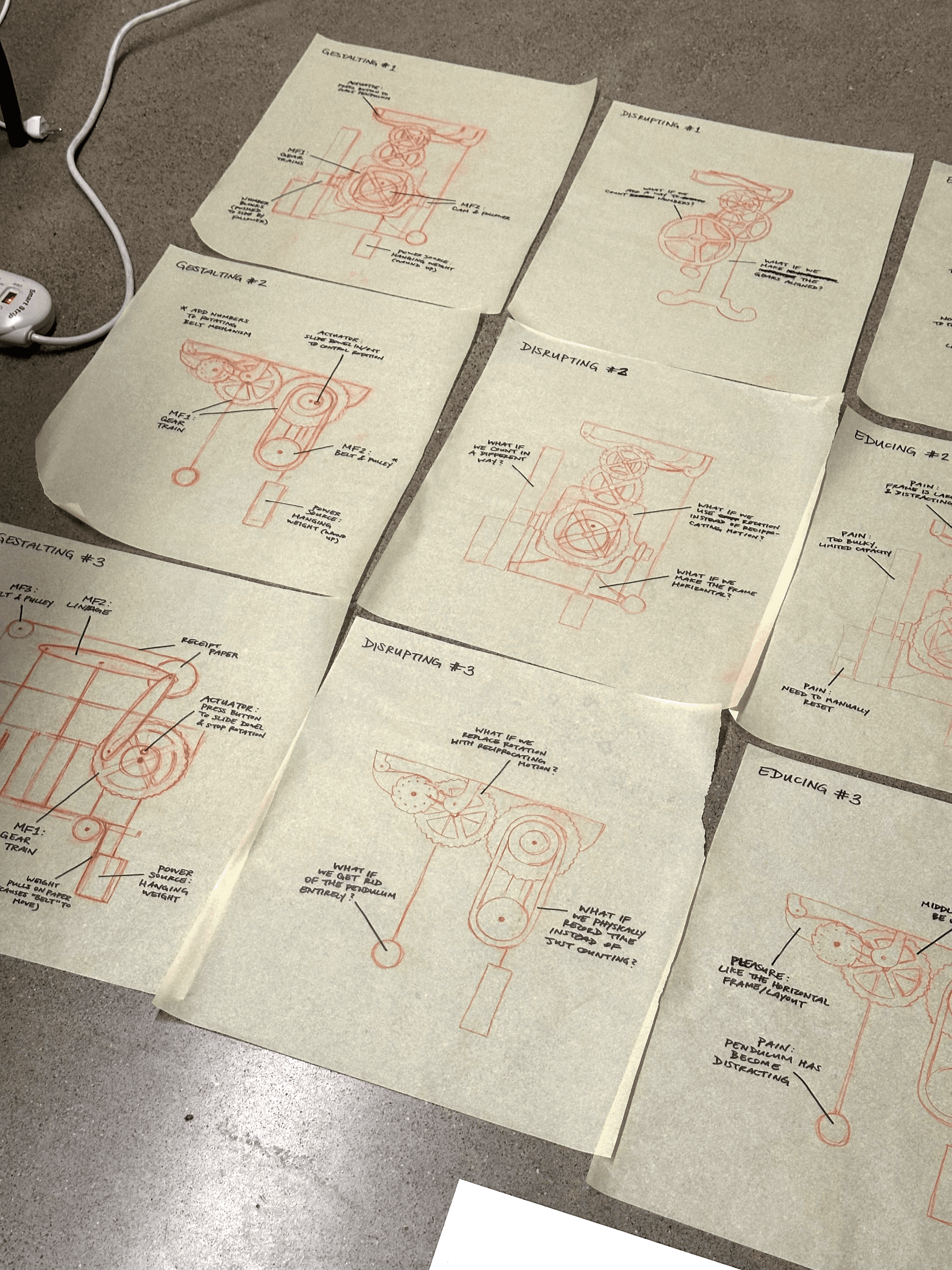
Timestamp is a timepiece with a twist. My group and I wanted to create a machine that represented the passing of time in a non-conventional way — something that was both visual and mechanical. The idea for the stamping clock arose from a series of 12 initial sketches, inspired by Galileo's original escapement.
In the sketches below, I experimented with creating a system of gears to power a repeatedly stamping arm. I had the idea to create a paper pulley, which could rotate while being stamped.
Group Brainstorm + Sketches
Following the formation of our group, we worked to further develop potential configurations for the timepiece. The 4 updated arrangements can be seen below. Each one contains a combination of various mechanisms (gears, linkages, belt and pulley, rack and pinyon), powered by the gravitational potential energy of a falling weight.
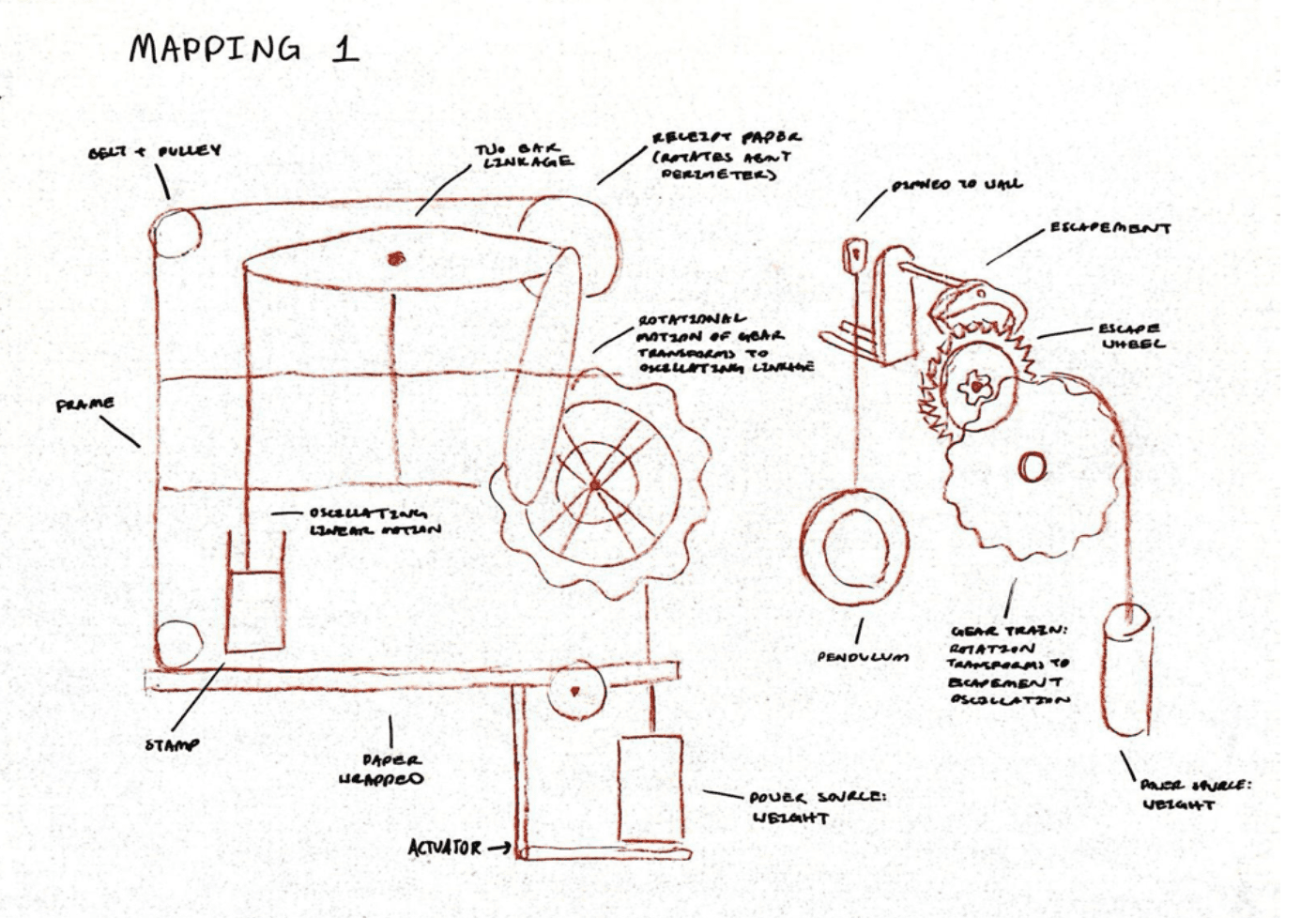
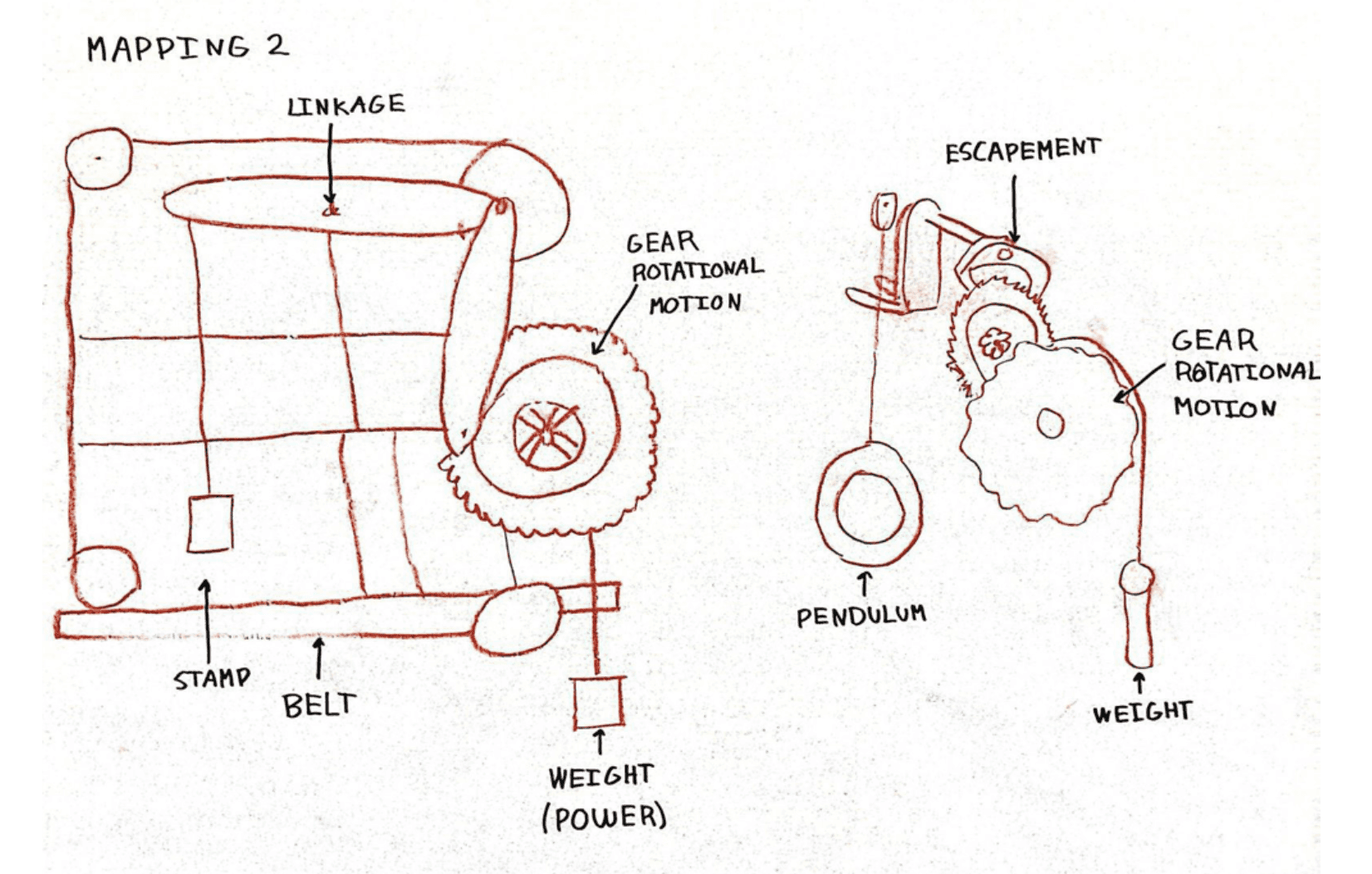
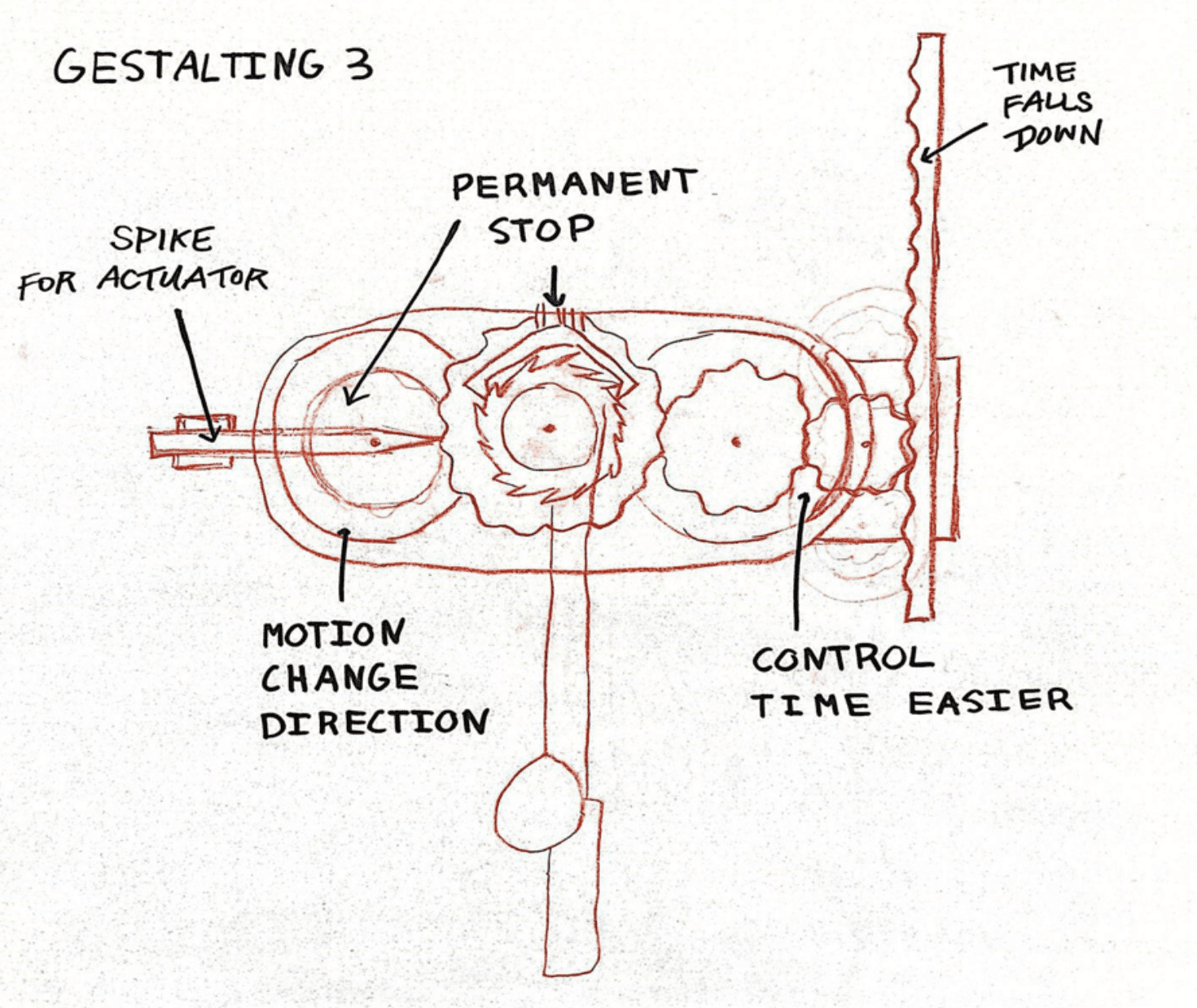
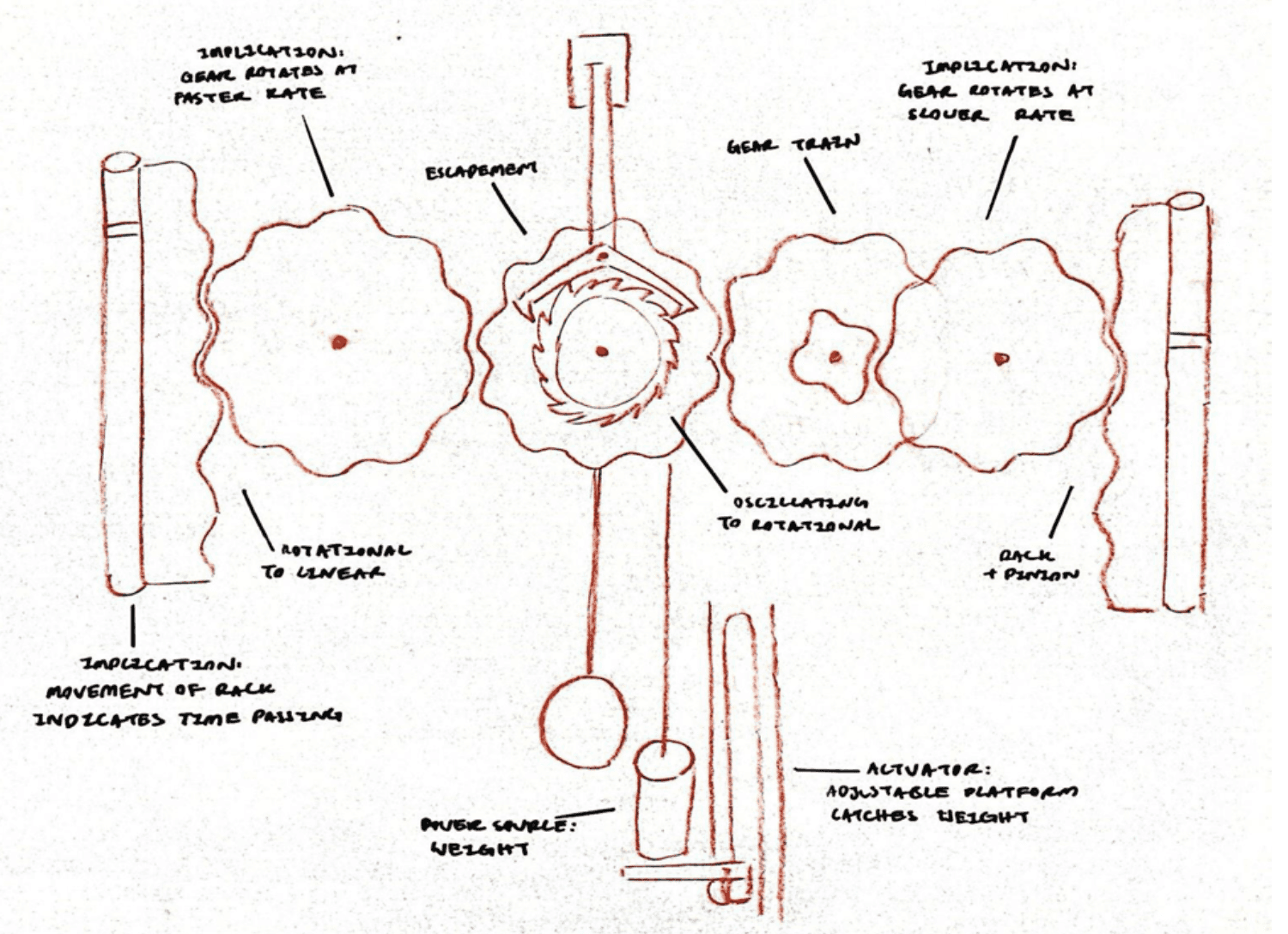
We knew we needed to regulate the rate at which the weight would fall, so we incorporated an escapement into each design.
Initial CAD Iterations
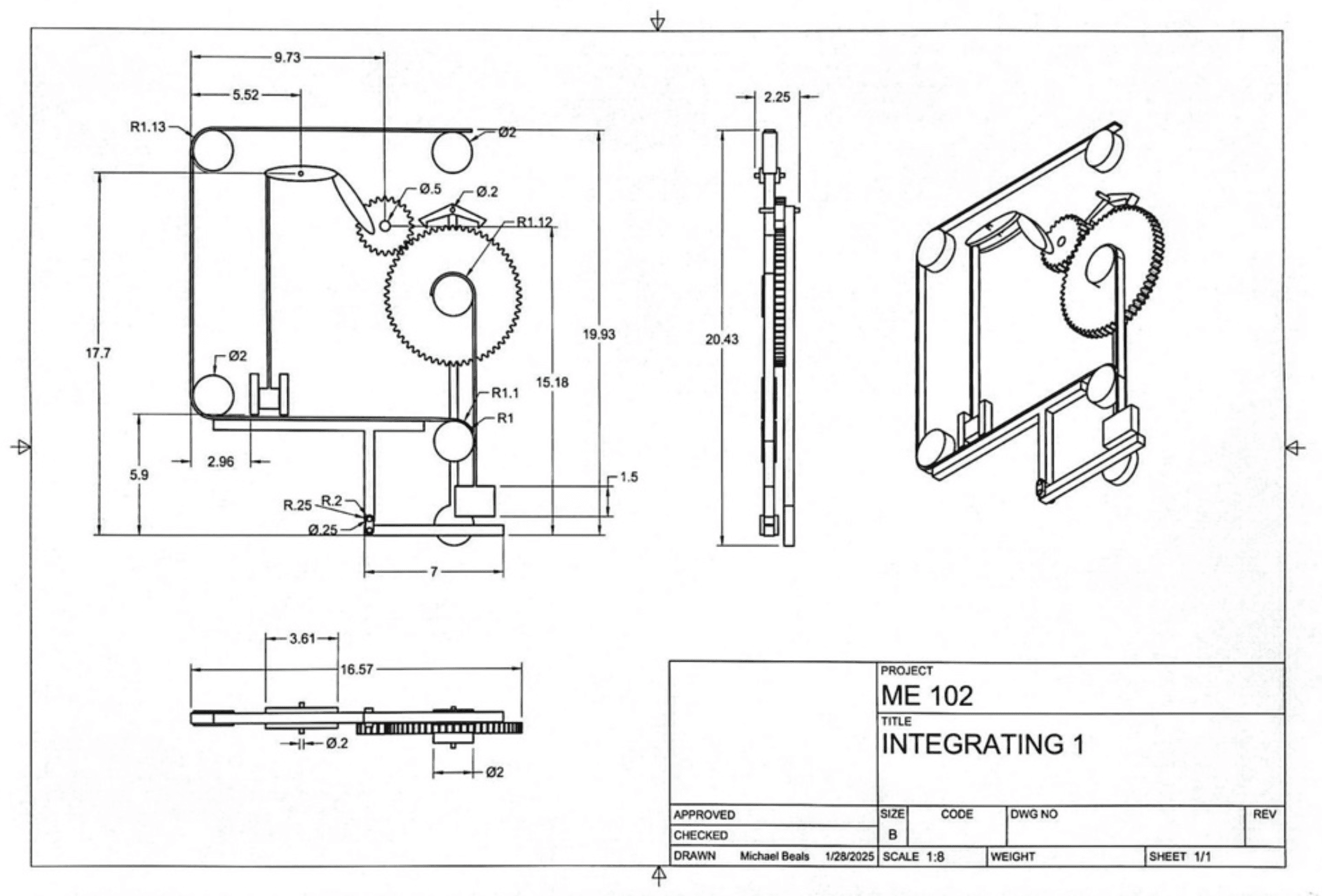
For each of the sketches above, we created a corresponding CAD model to better visualize the interfaces between parts.
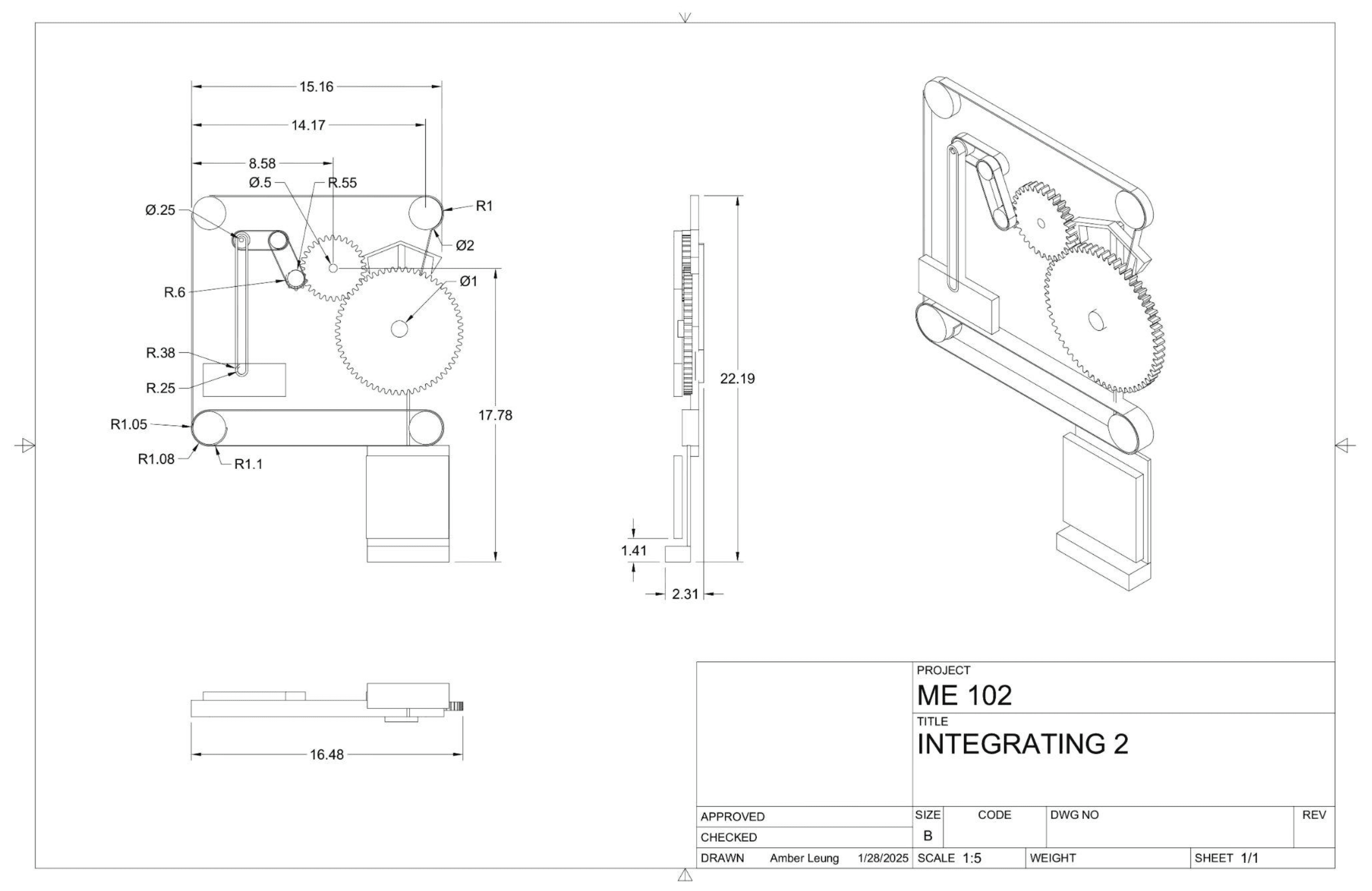
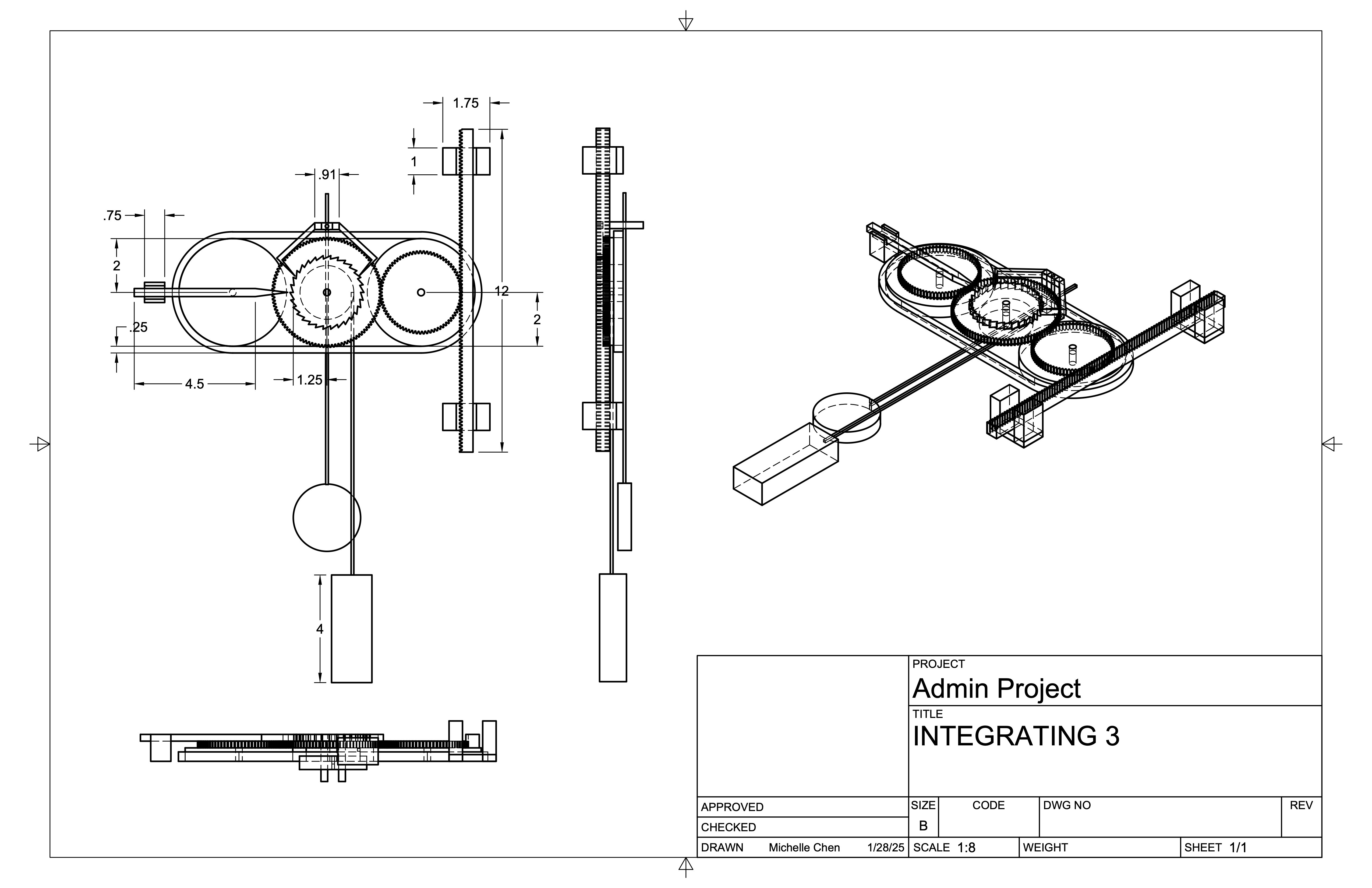
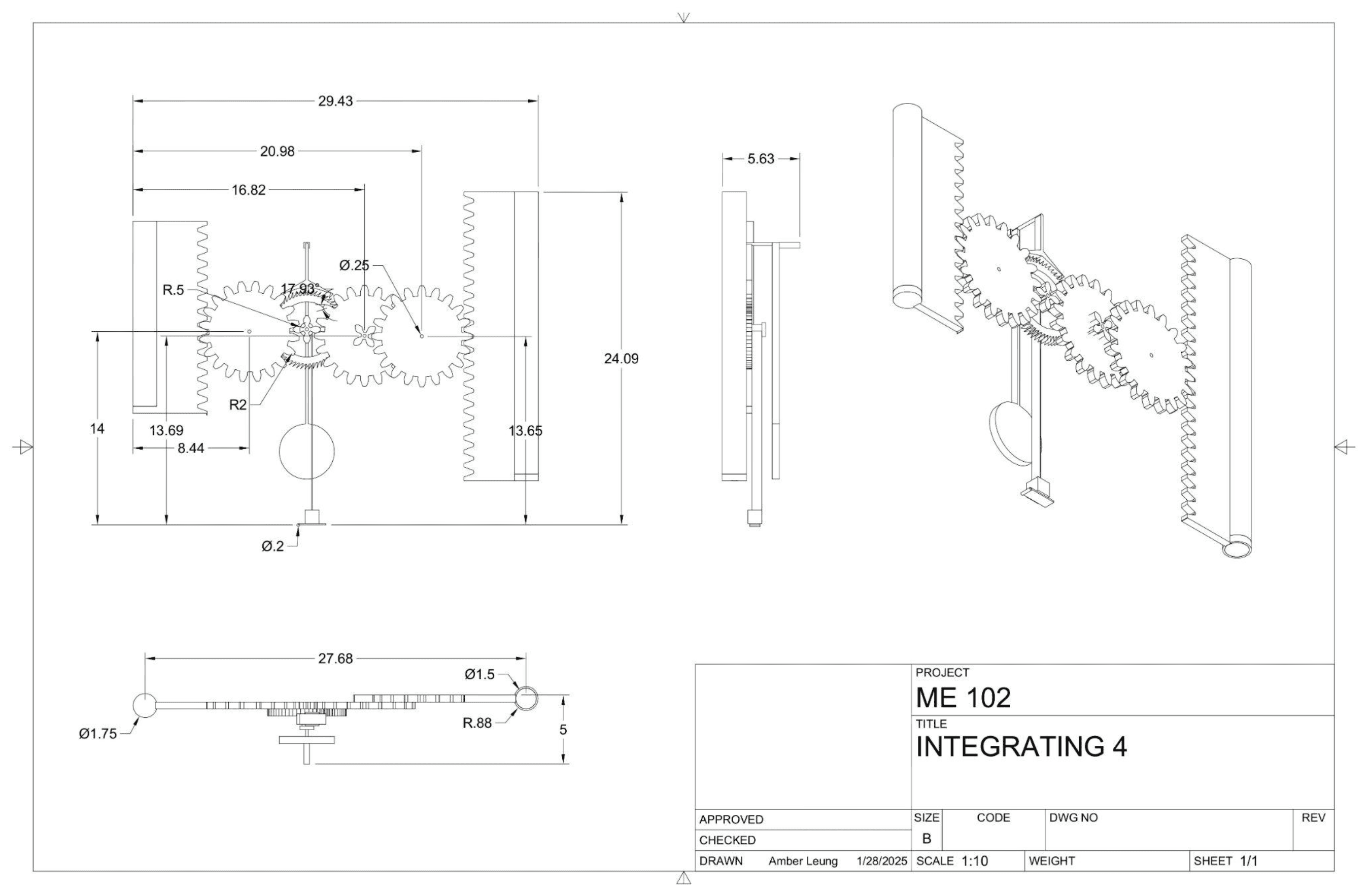
First Prototype
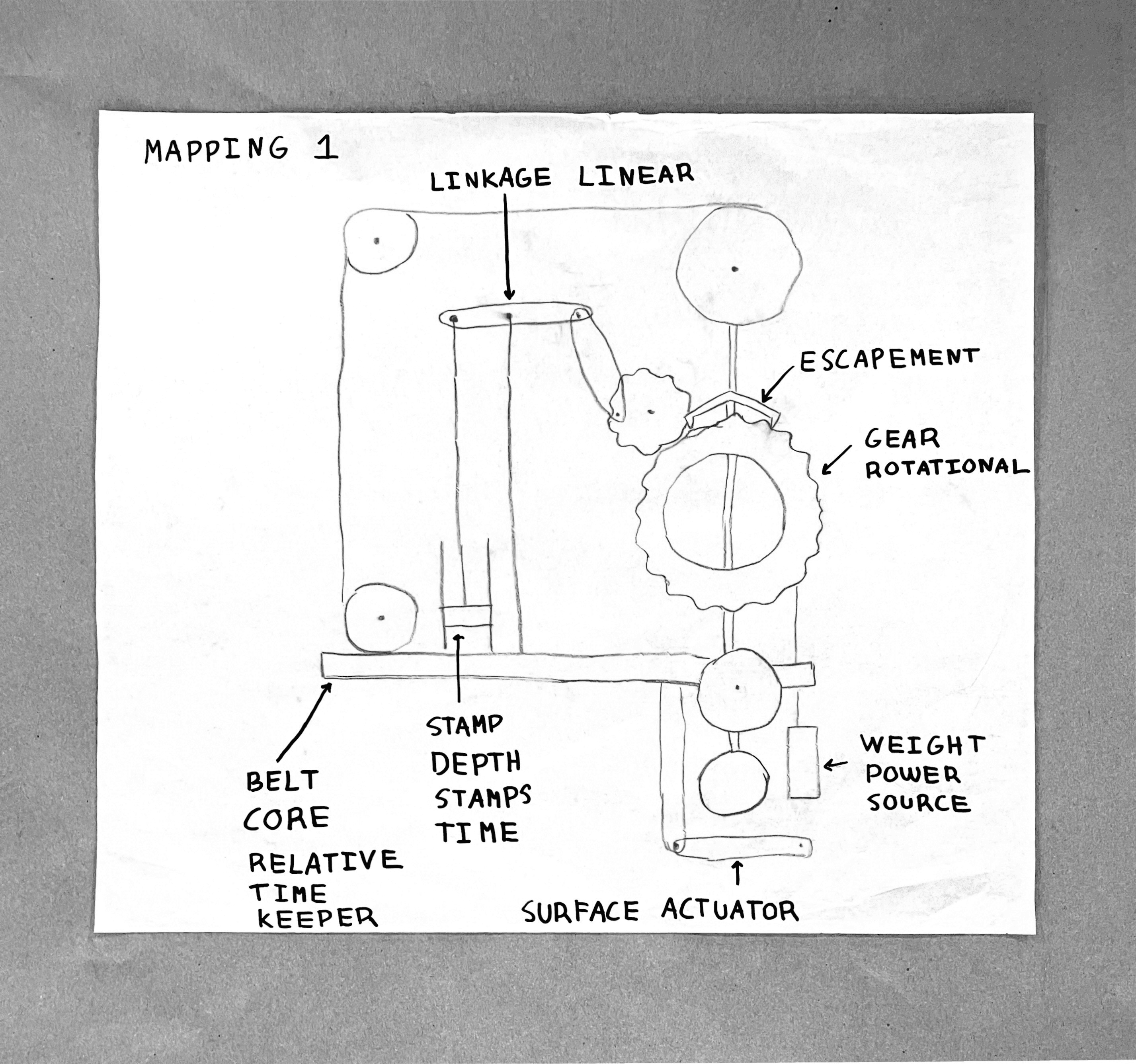
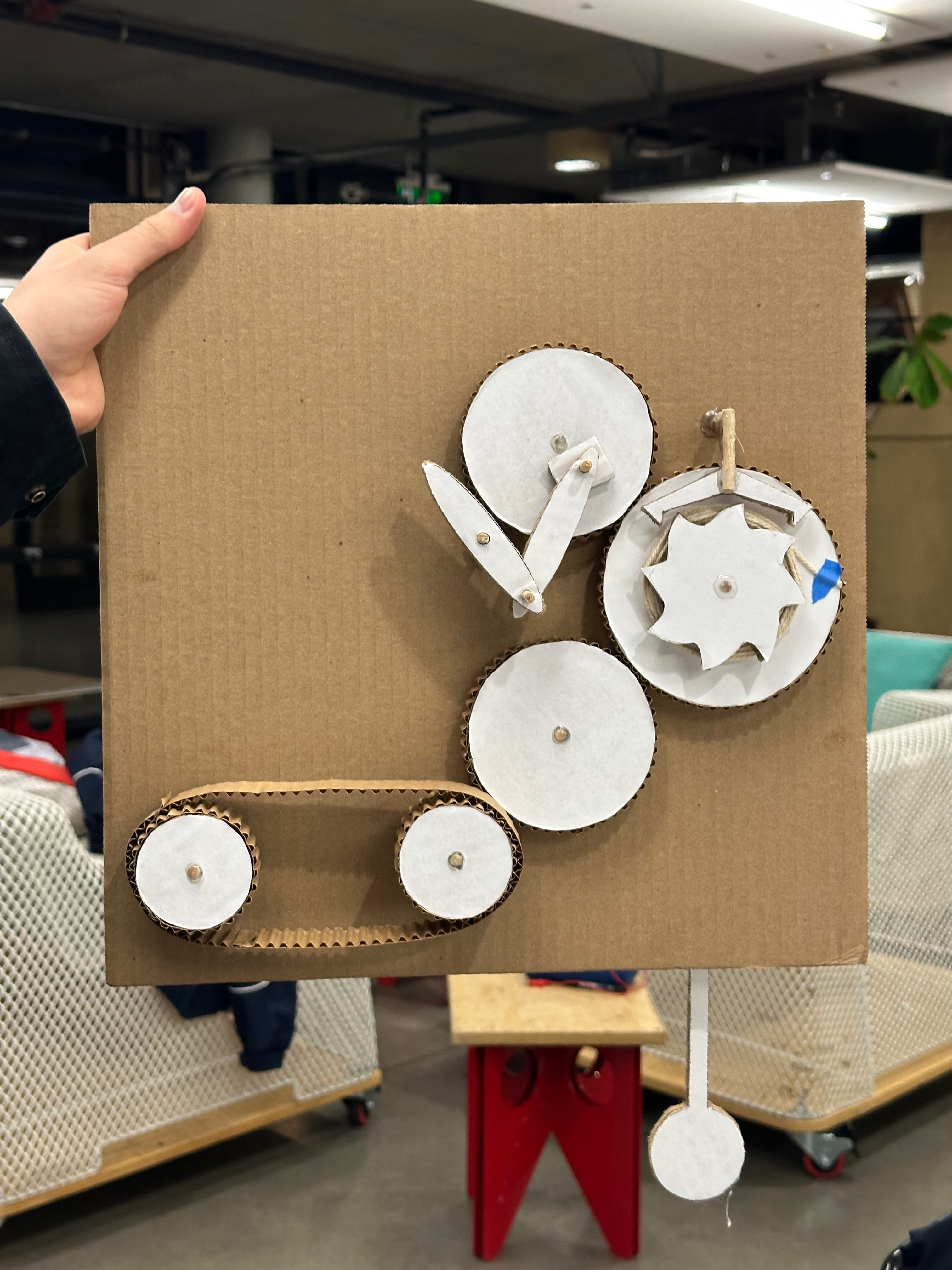
After consolidating our CAD, we created a revised sketch that combined elements from each one. We then created our first prototype using cardboard, demonstrating the motion of the stamping linkage. However, the escapement did not work, which was a critical detriment to our machine.
The Escapement
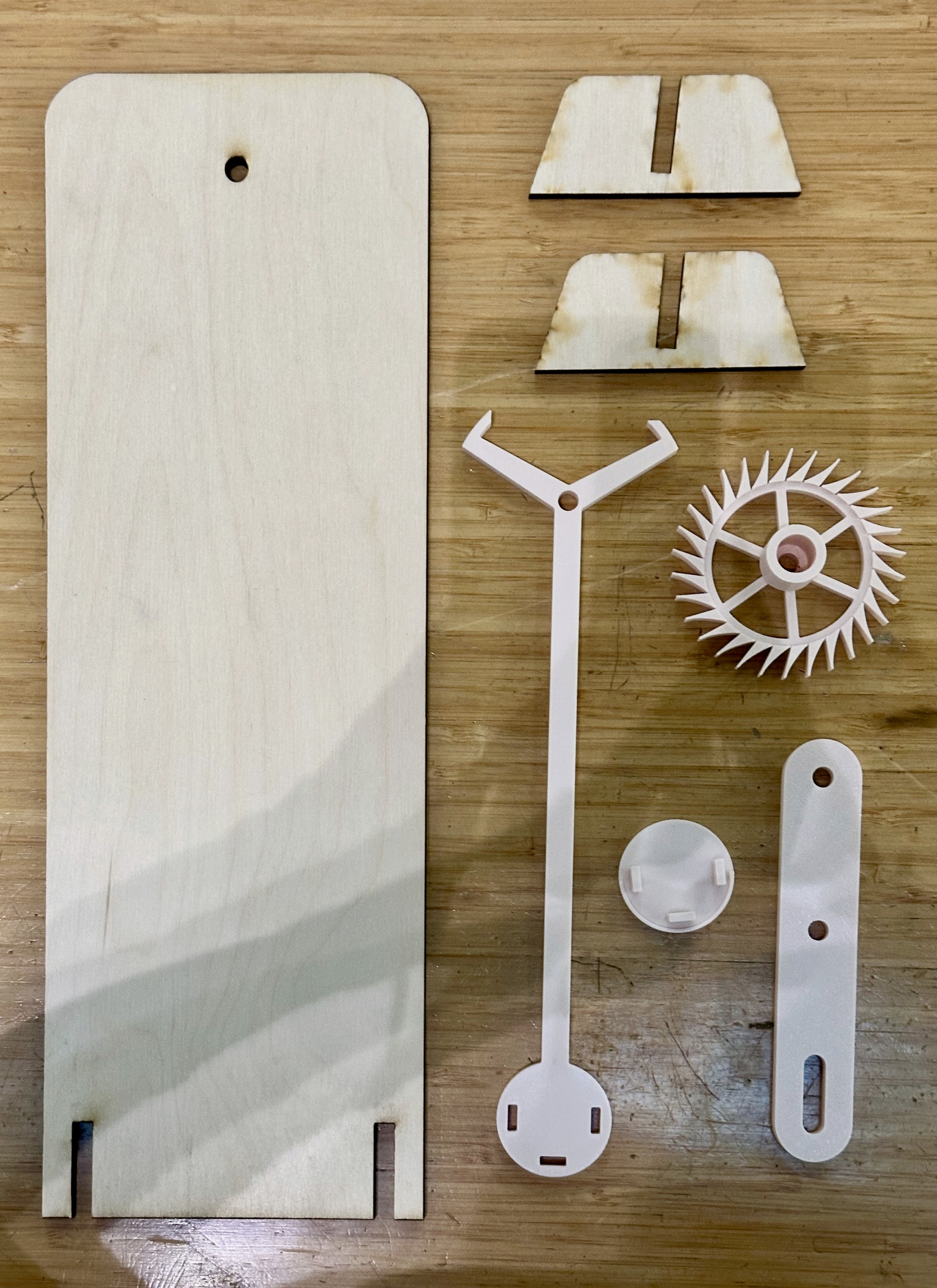
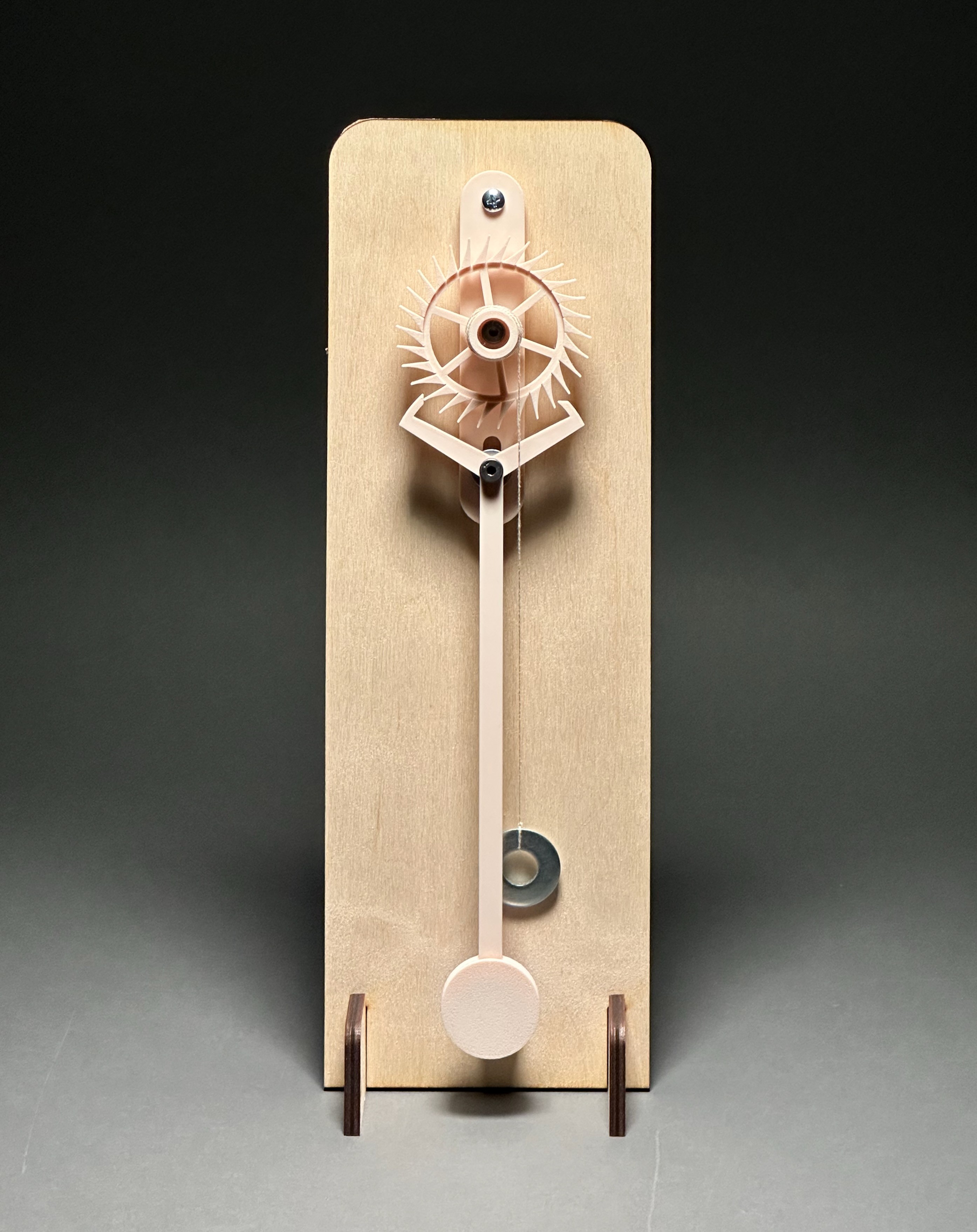
To solve this problem, we created a CAD model for an improved escapement with an adjustable pendulum. We first prototyped this using laser-cut birch wood. We ran into challenges with getting the correct tolerances for the pendulum to swing regularly, as it would either jam or slip.
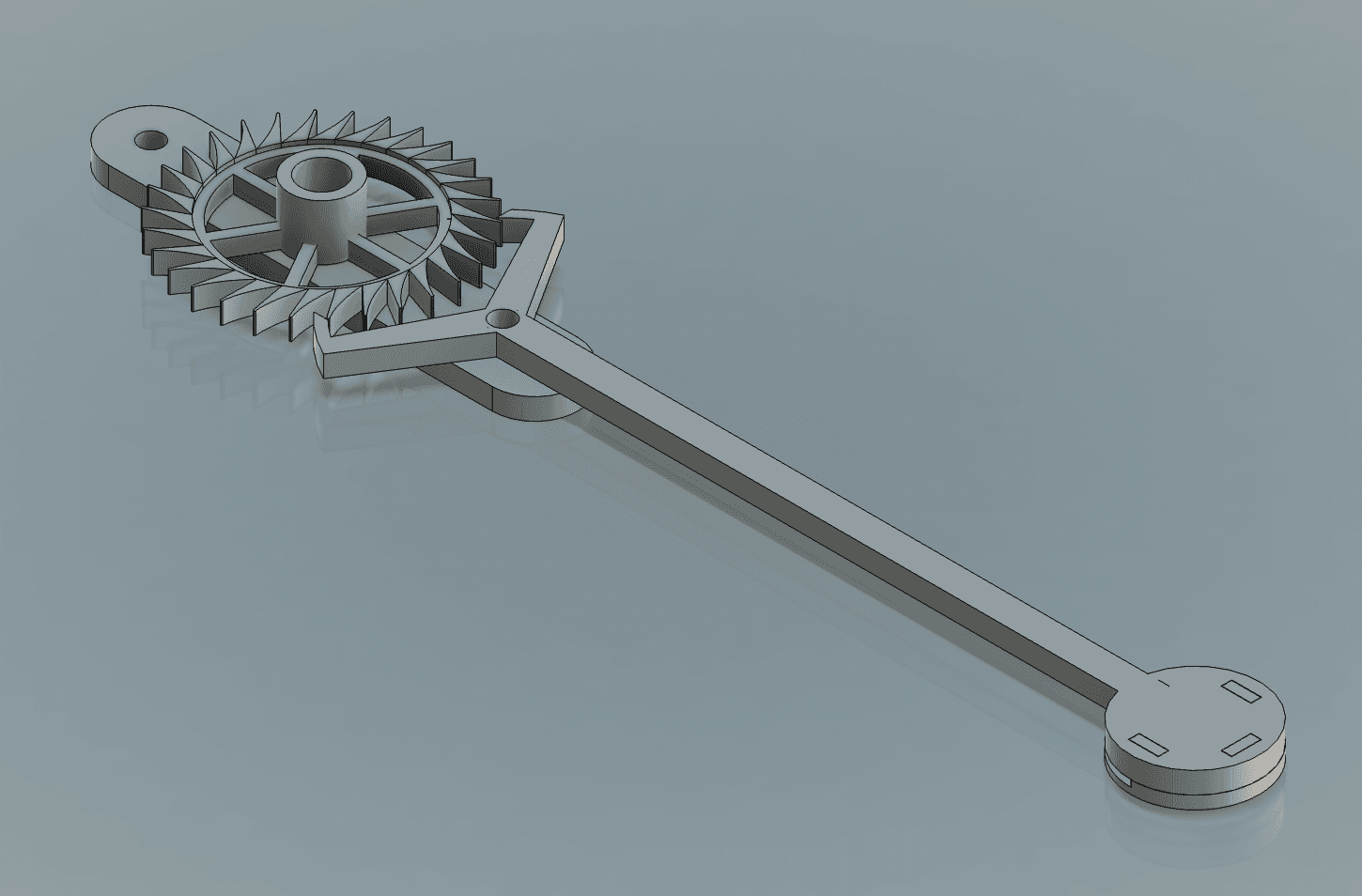
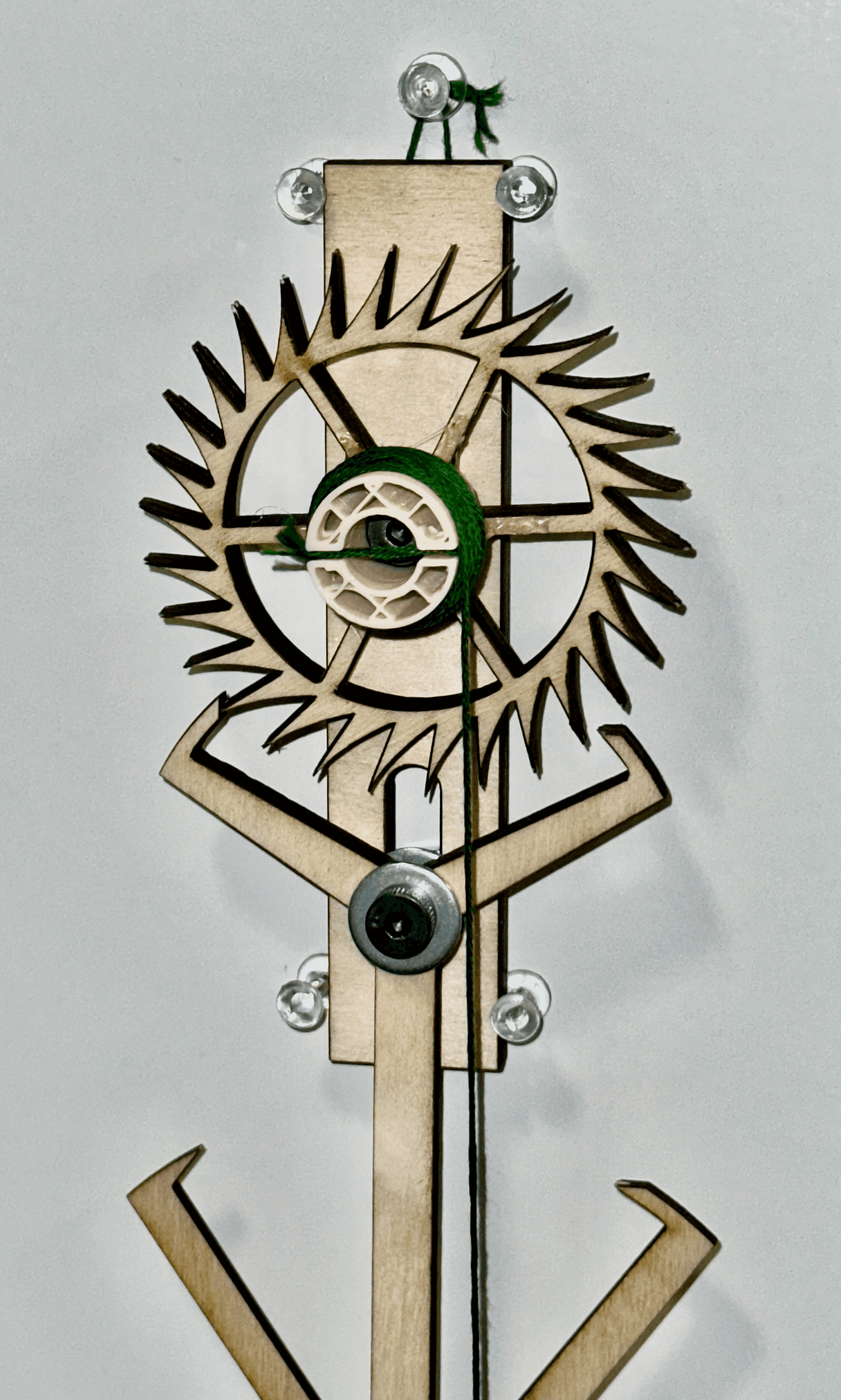
We solved this by adjusting the vertical position of the pendulum's pivot point. Once we got this to work, we 3D-printed the assembly to mitigate the chipping of the laser-cut wood.
Revised Sketches
Following this prototype, I created new sketches modifying the placement of the escapement and linkages to integrate the belt into the overall assembly. I added a yoke and wheel that would be powered by a gear attached to the escapement. This would allow the linkages to translate laterally, switching the stamp between an ink pad (right) and the paper (left).
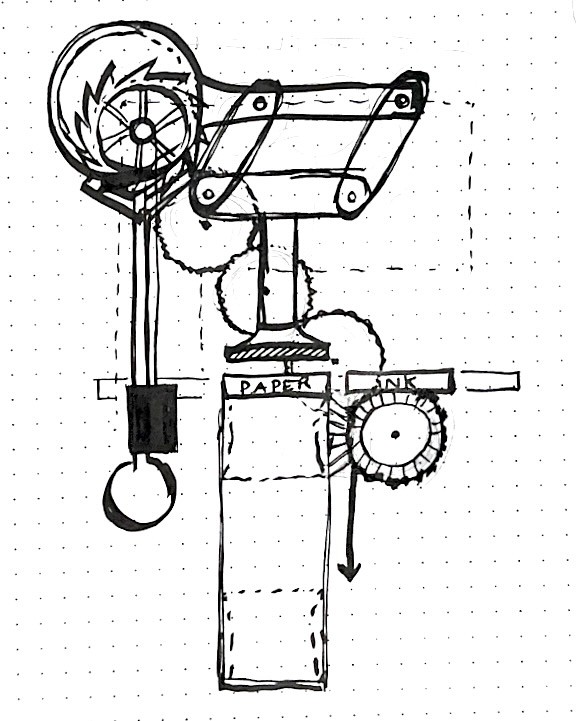
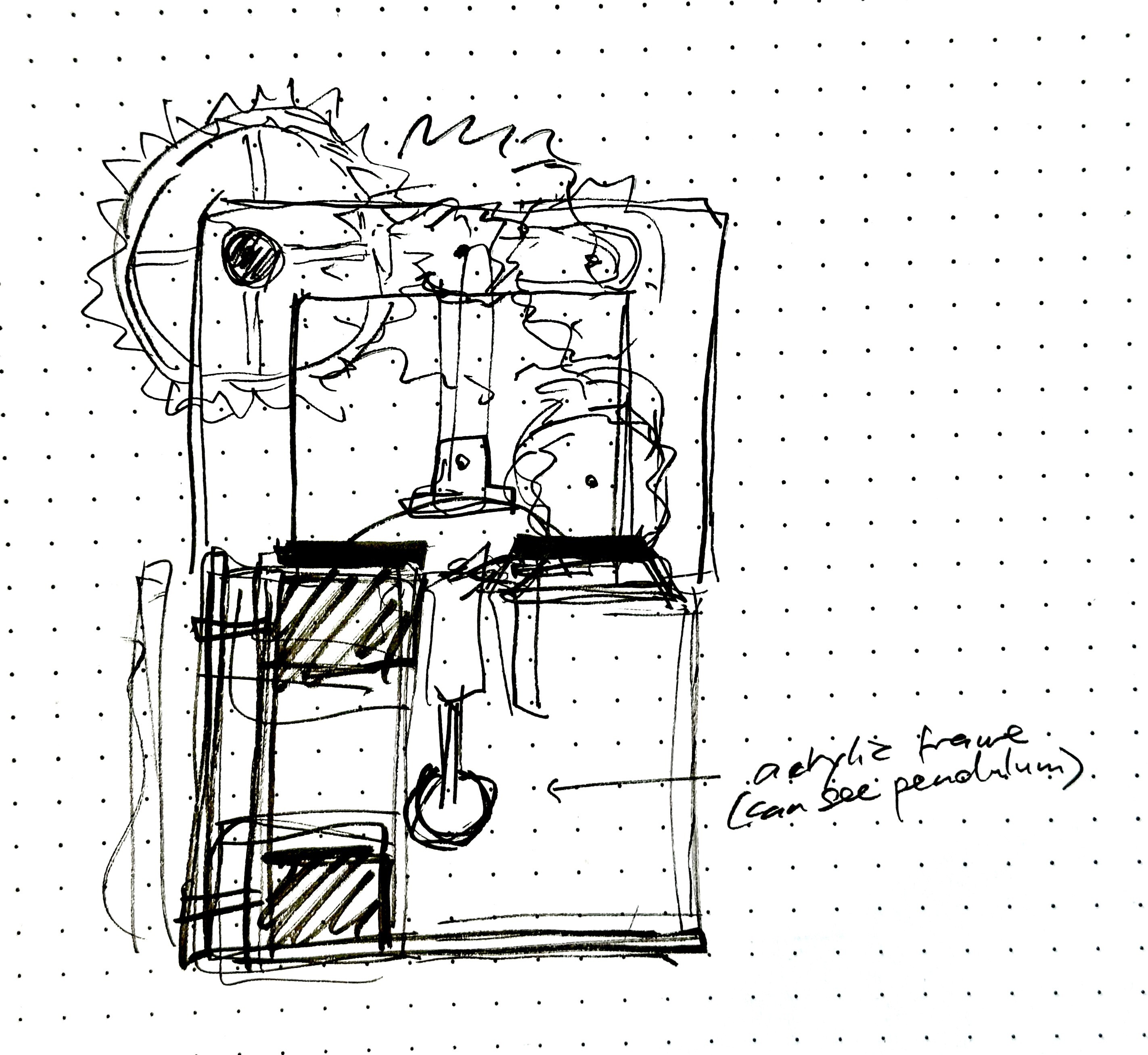
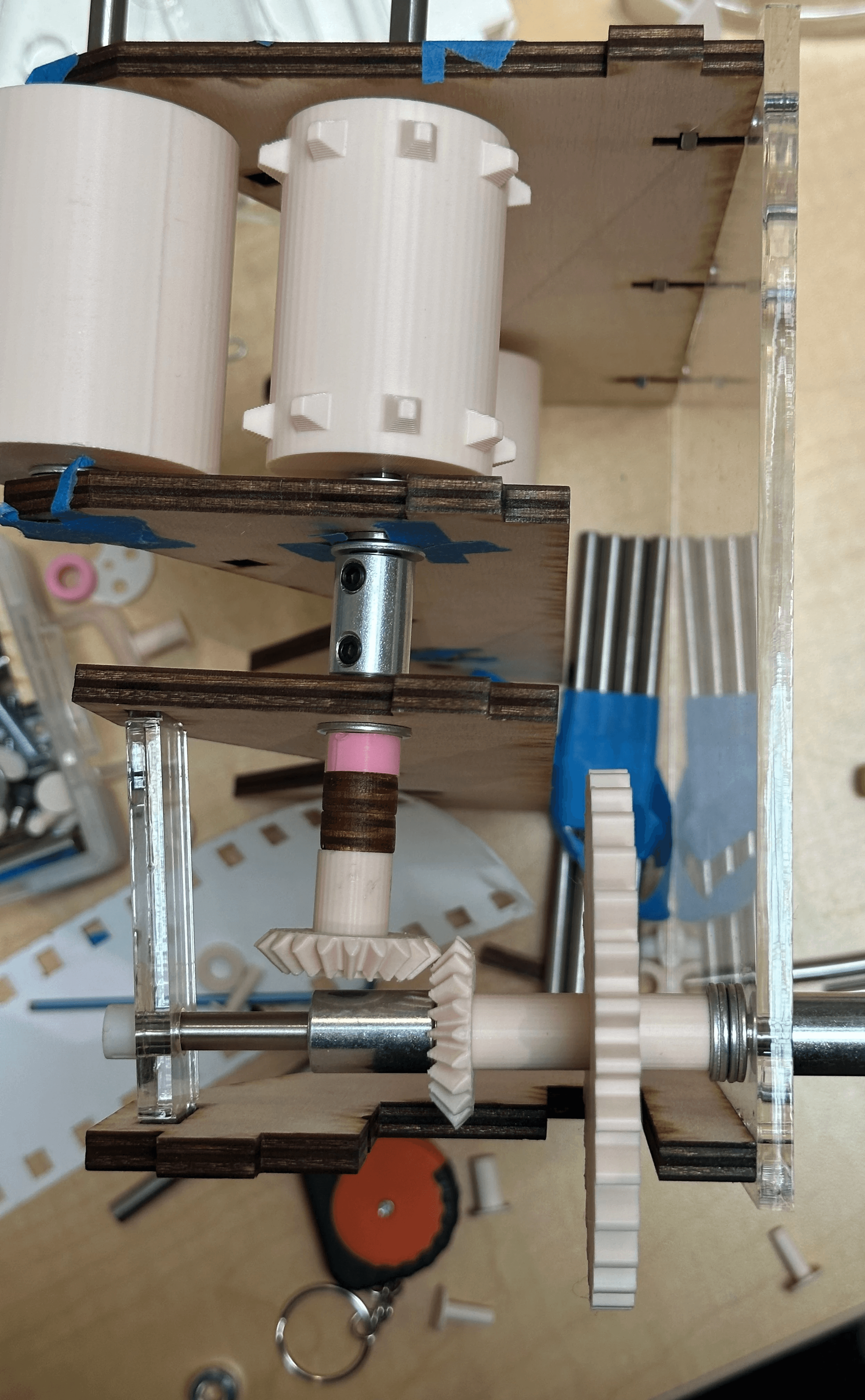
I also added two pulleys to hold the paper belt in place, as well as bevel gears to convert the XY-motion of the escapement and gear train into the YZ-motion of the pulleys.
CAD Model
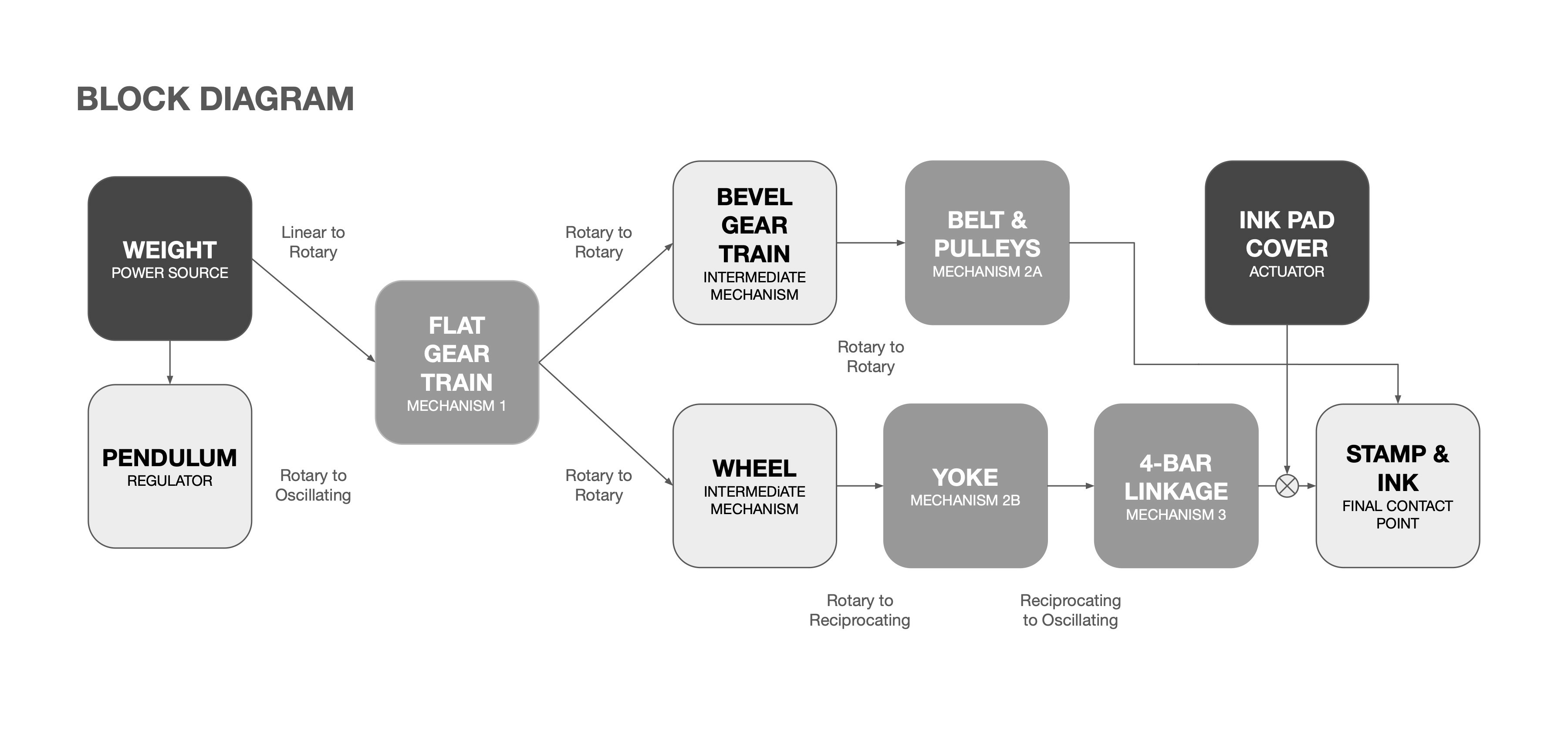
With this sketch as our base, we began working on the full CAD for Timestamp. We added left, right, back, and center walls to support the mechanisms and added pins, shafts, and hardware for connections between parts. The flowchart for the transfer of energy through the machine can be seen below.
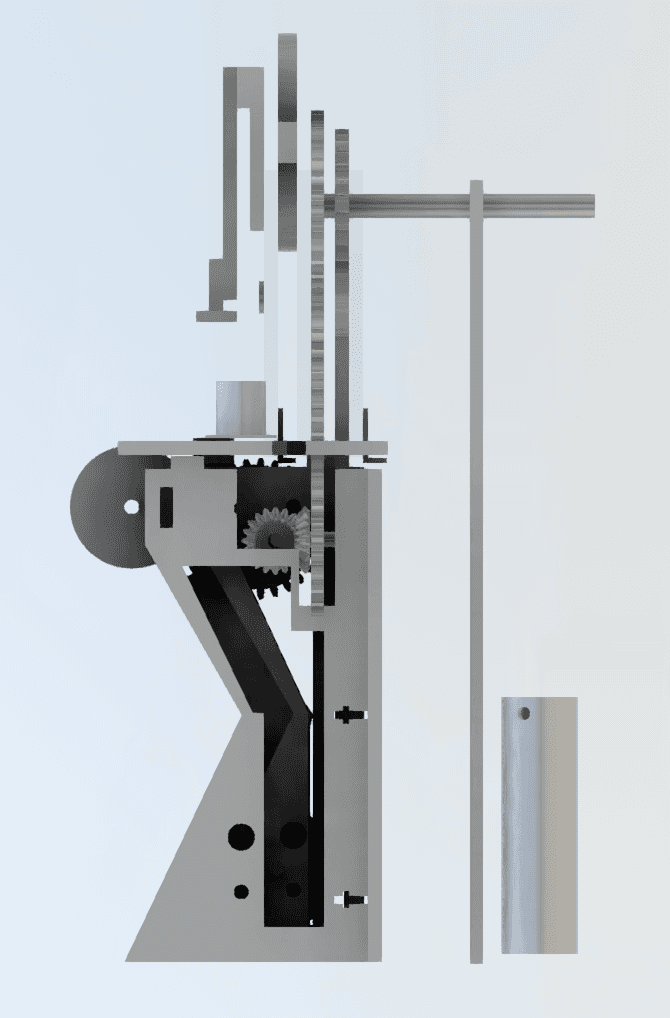
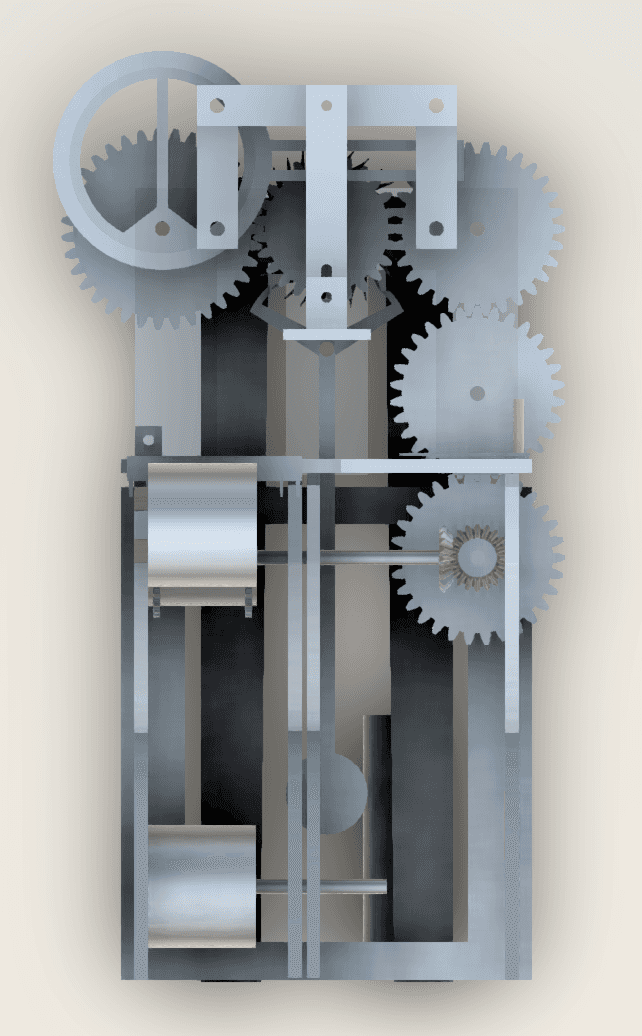
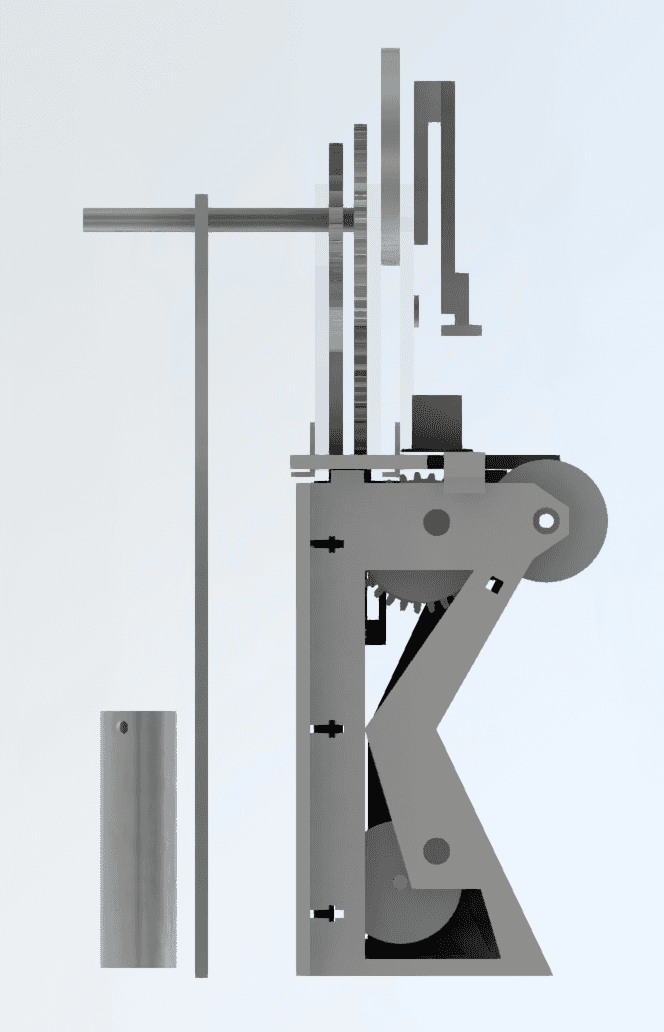
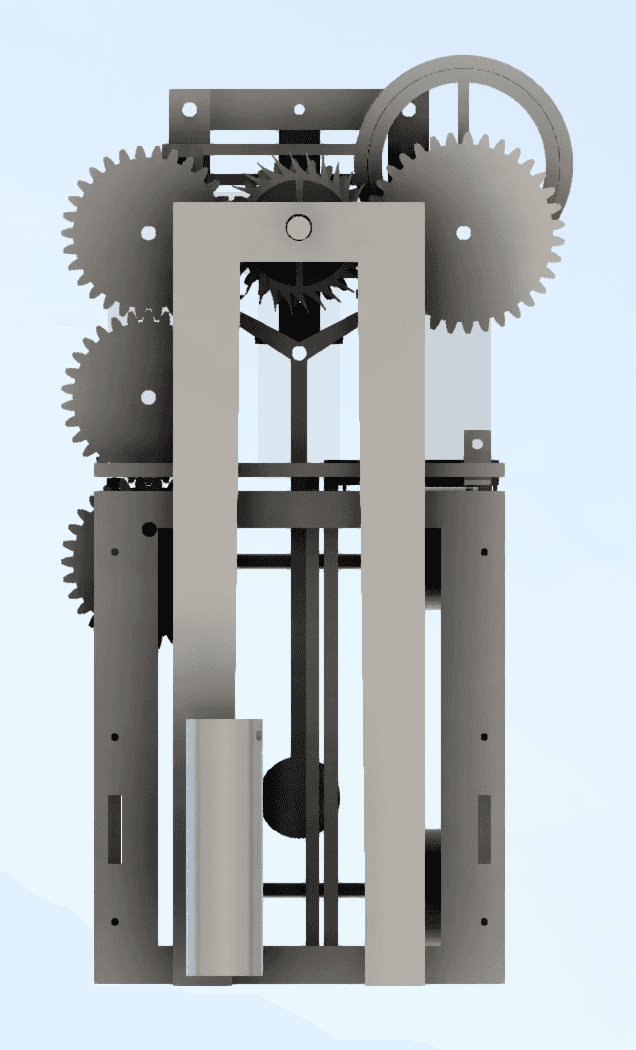
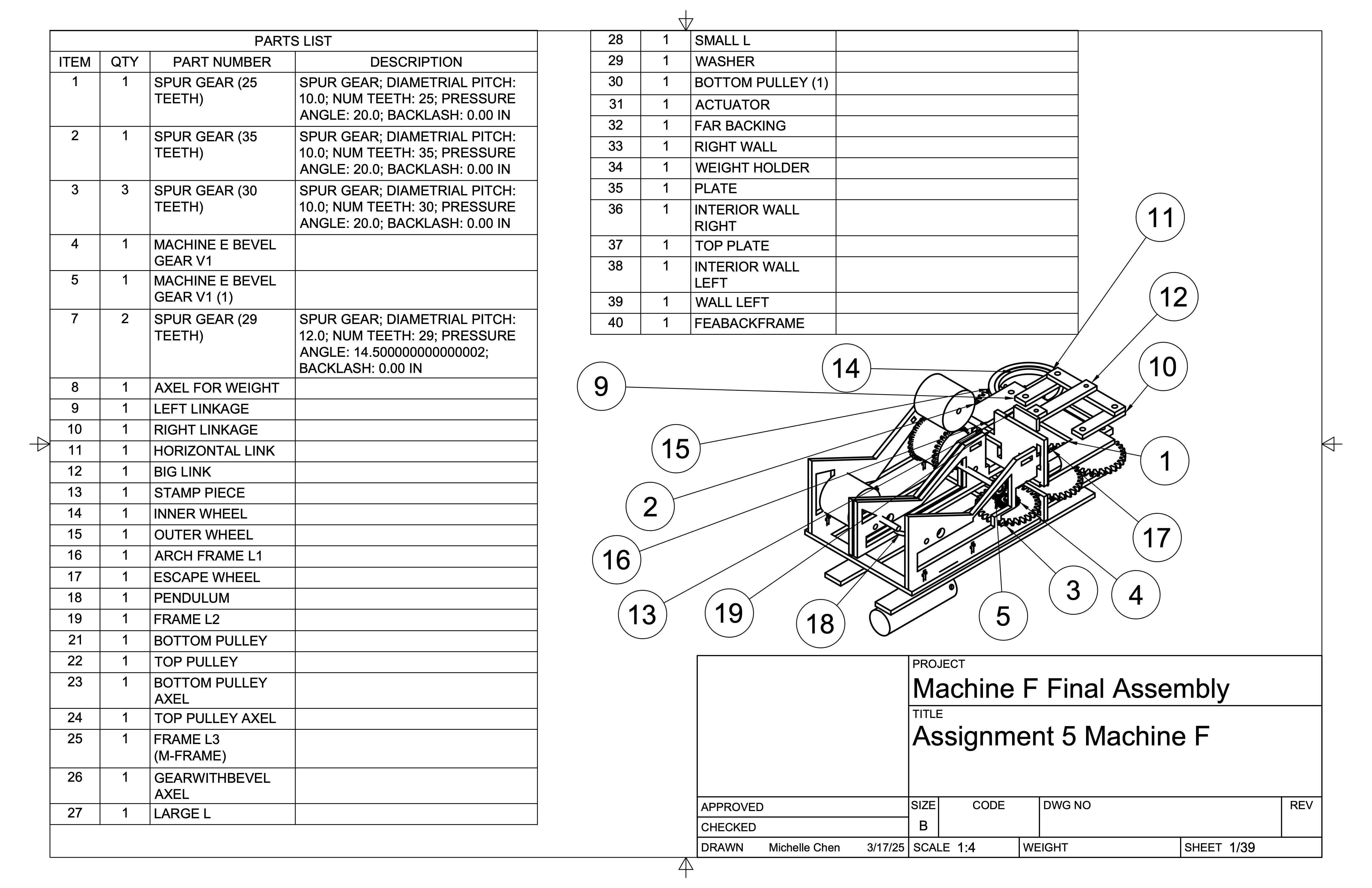
Above is an assembly drawing showing the full parts list of the machine.
Exploded View
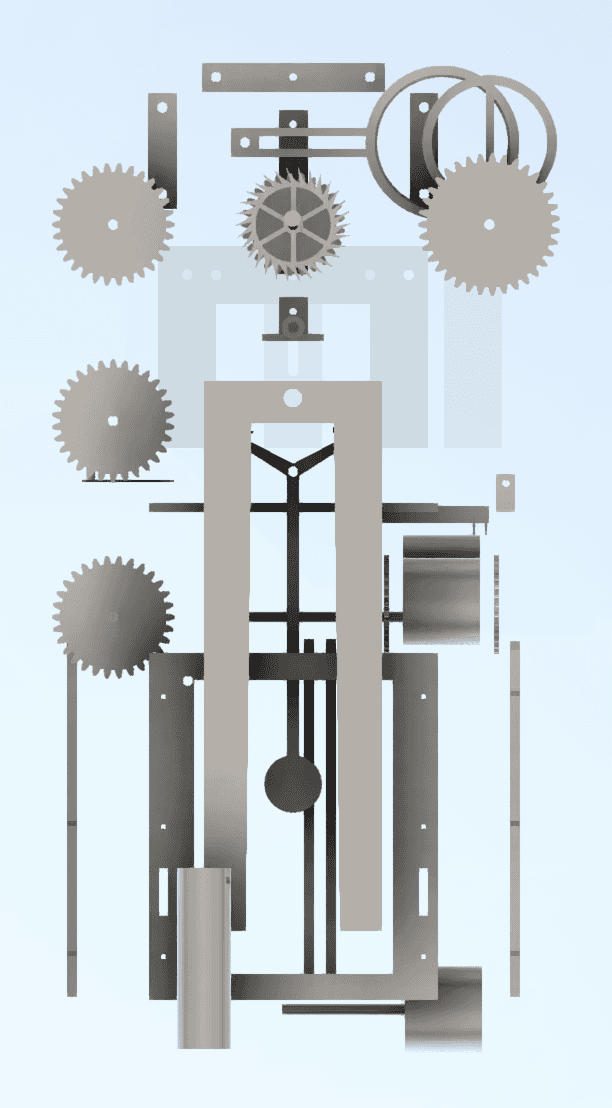
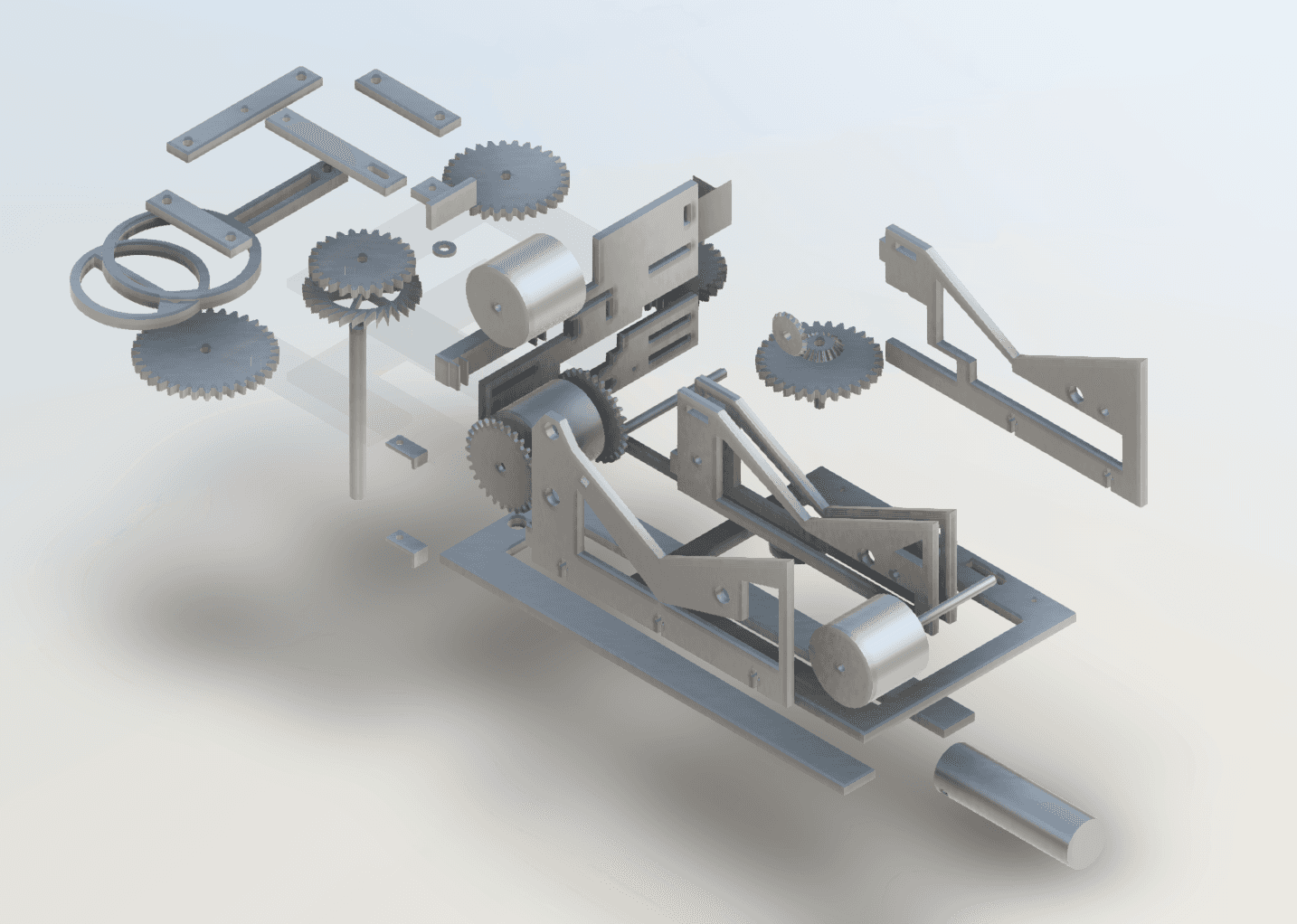
A clearer view of how the parts fit together can be seen below.
First Assembly
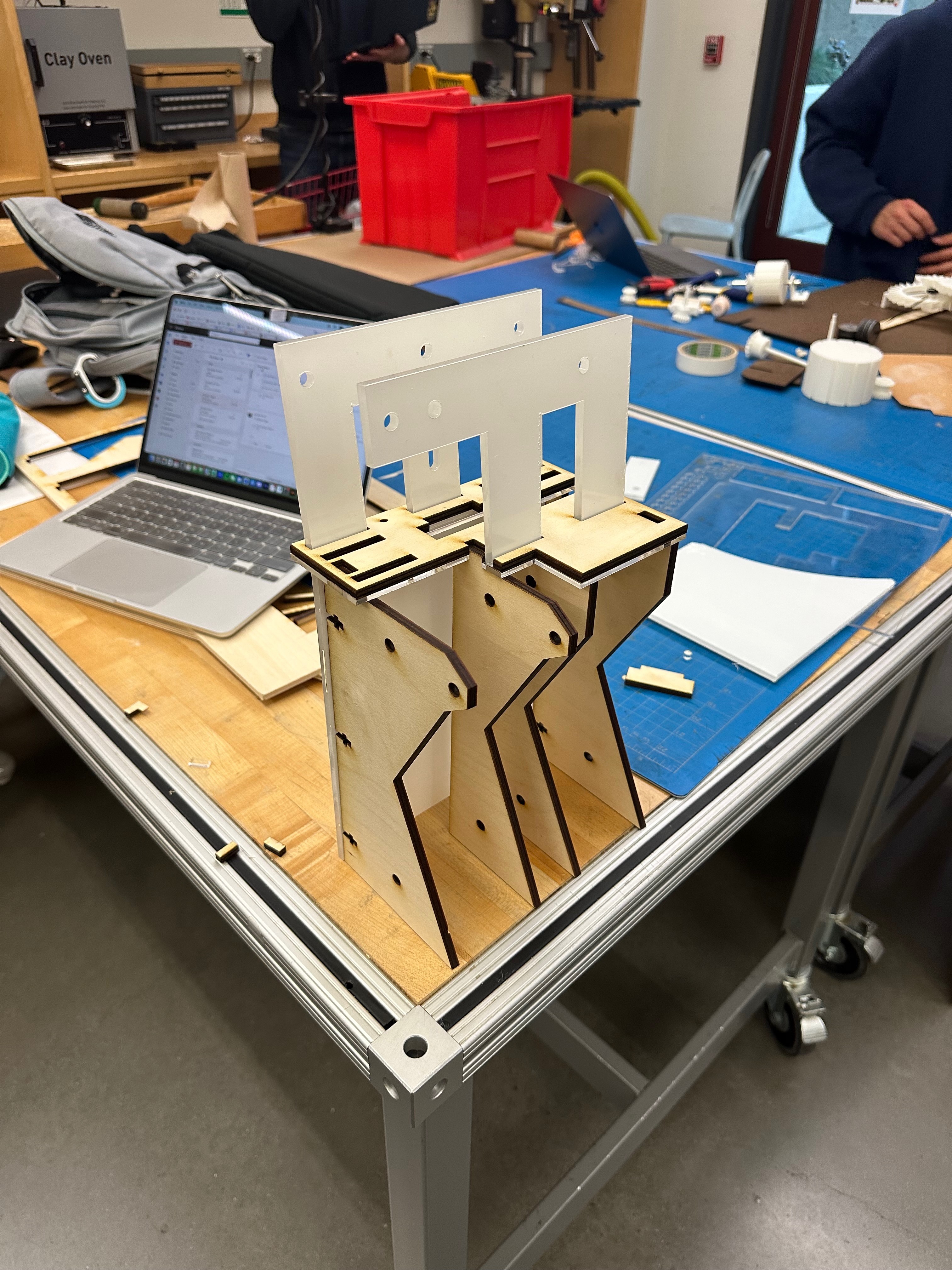
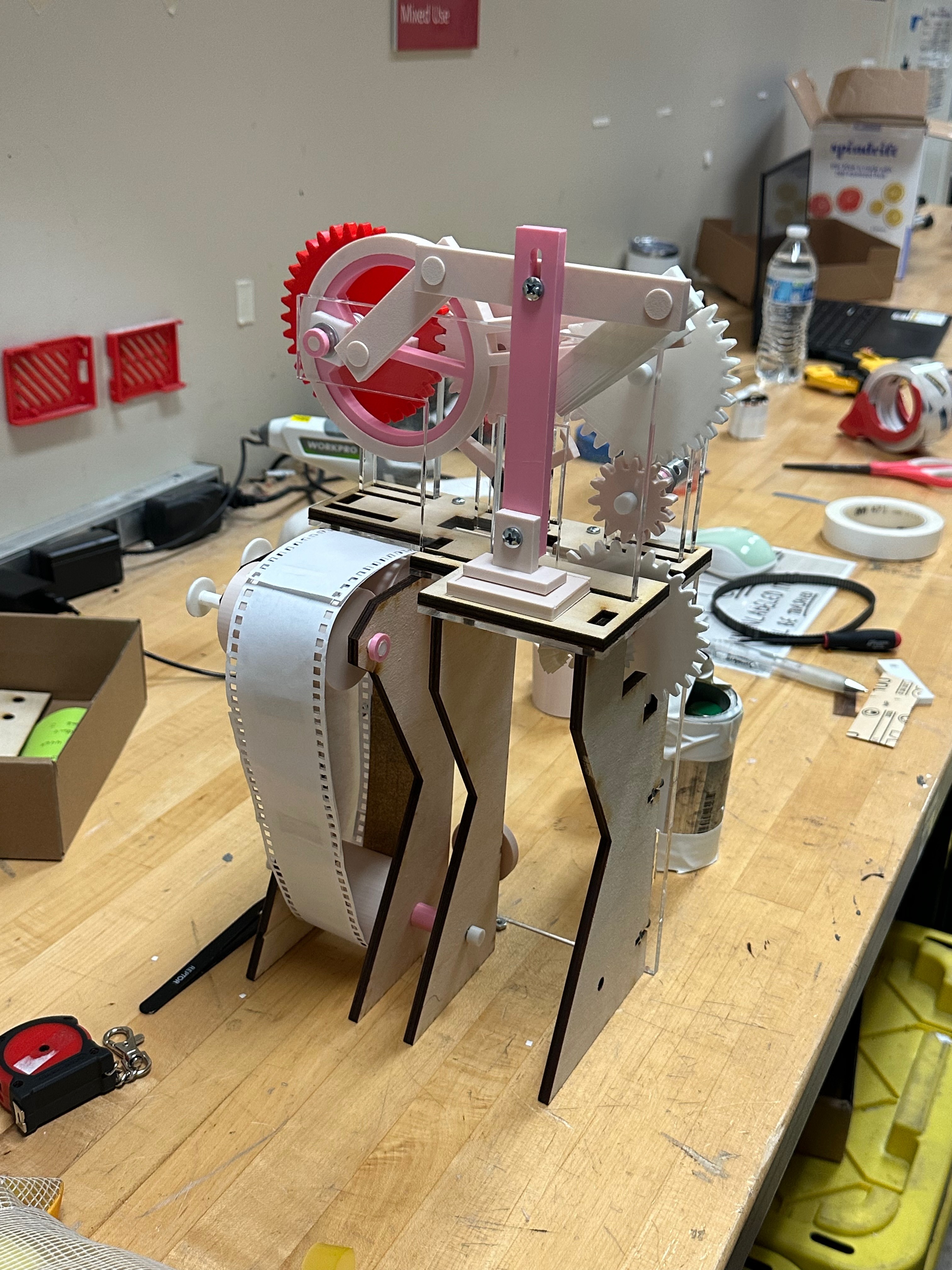
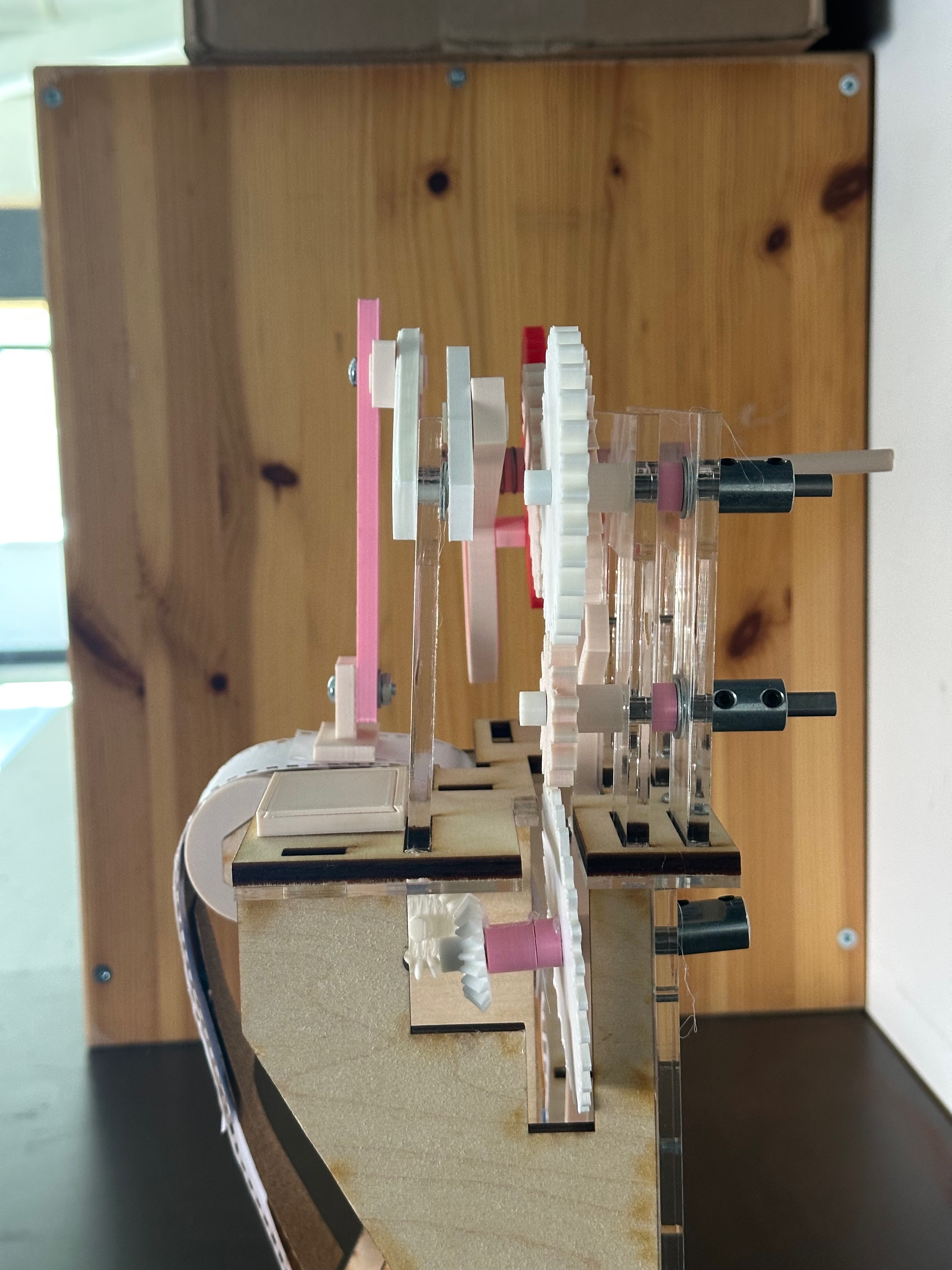
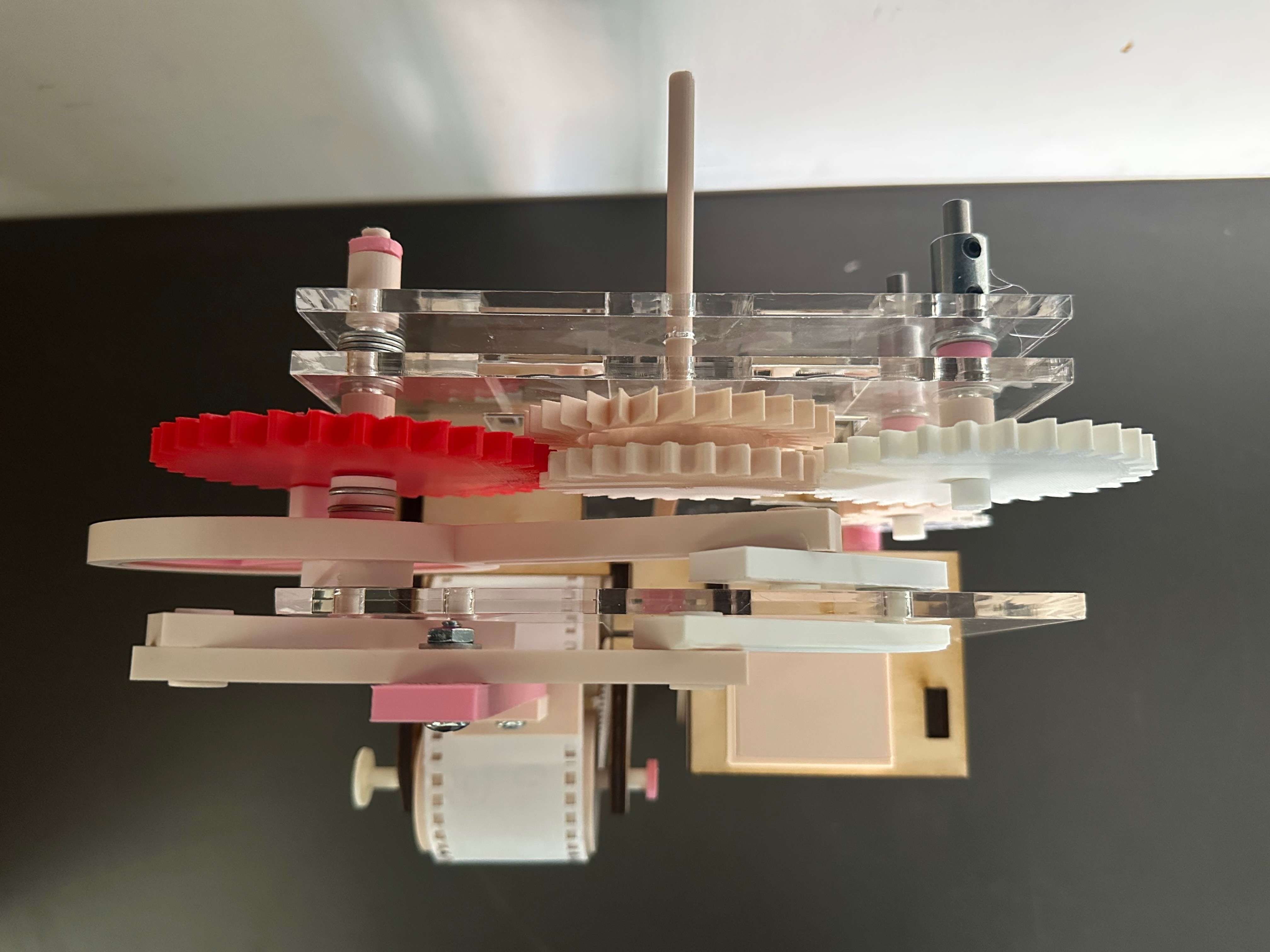
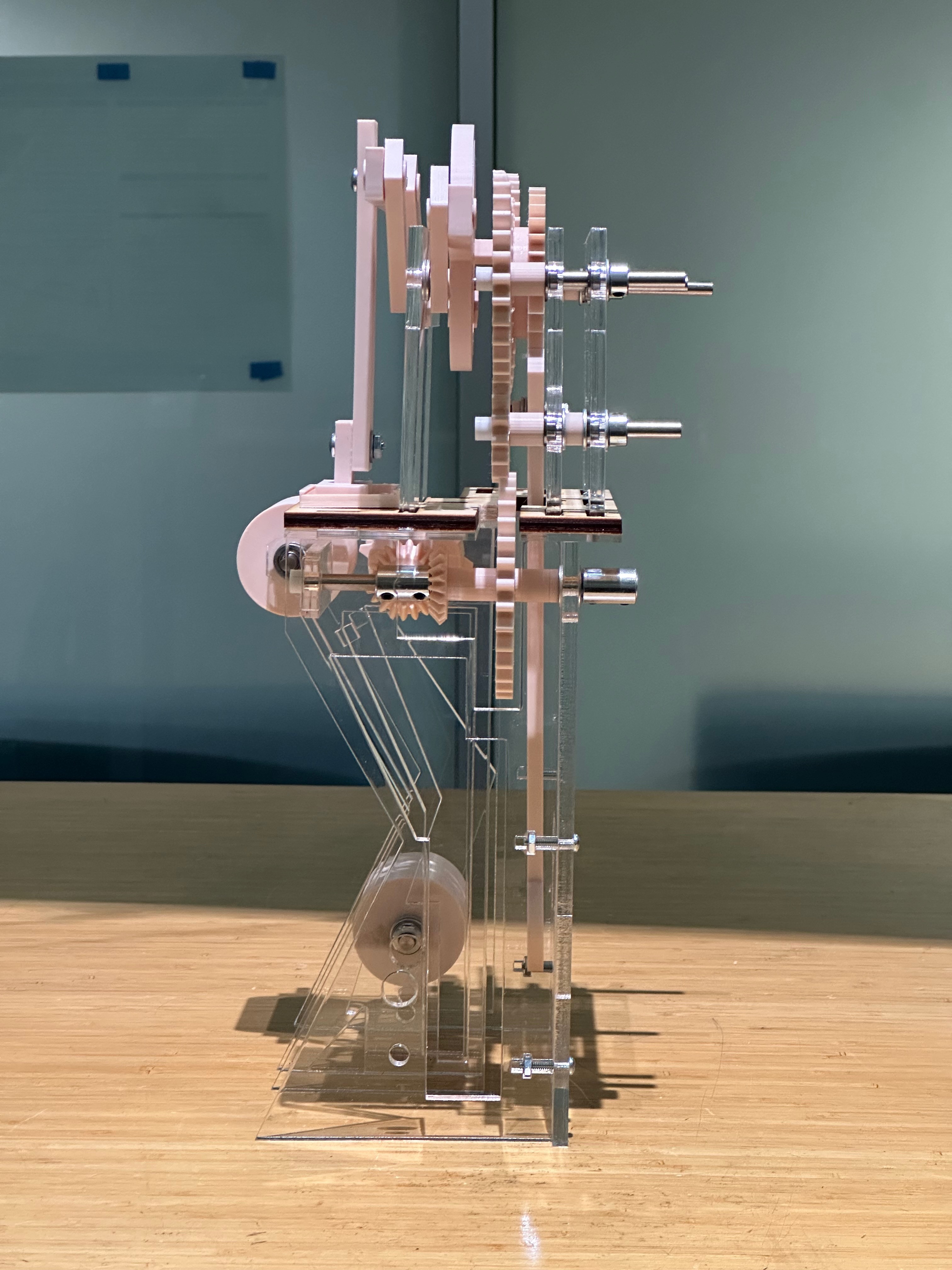
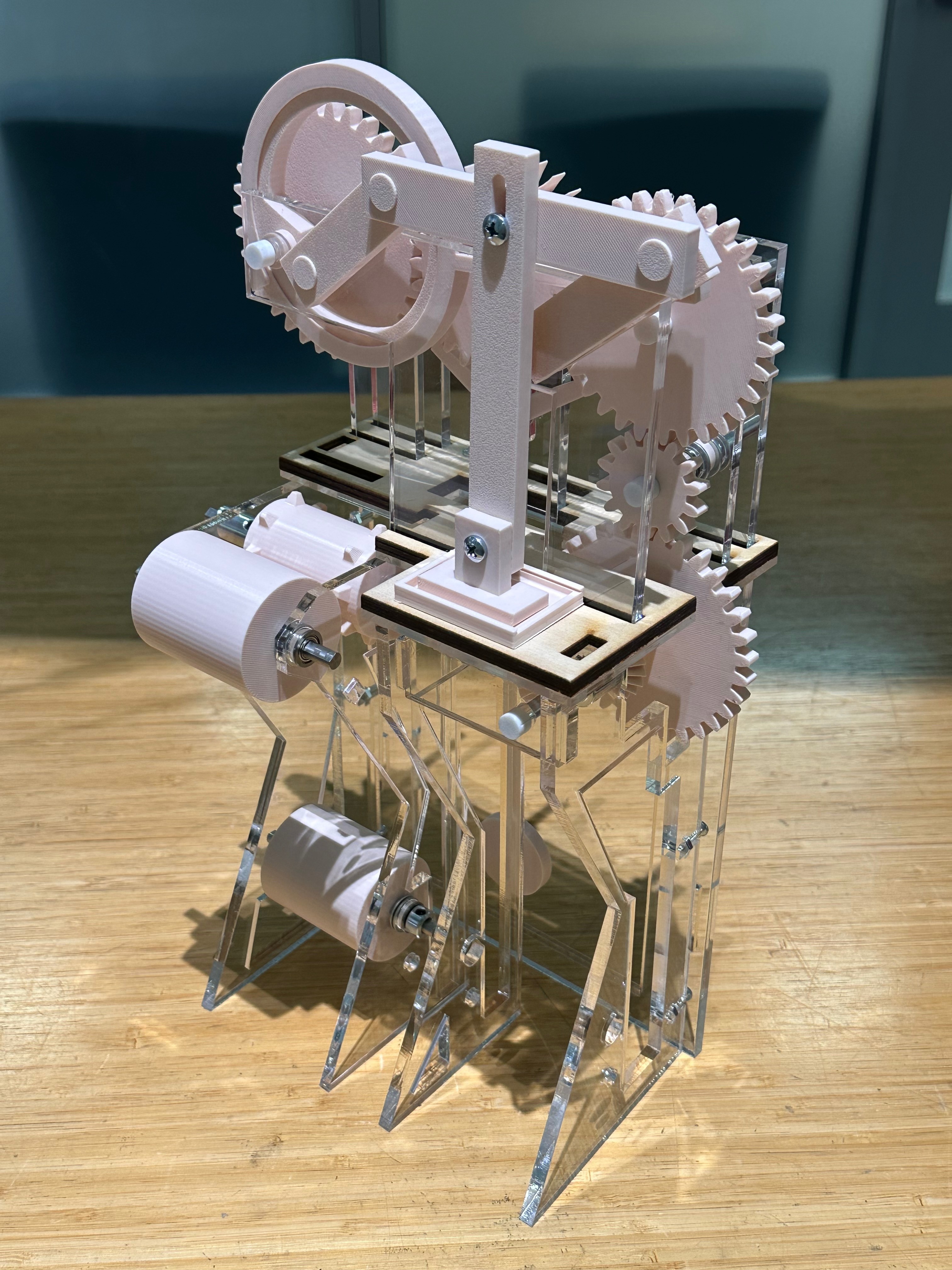
All mechanical parts were 3D-printed on a Bambu X1E with PLA filament. The frame was laser cut from wood and acrylic sheets. We ran into a ton of issues with this assembly, which was overall very rough:
Wheel — would fall out of the yoke, linkages would get jammed
Gears — did not fully interlock due to poor tolerances
Pulleys — not yet connected to the rest of the rotating parts, paper belt would slip off
Connections — the 3D-printed pins holding the linkages together would pop out and disassemble
Second Assembly
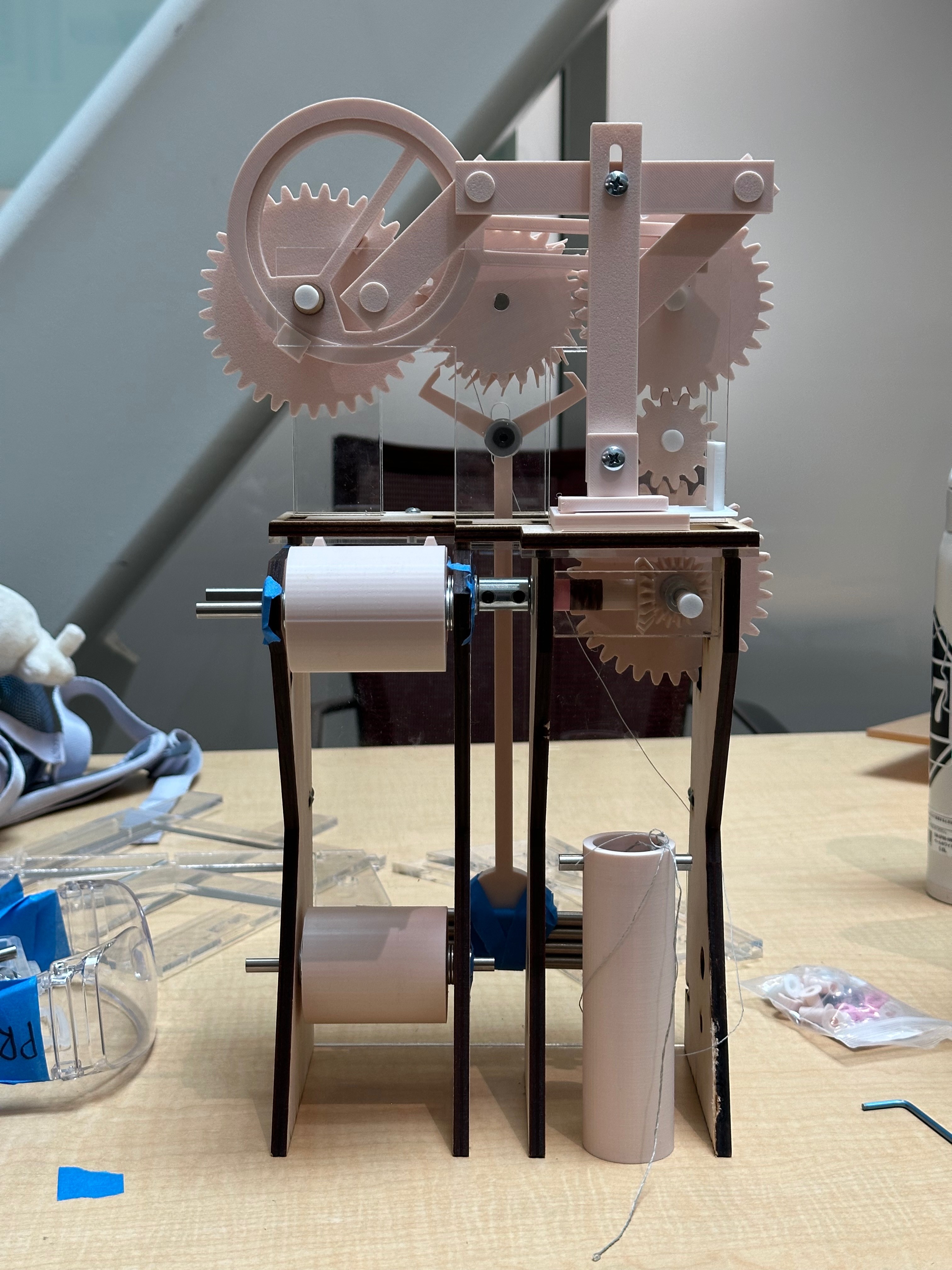
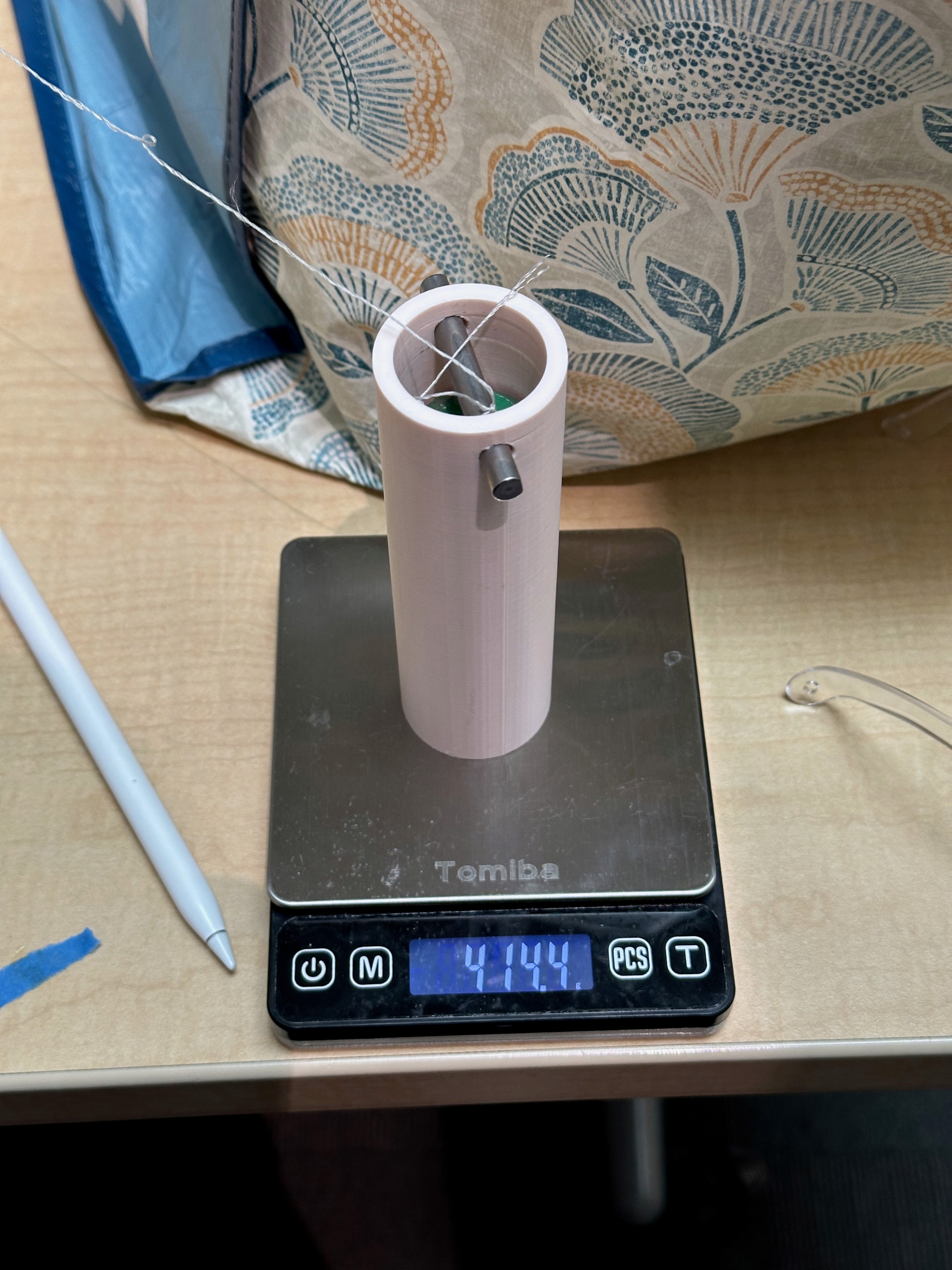
With this assembly, we reprinted almost all of our parts with revised tolerances and gear sizes. We also created a compartment for the weight to test the escapement and gear train. This iteration was much more successful. However, it was quite bulky and the pulleys were still misaligned.
Finite Element Analysis
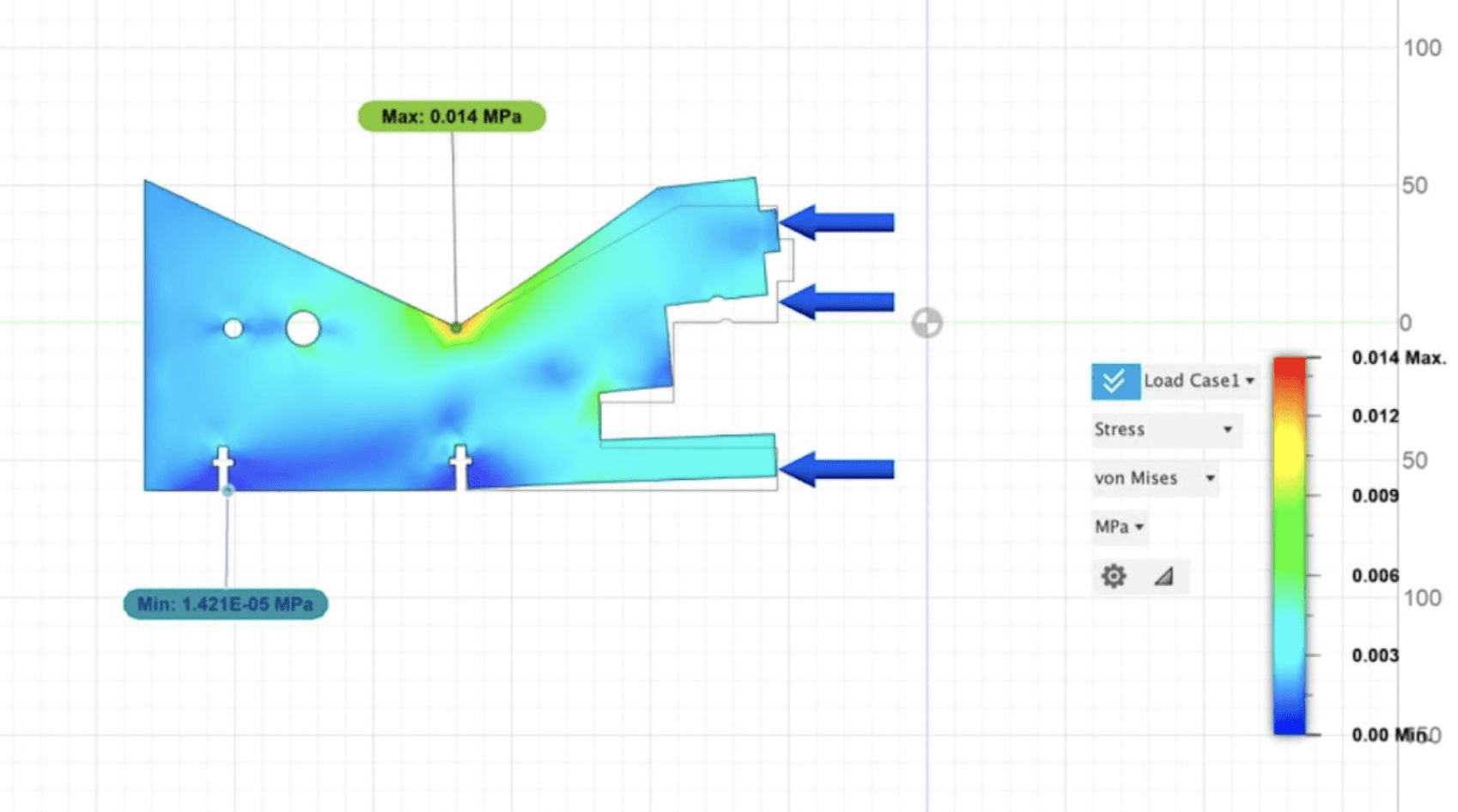
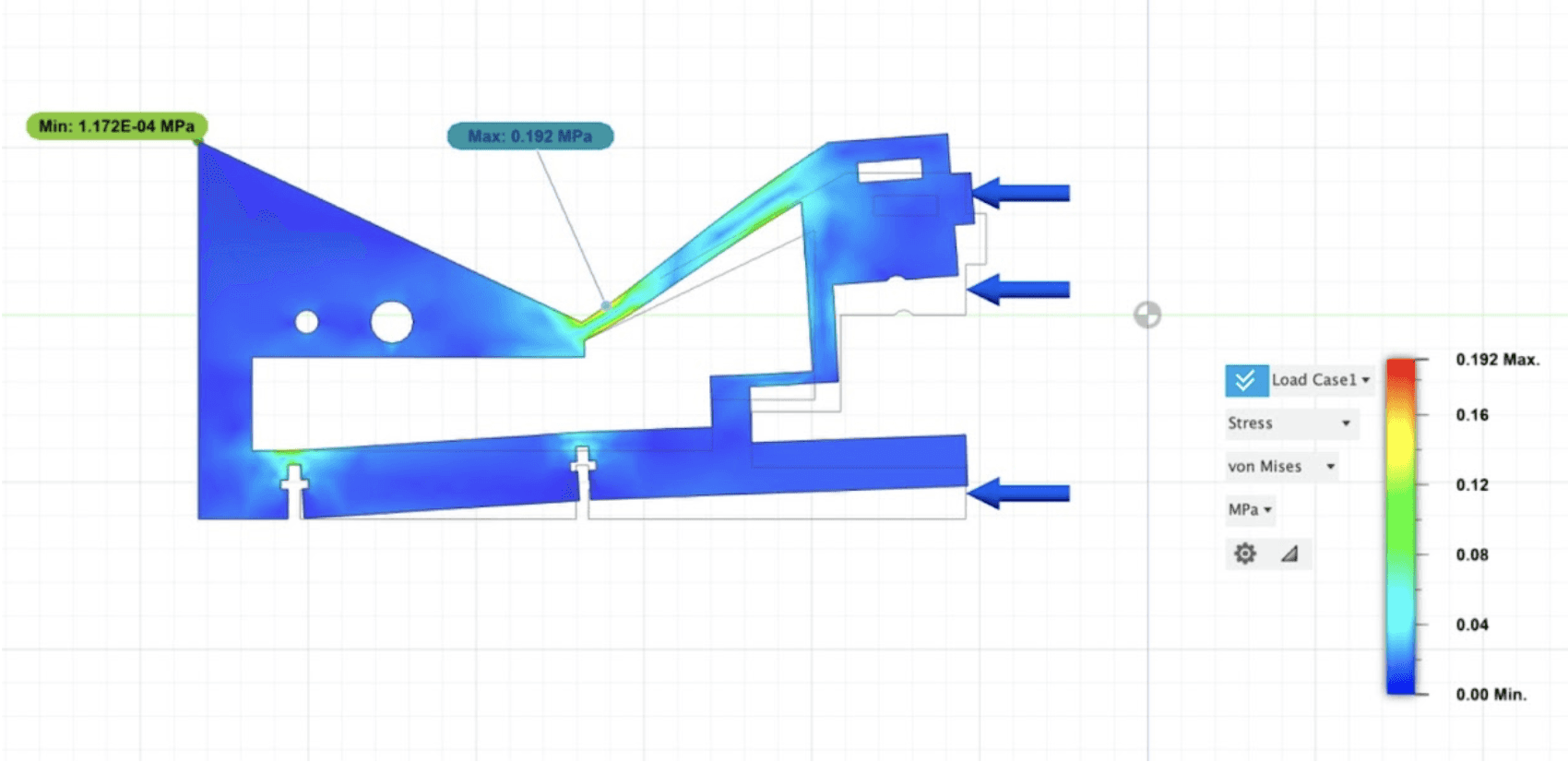
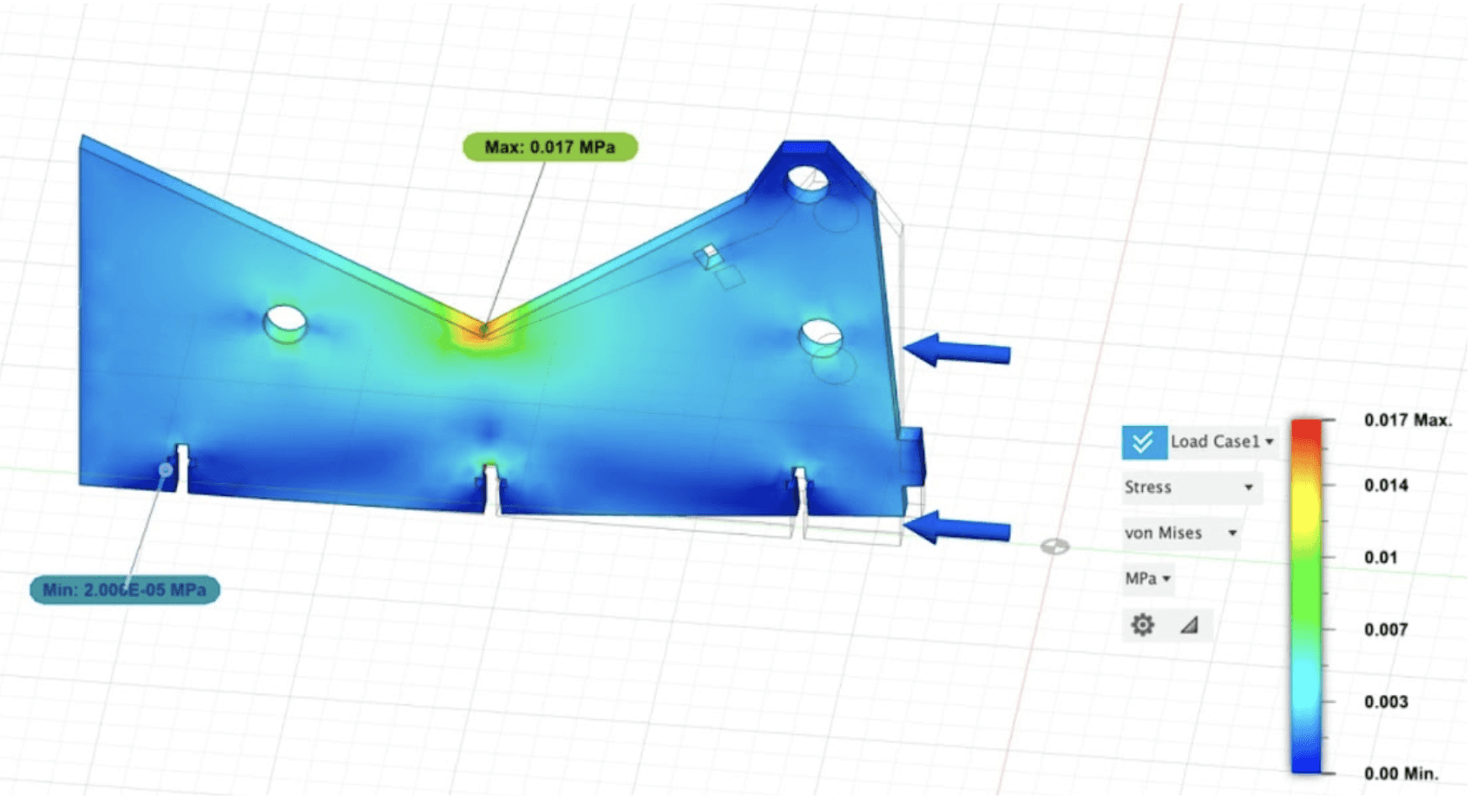
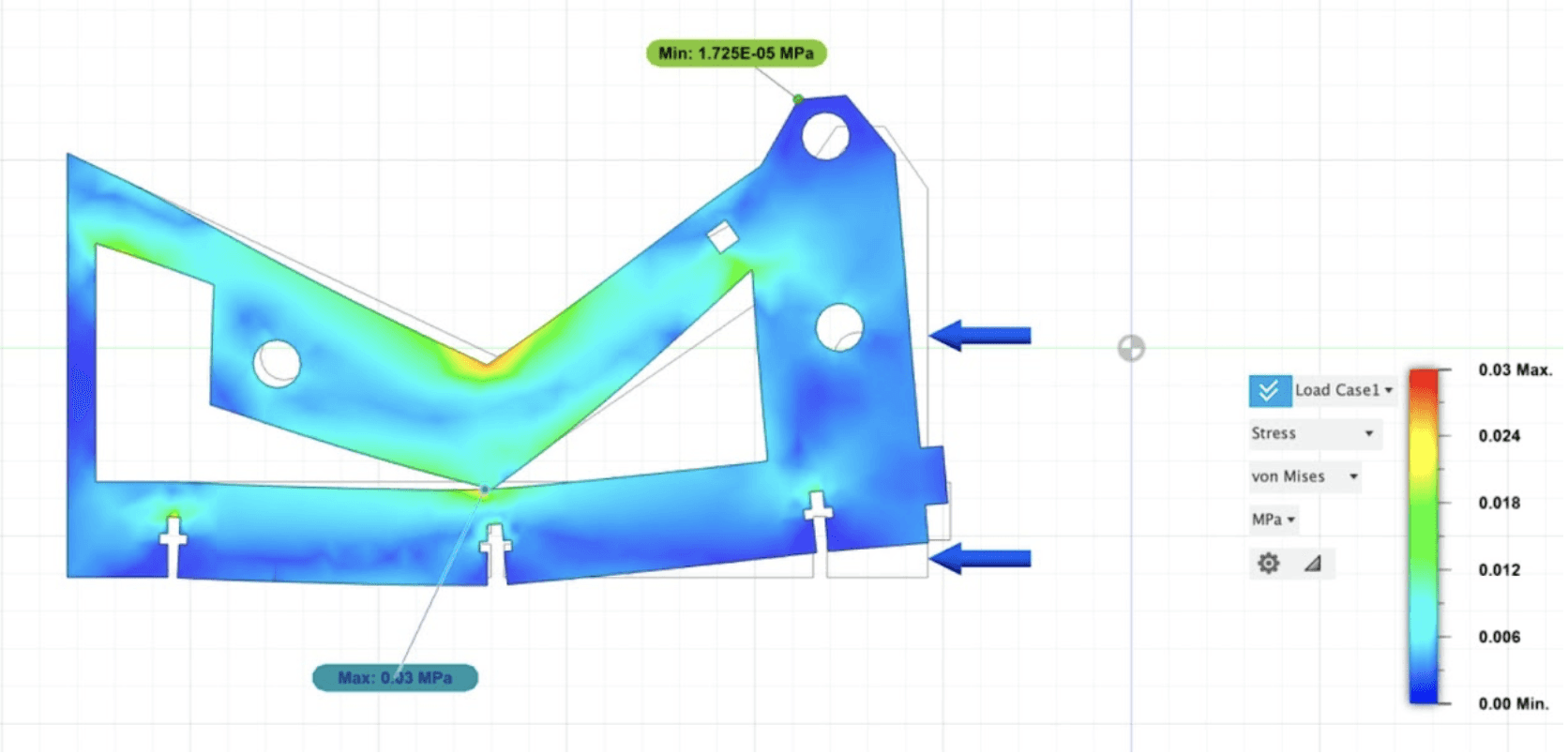
To fix the pulley issue and make it easier to access the inside of the machine, we redesigned the frame by removing excess material from each wall. We performed an FEA Stress Analysis to determine where to remove material. The before and after comparison can be seen below.
Final Assembly
Based on what we learned, we made the following final modifications:
Walls — re-cut the new walls out of acrylic
Connections — replaced all possible connections with D-shafts fitted with 3D-printed end caps
Belt — laser-cut paper with holes to grip onto the teeth of the pulley
Pendulum — secured a piece of aluminum to the pendulum to slow frequency and increase period of swing
Demo Video
The completed Timestamp can be seen below. The machine can run for over a minute before stopping. Final product was exhibited at Meet the Makers, a showcase hosted by the Stanford Department of Mechanical Engineering.
Contact:
Go home