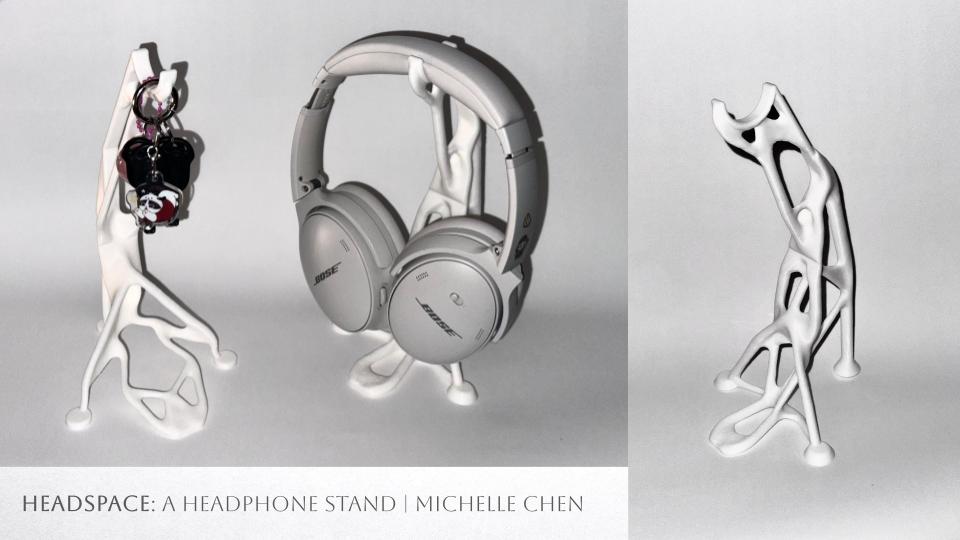
Headspace
3D Printing
CAD
Generative
FEA
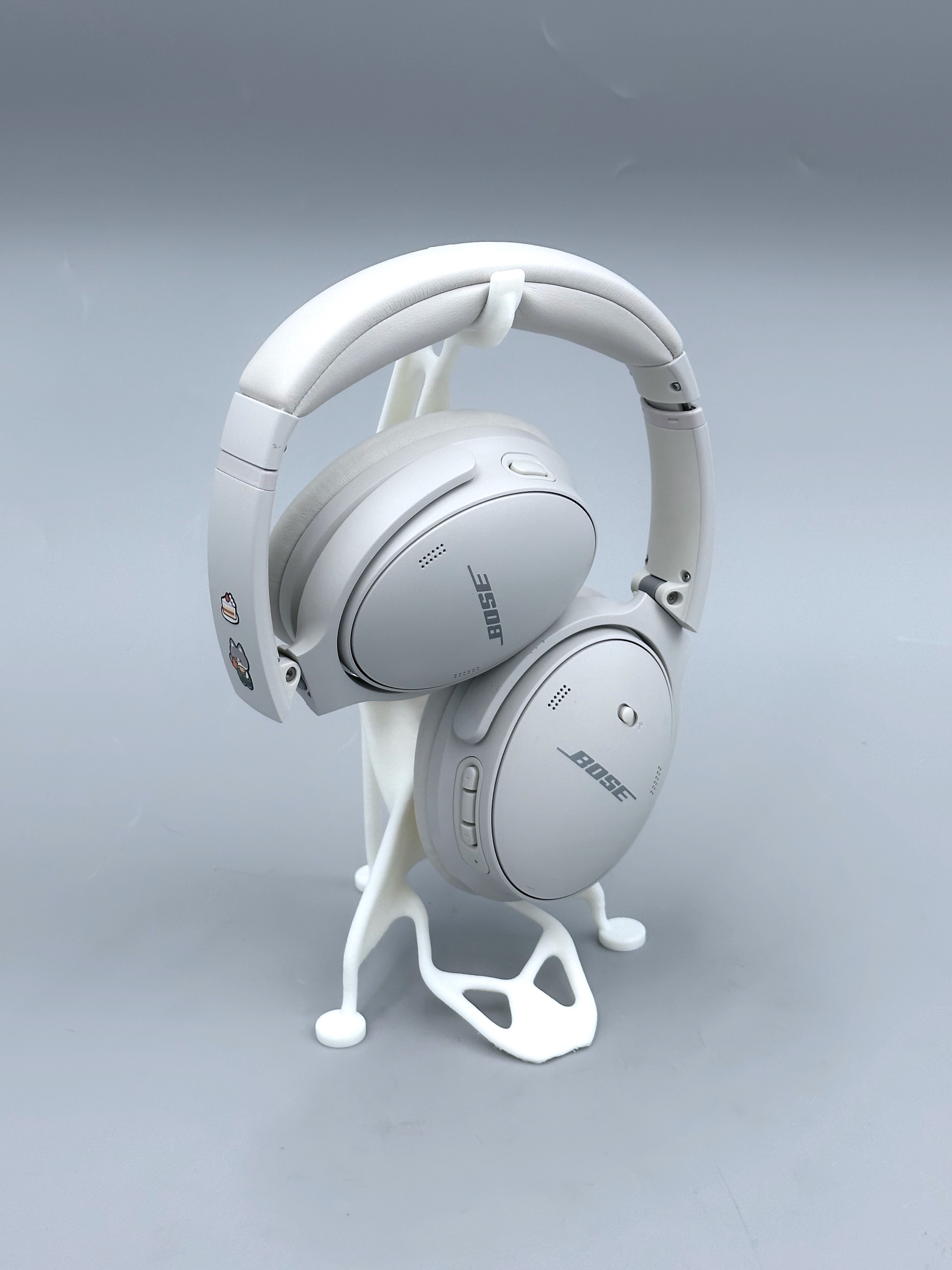
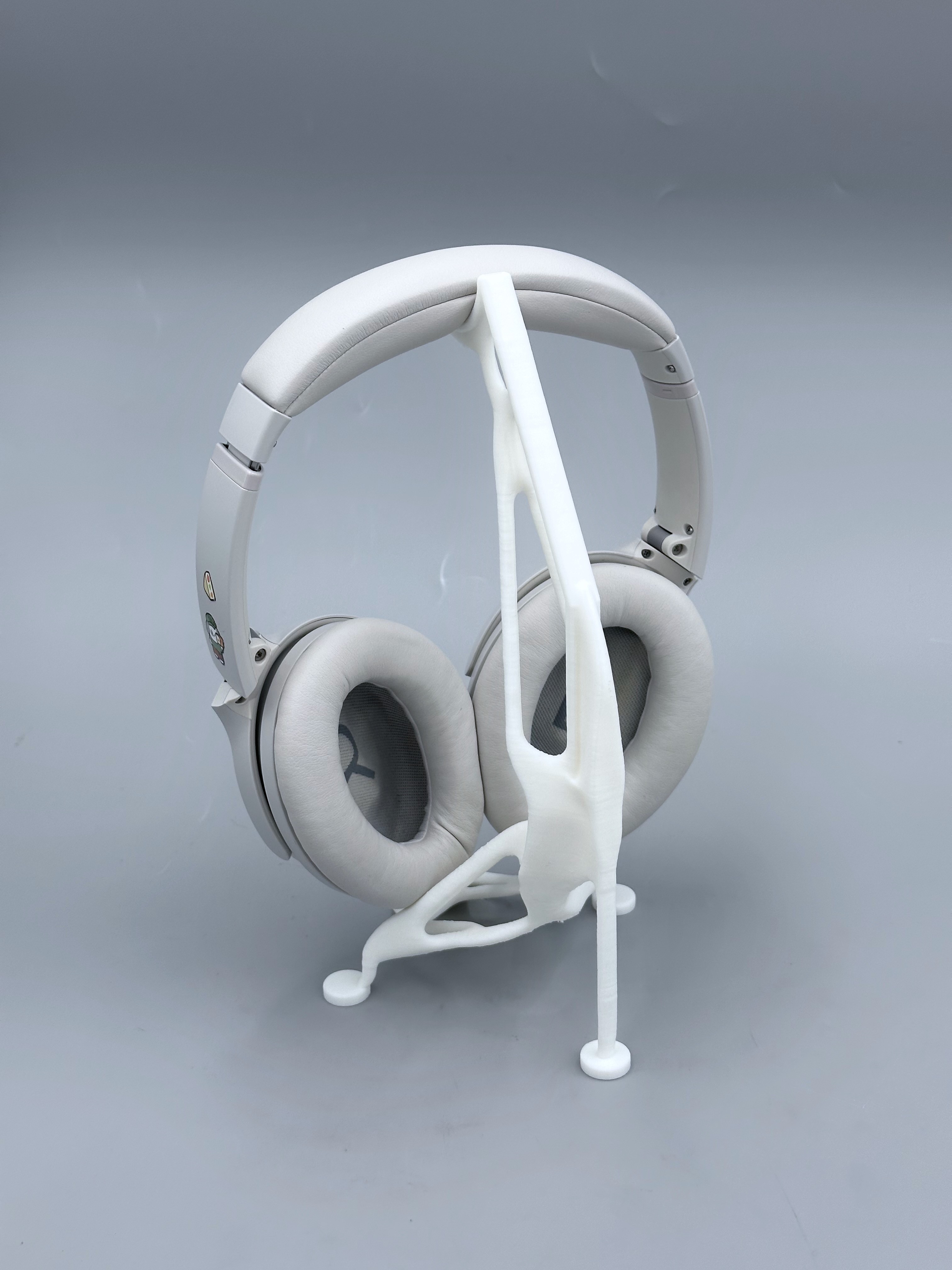
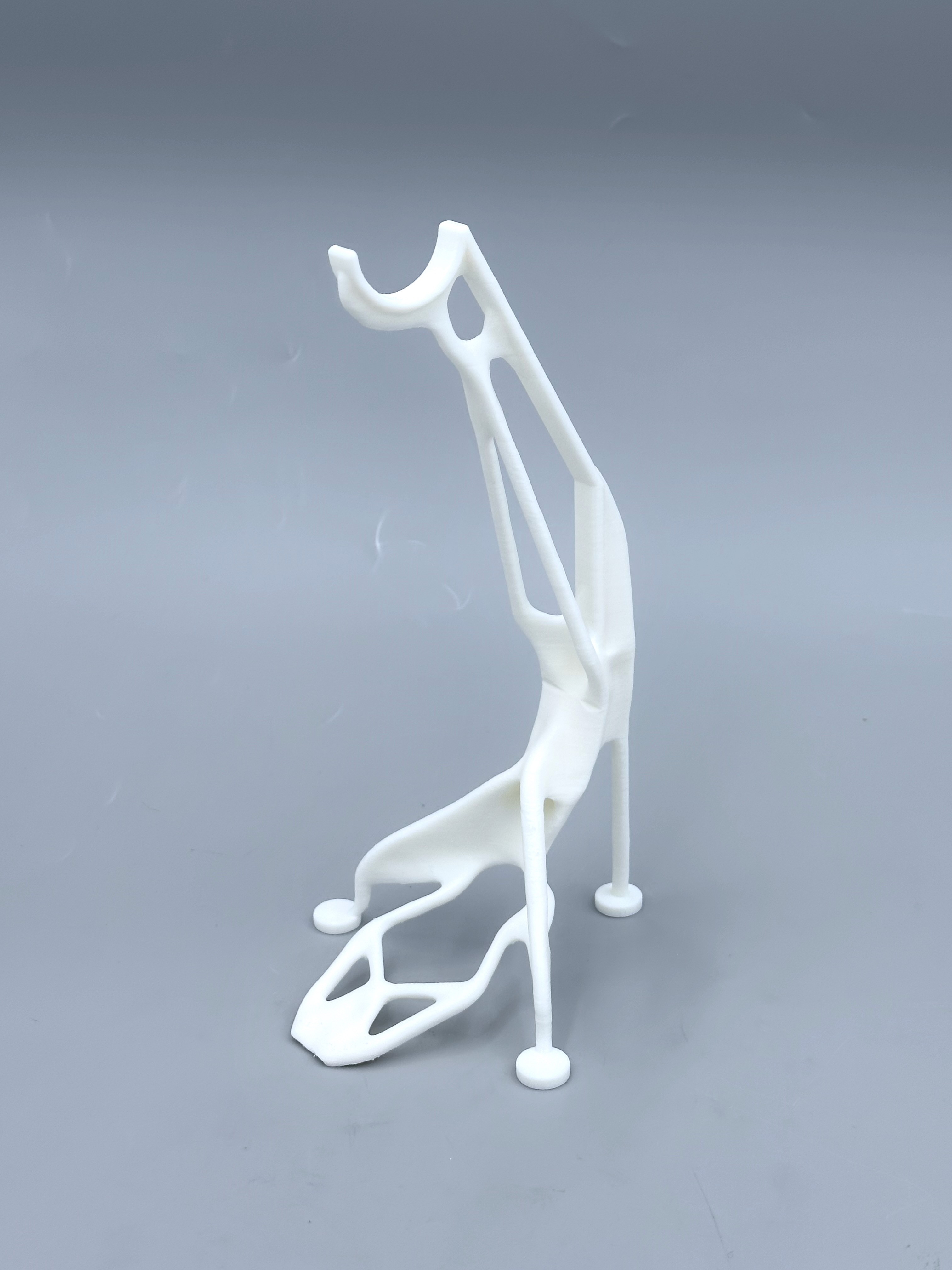
A mass-optimized headphone stand that leverages the strengths of additive manufacturing. Created through a series of 7 iterations of Generative Design in Fusion 360, testing various configurations of preserve and obstacle geometries.
Ideation
Headspace was created to solve a recurring problem — my tendency to misplace my headphones. Most headphone stands are heavy, bulky, or obstruct the ear cups from sitting properly. My goal was to create a lightweight, compact stand that is:
Compact enough to fit on my cluttered desk (base less than 15 x 15 cm in size)
Lightweight (< 90 grams, 0.2 lb) for me to carry easily in my backpack
Able to support the load of my headphones (240 grams, 0.53 lb)
Able to hold other miscellaneous items that I often lose in my room (e.g. keys, wallet) up to 1 lb
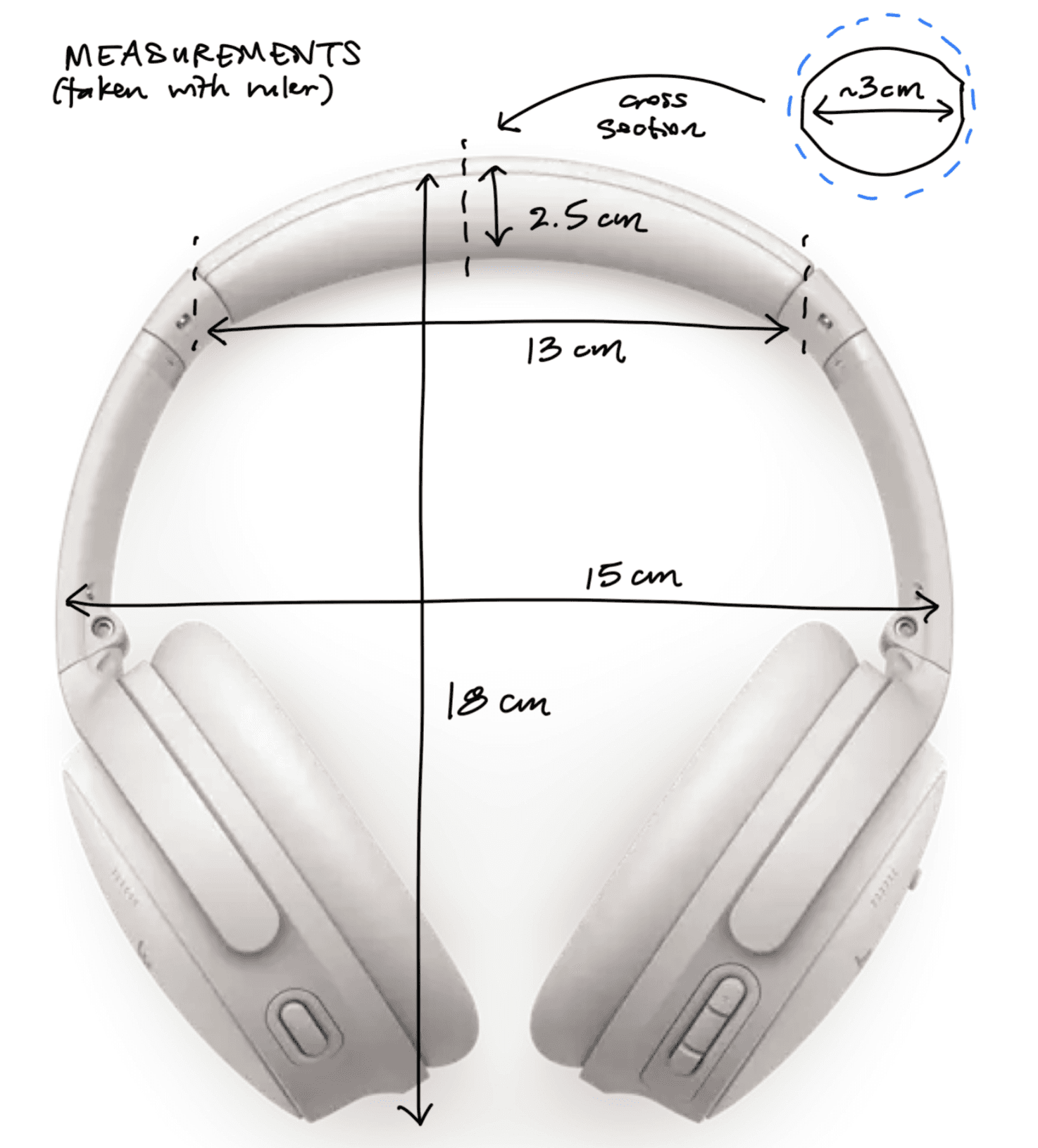
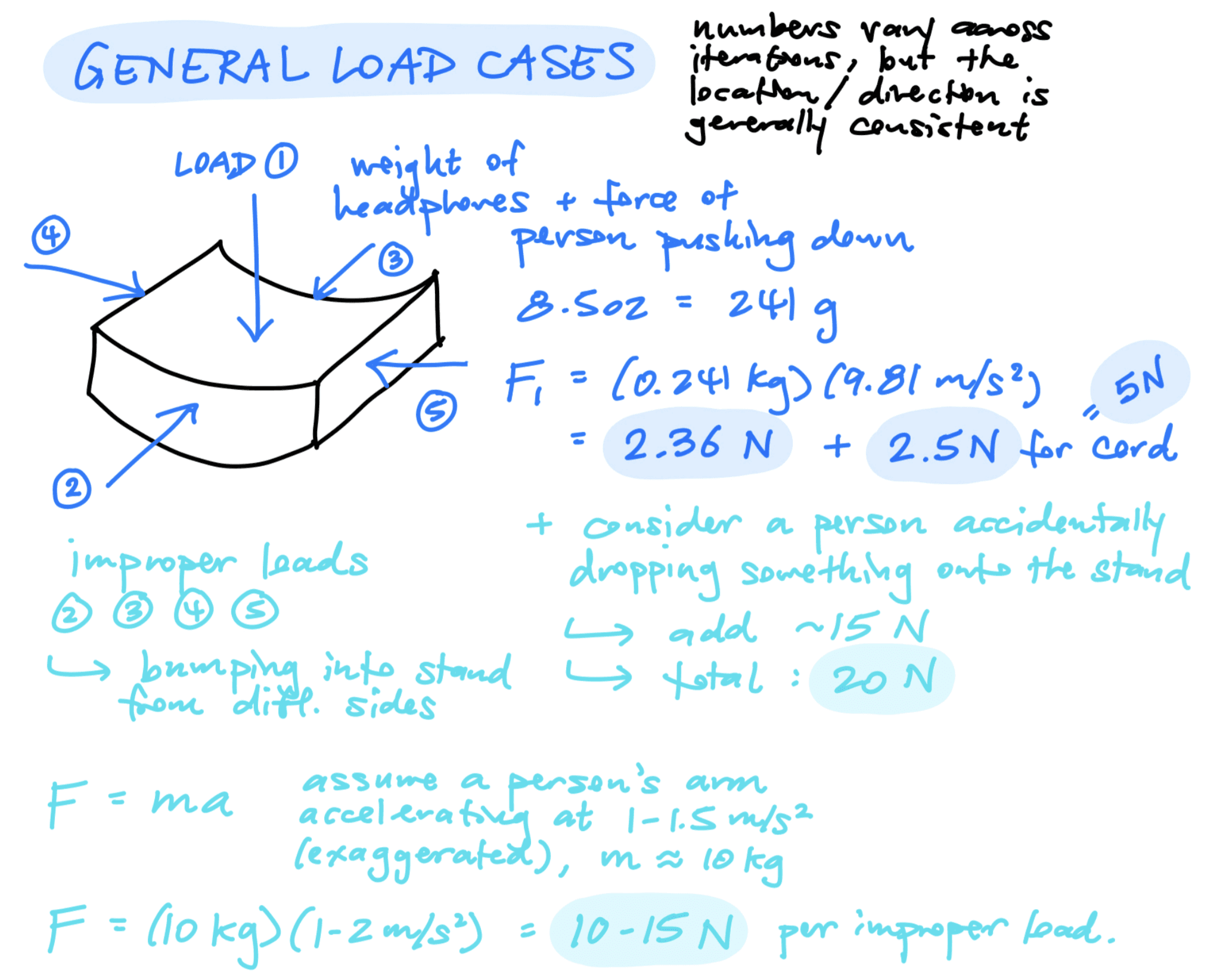
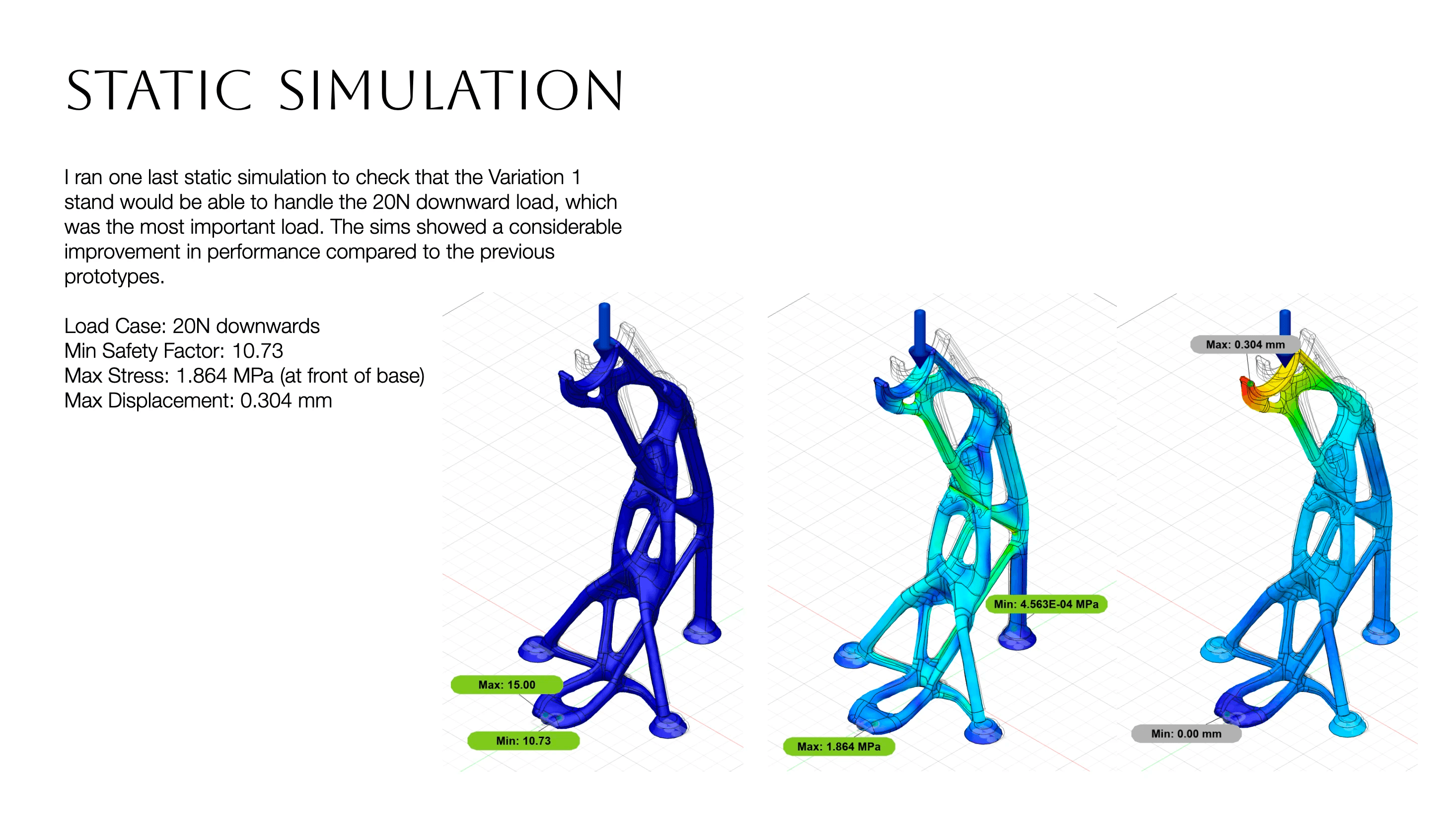
I also wanted the stand to handle improper load cases from hitting and bumping, which I calculated to be 10-15N per load.
General Setup
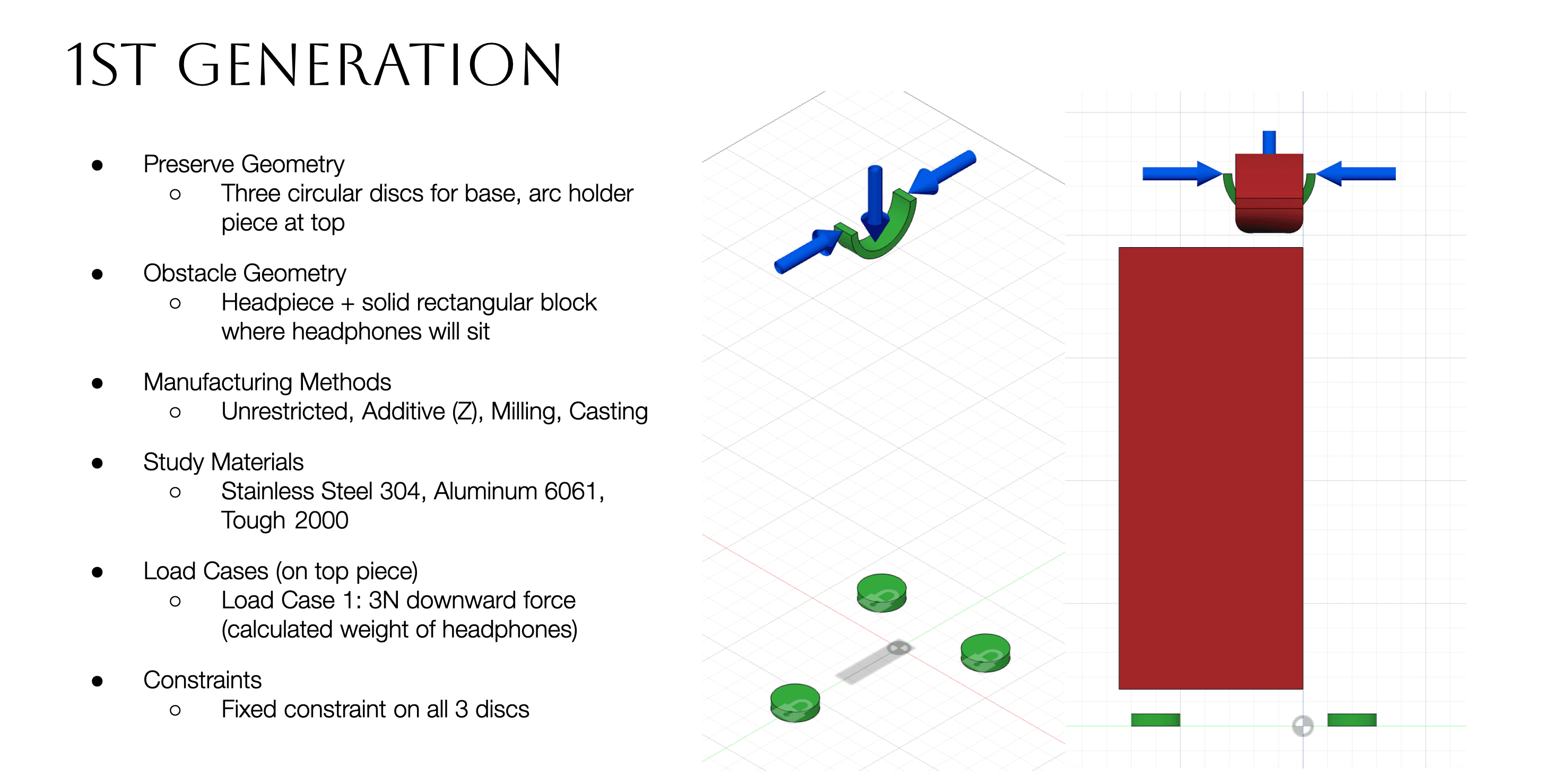
Each setup in the Generative Workspace contains the following geometries:
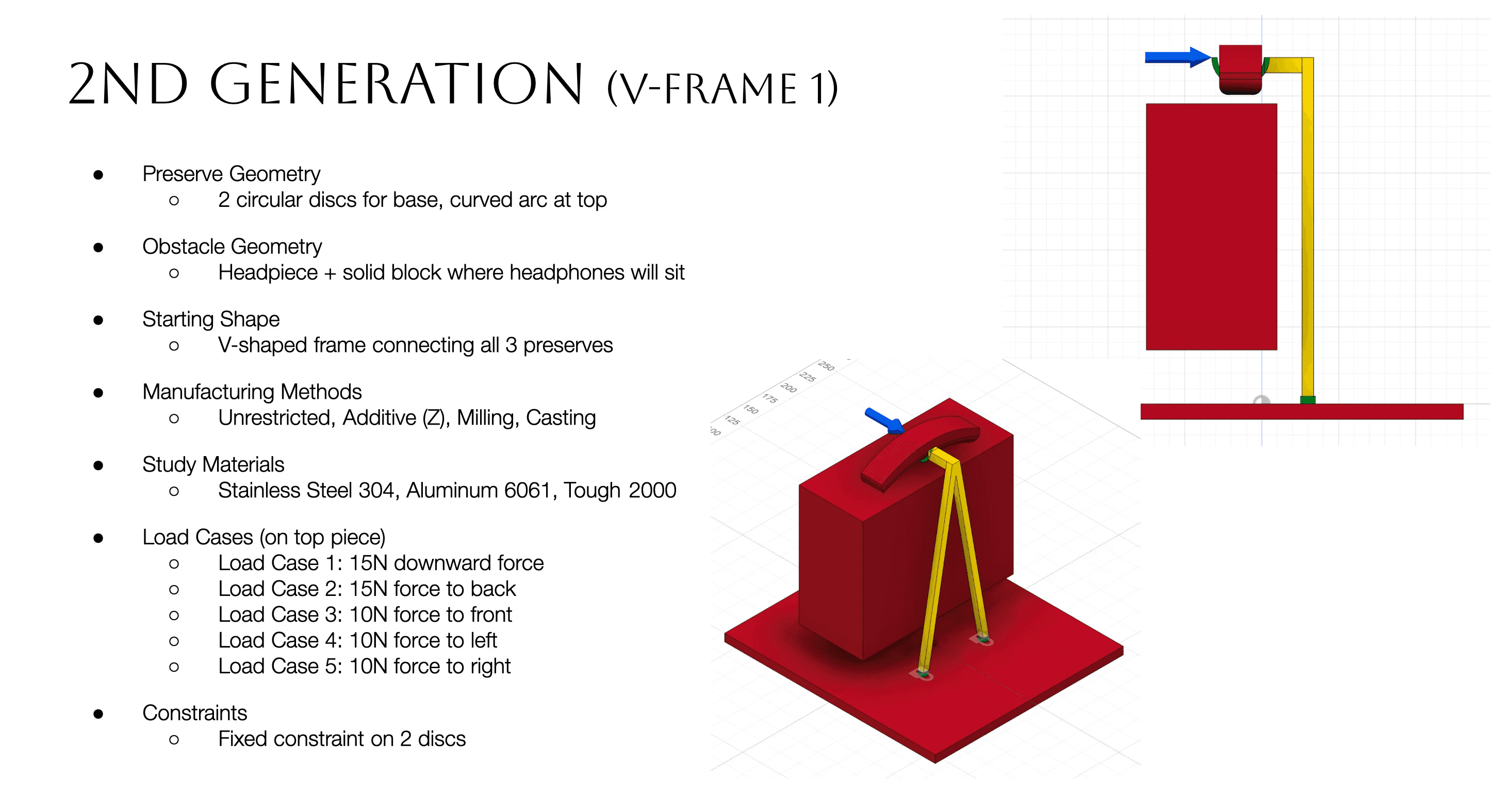
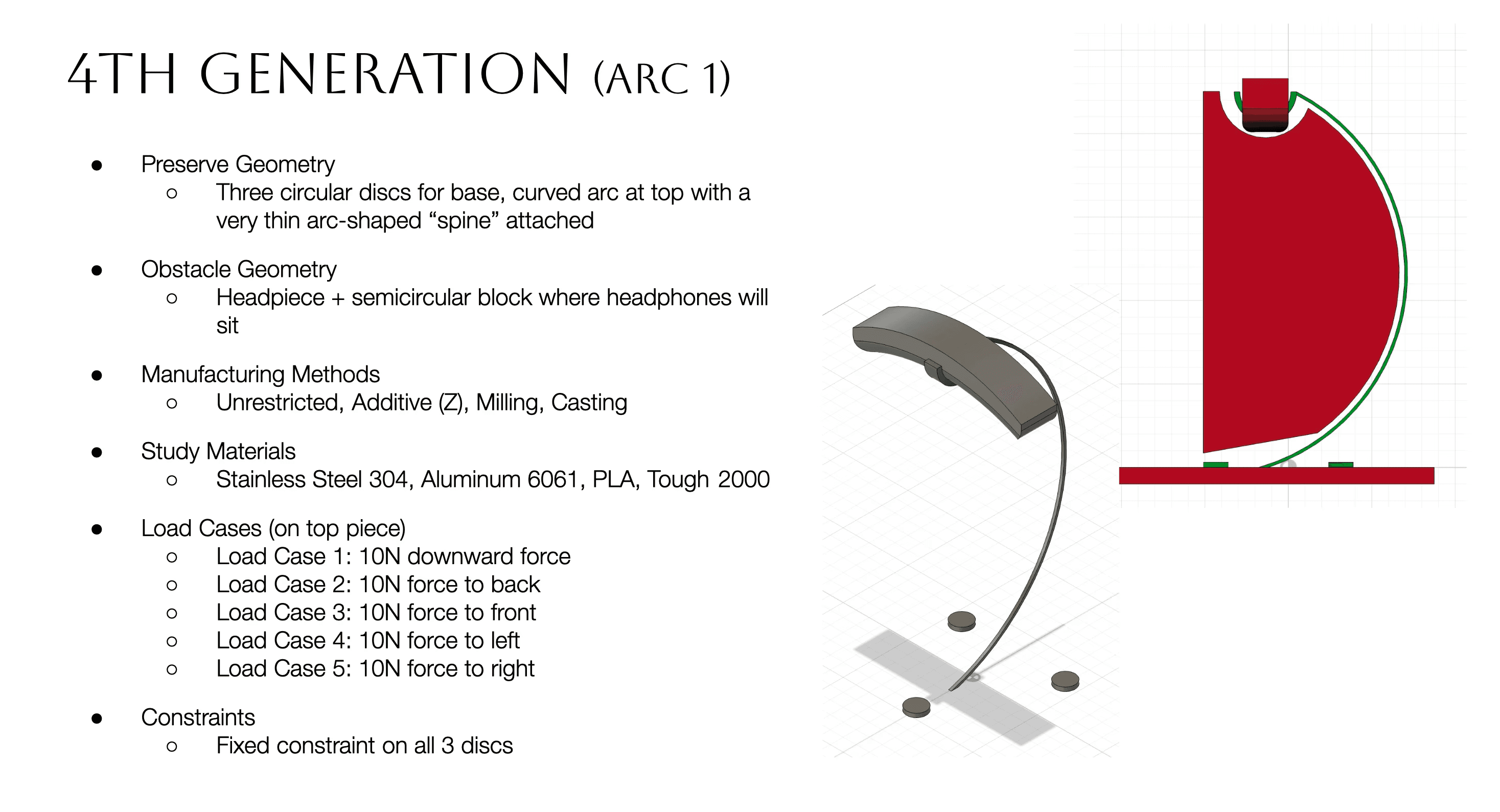
Preserve Geometry — Thin discs to define the attachment points for the base and a crescent-shaped headpiece, modeled after my specific headphones
Obstacle Geometry — A large block in the area between the holder and the discs at the base, which makes space for the body of the headphones and prevents the ear cups from knocking into the stand
Generation 1
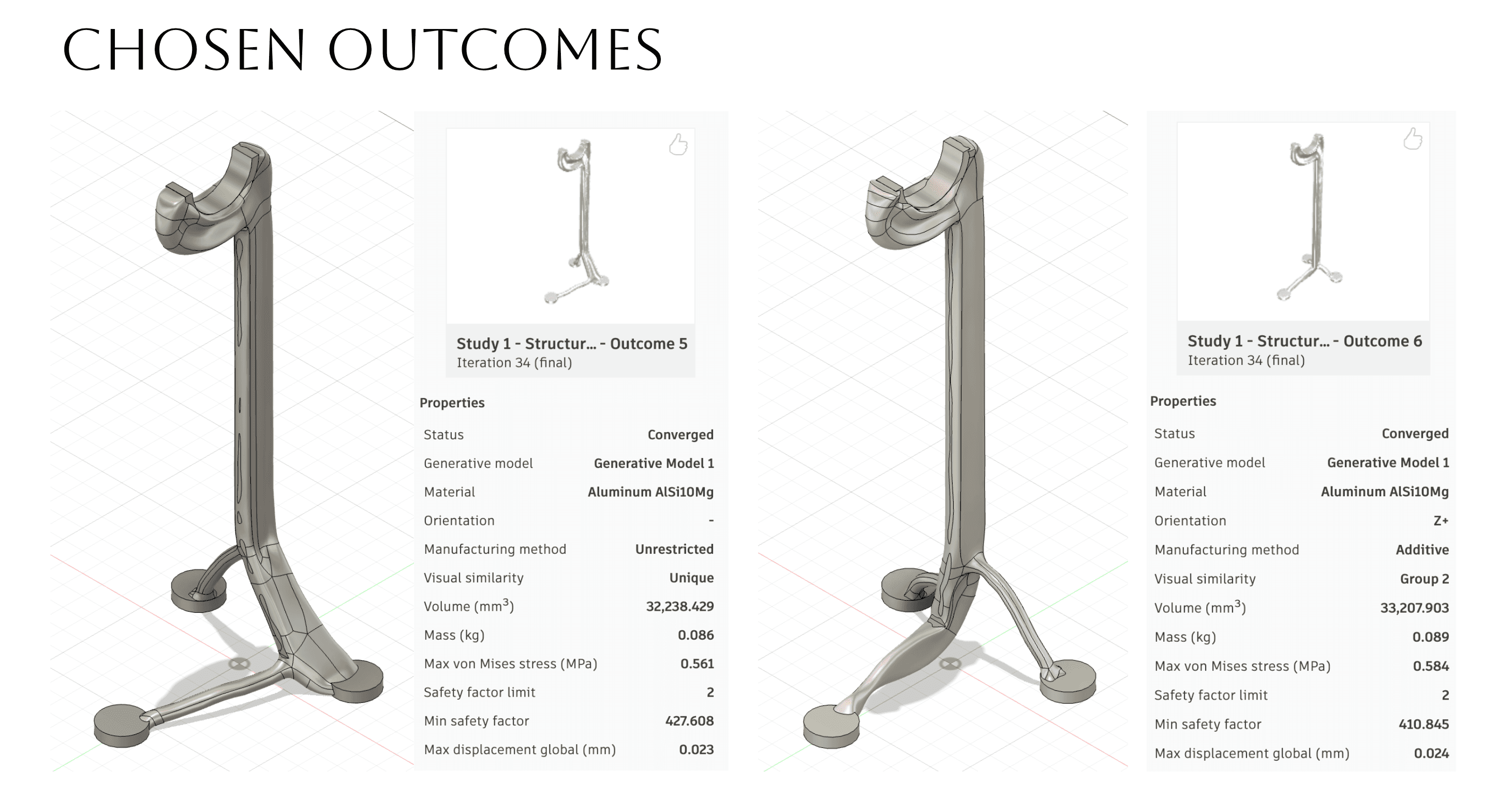
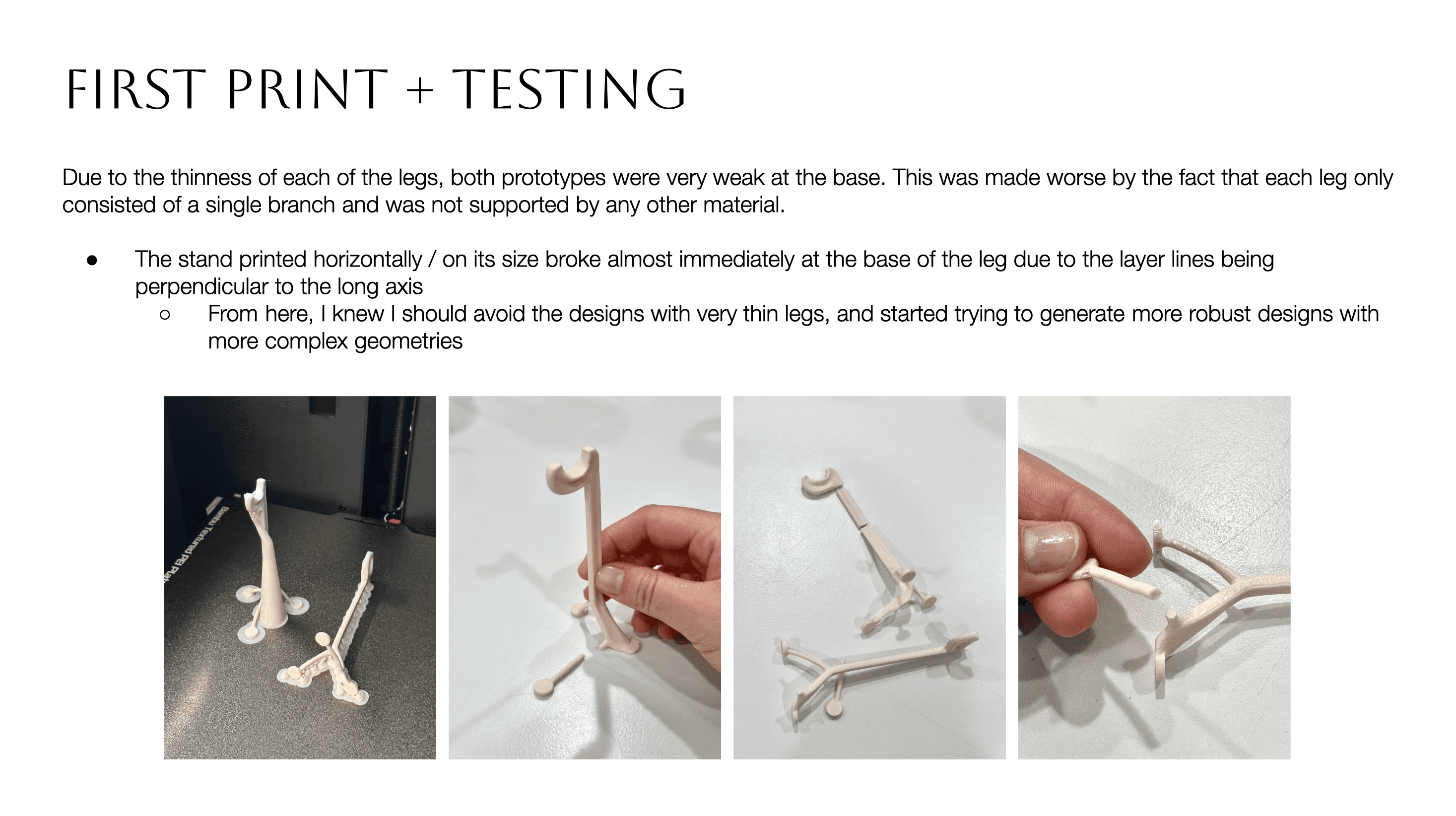
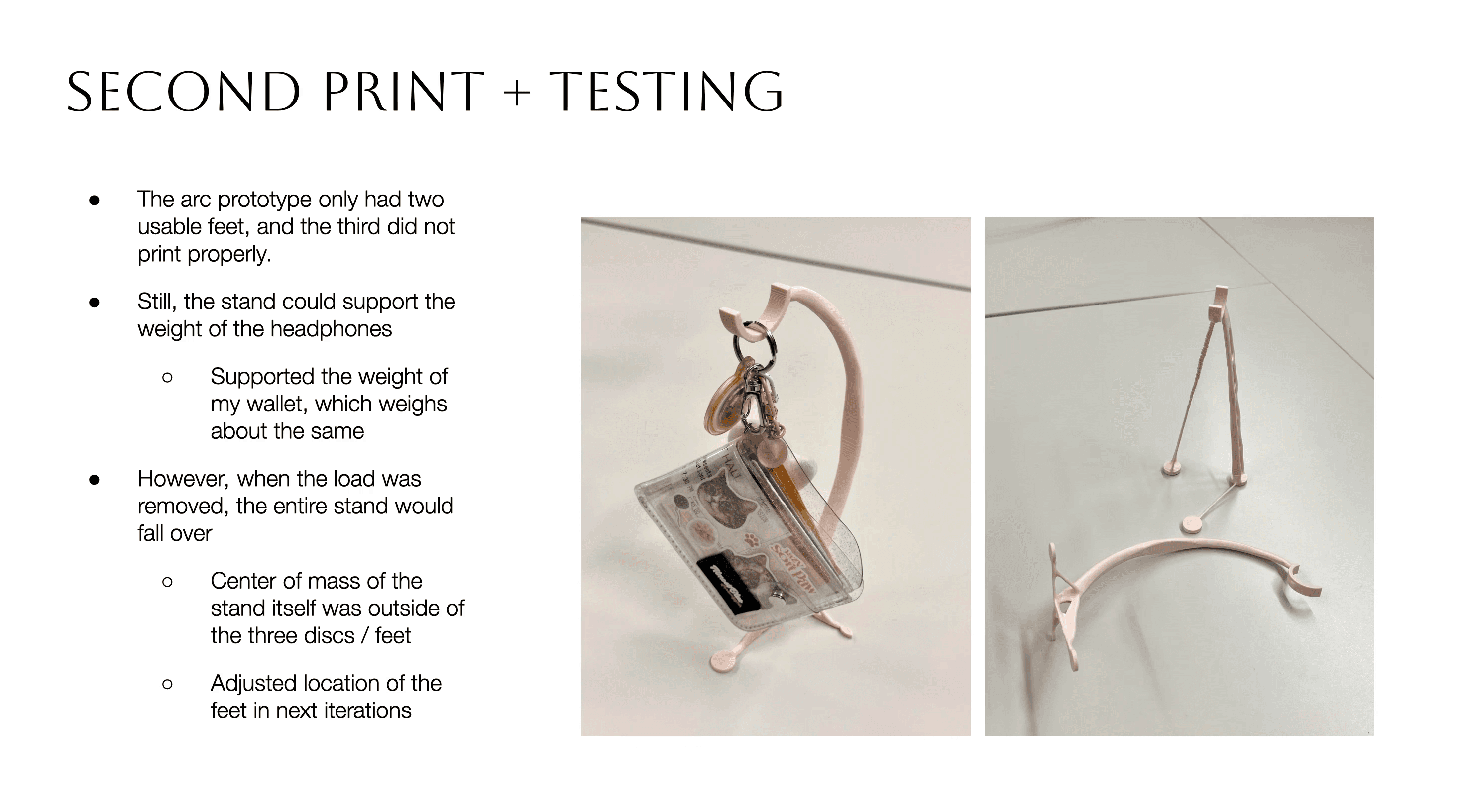
First Prototypes. I created two small initial prototypes, which both failed. This exposed the weaknesses of the base geometries.
Generations 2-5
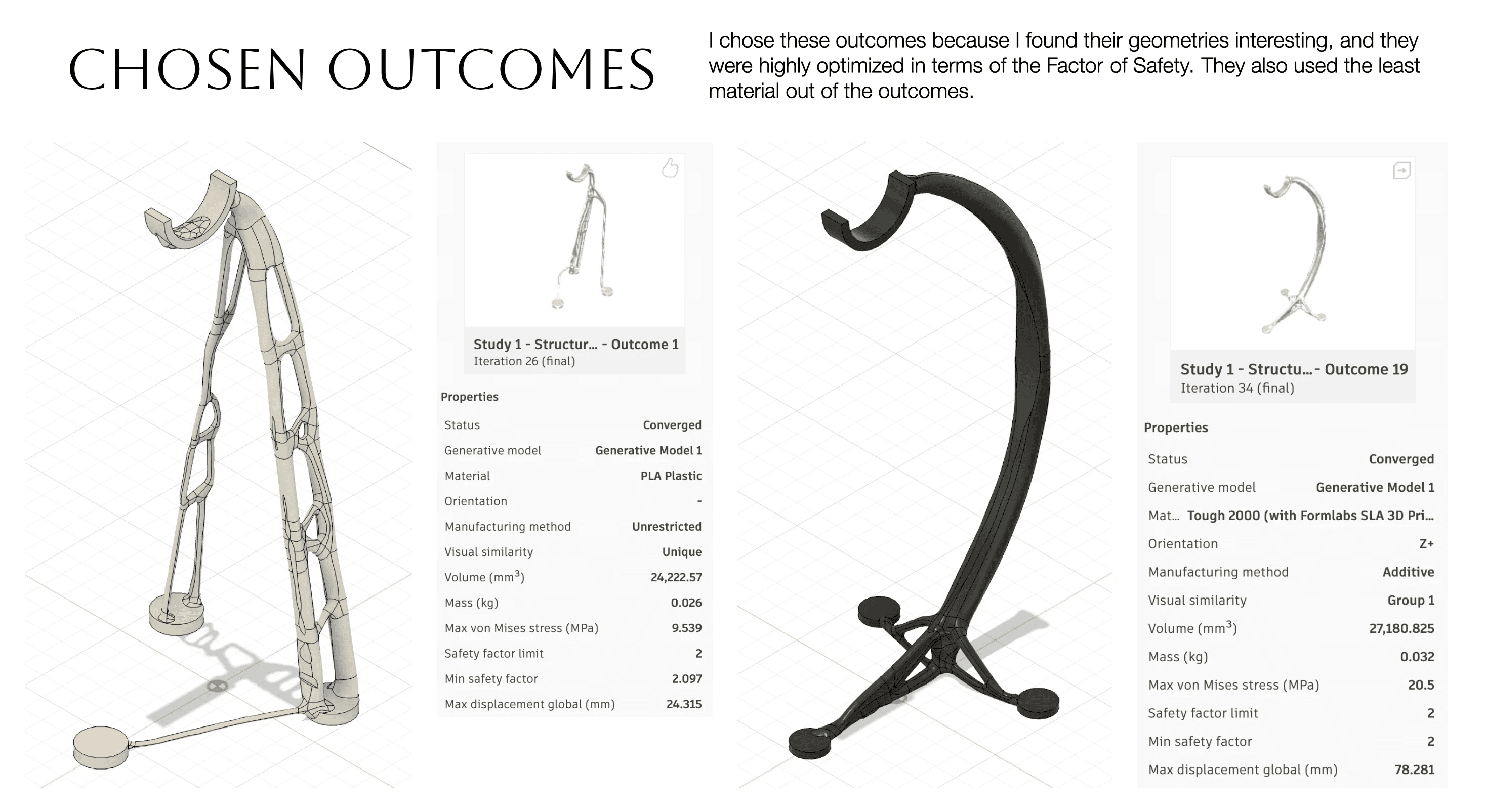
Second Prototypes. I experimented with using a starting shape to guide generation and increasing the downward load case to account for extra force from pressing downwards when putting the headphones on the stand. Below are the two notable generations from this collection.
Generations 6-7
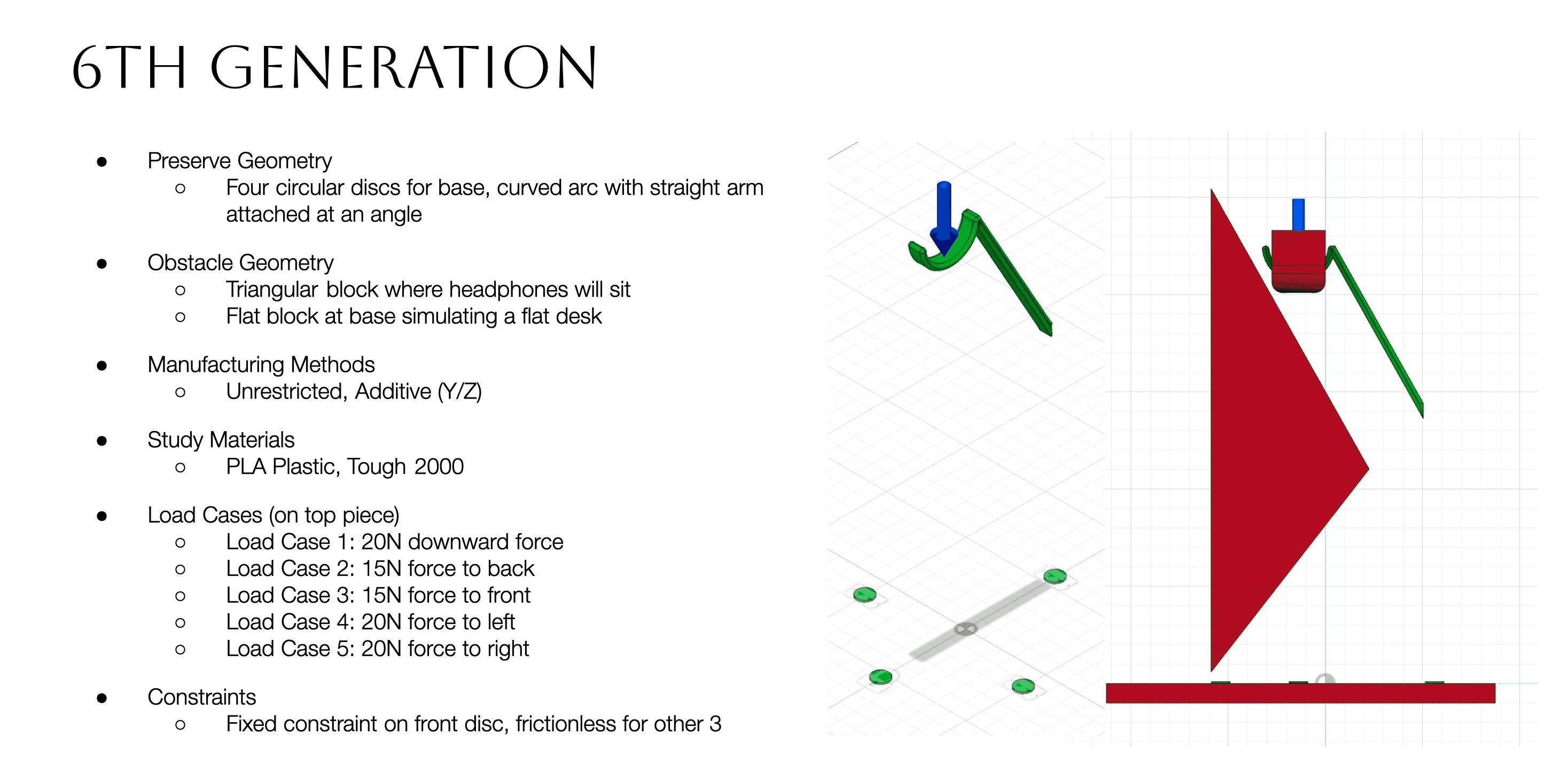
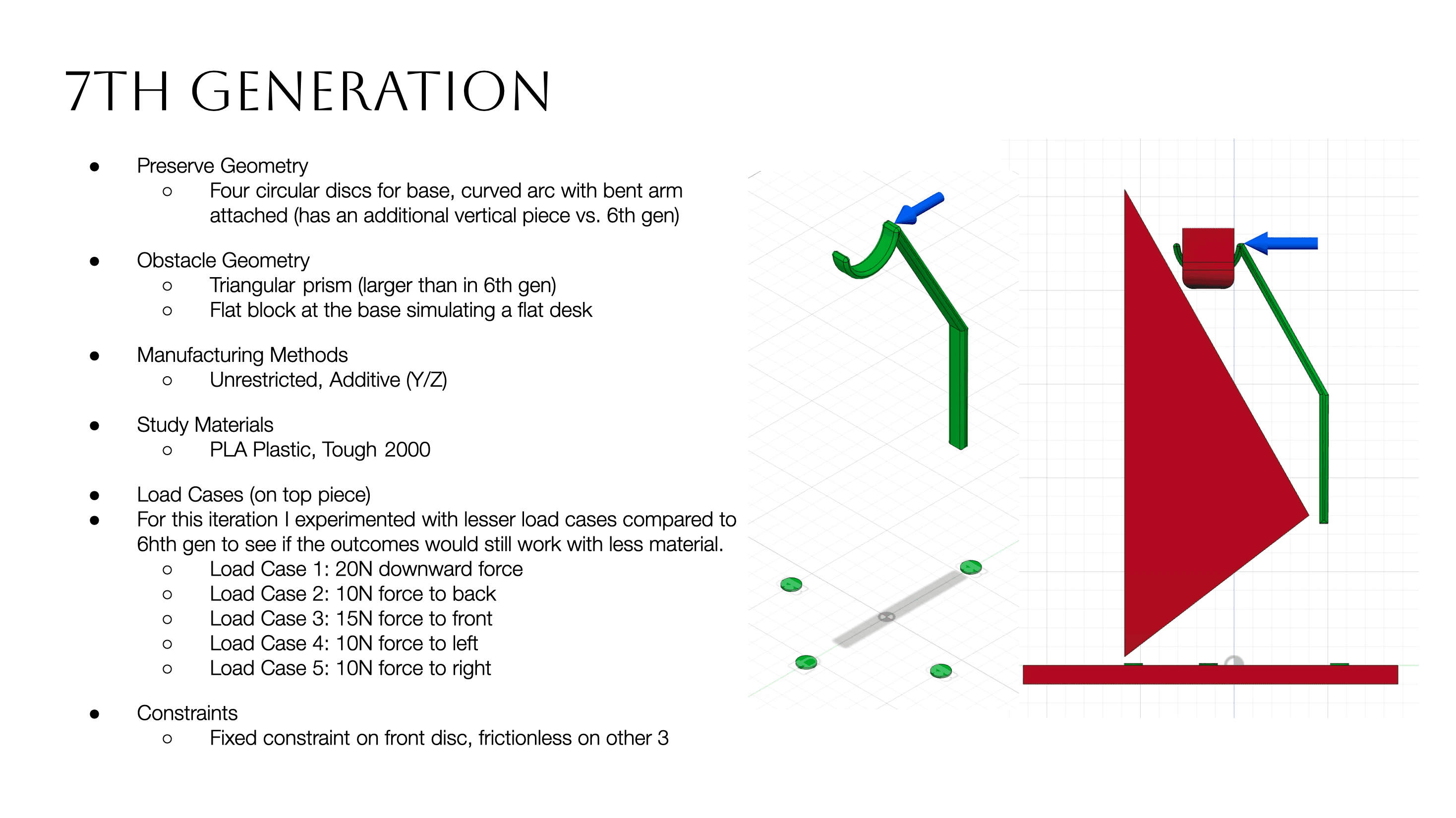
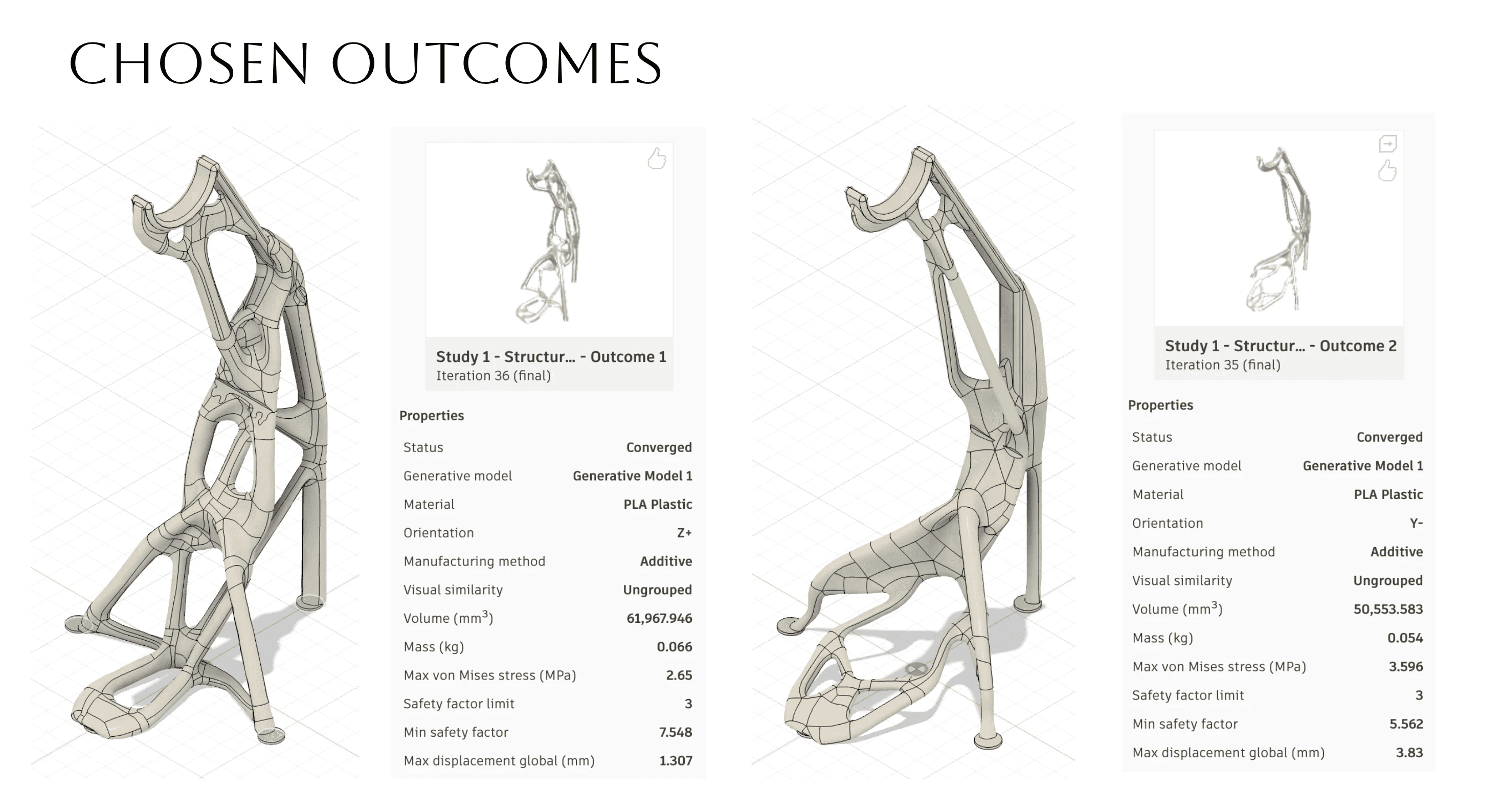
Final Iterations. In an effort to make Fusion stop generating extremely thin legs, I modified the final generations by:
Increasing minimum Safety Factor, minimum thickness, and magnitudes of loads
Adding a 4th disc (preserve geometry) to the back end of the stand for greater stability
Static Simulation
A final test with a 20N load under Static Simulation proved these iterations to be reliable enough to print.
Final Stands
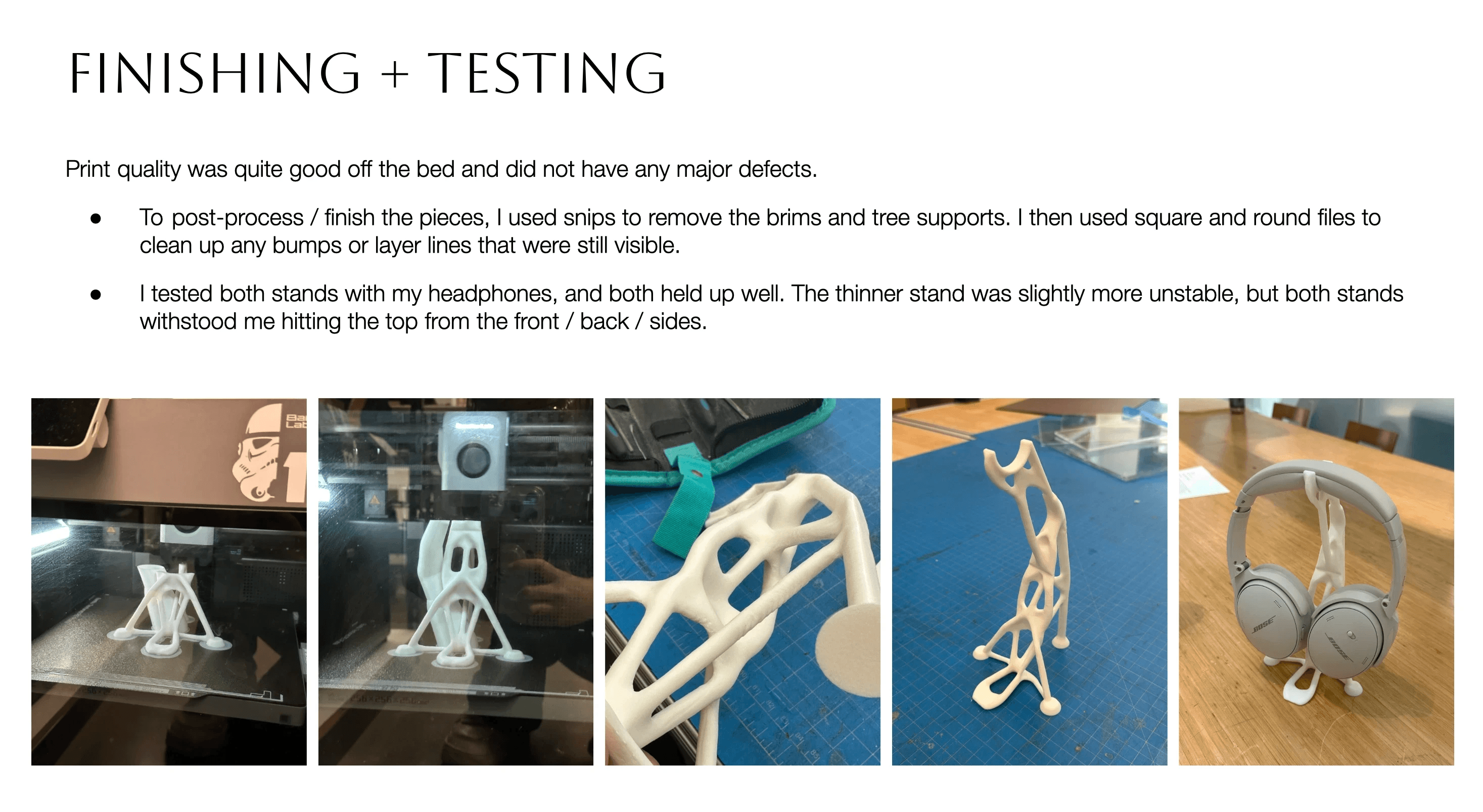
Variation 1: 78.87 grams (0.17 lb)
Variation 2: 62.00 grams (0.14 lb)
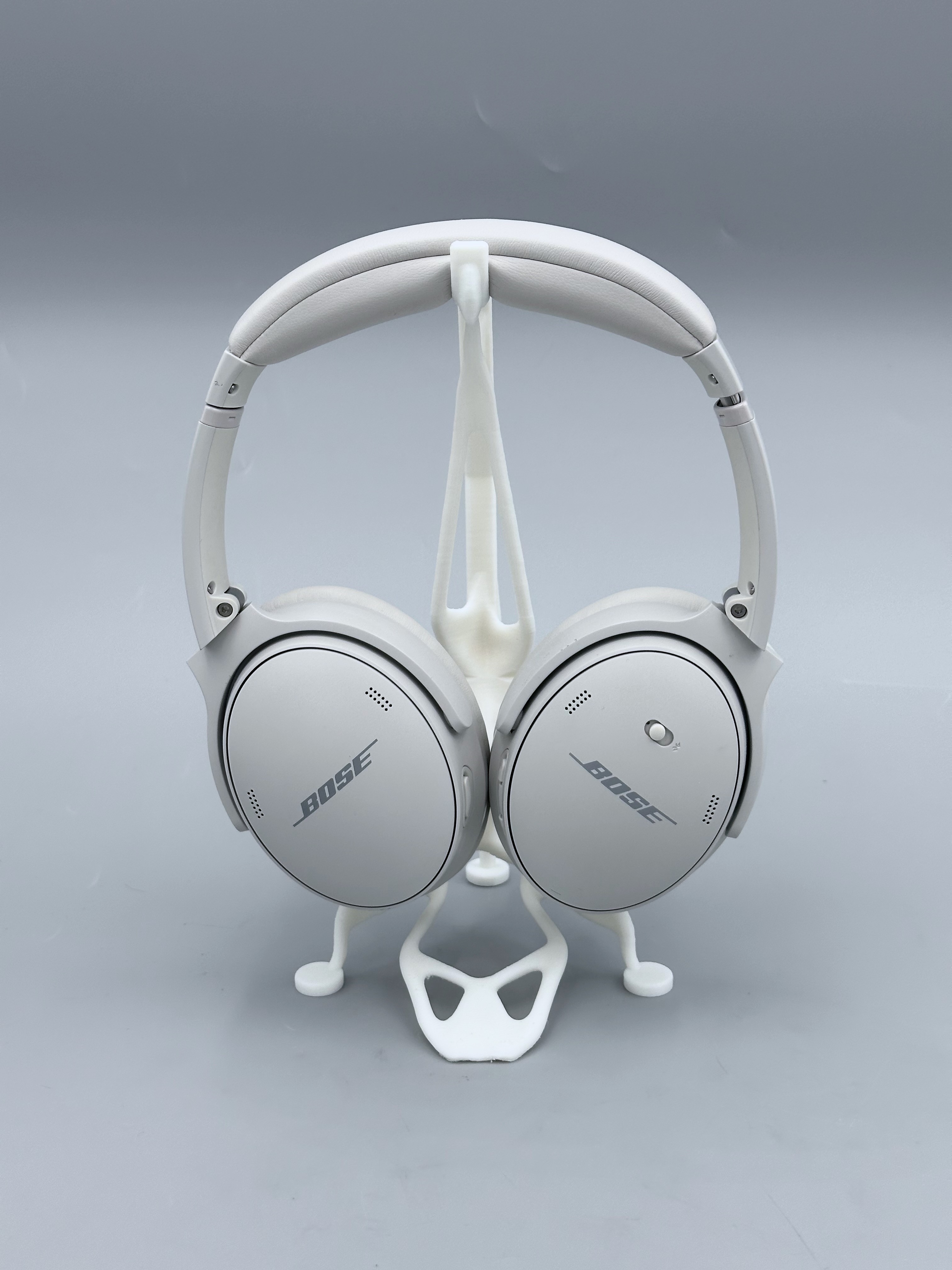
Both stands were under my targeted mass of 0.2 lb and supported the weight my headphones, wallet, and keys (1 lb total) without tipping. Going forward, I would like want to further optimize by adding multiple hooks to hold other items simultaneously.
Contact:
Go home