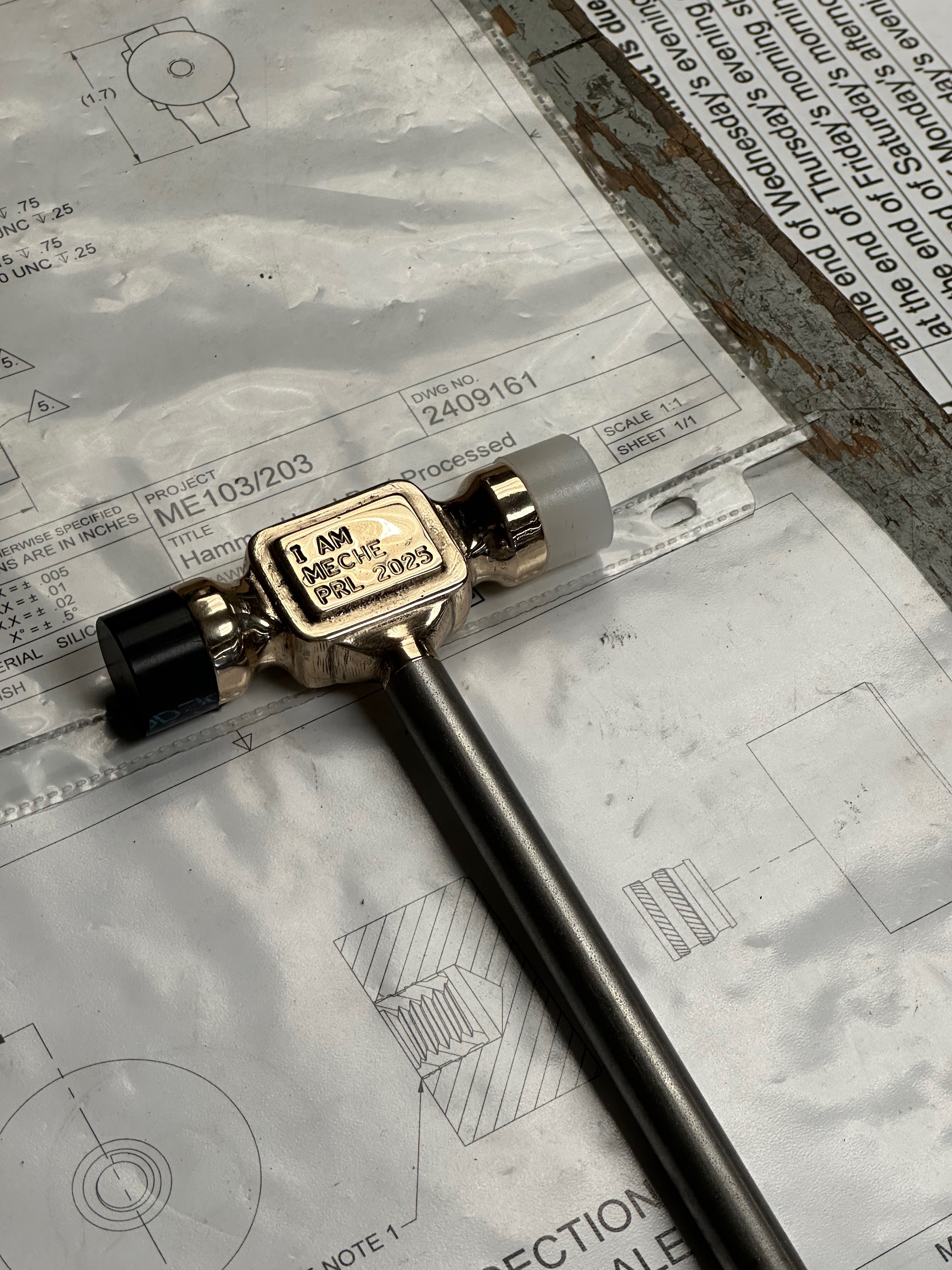
Mechanic's Hammer
Machining
Casting
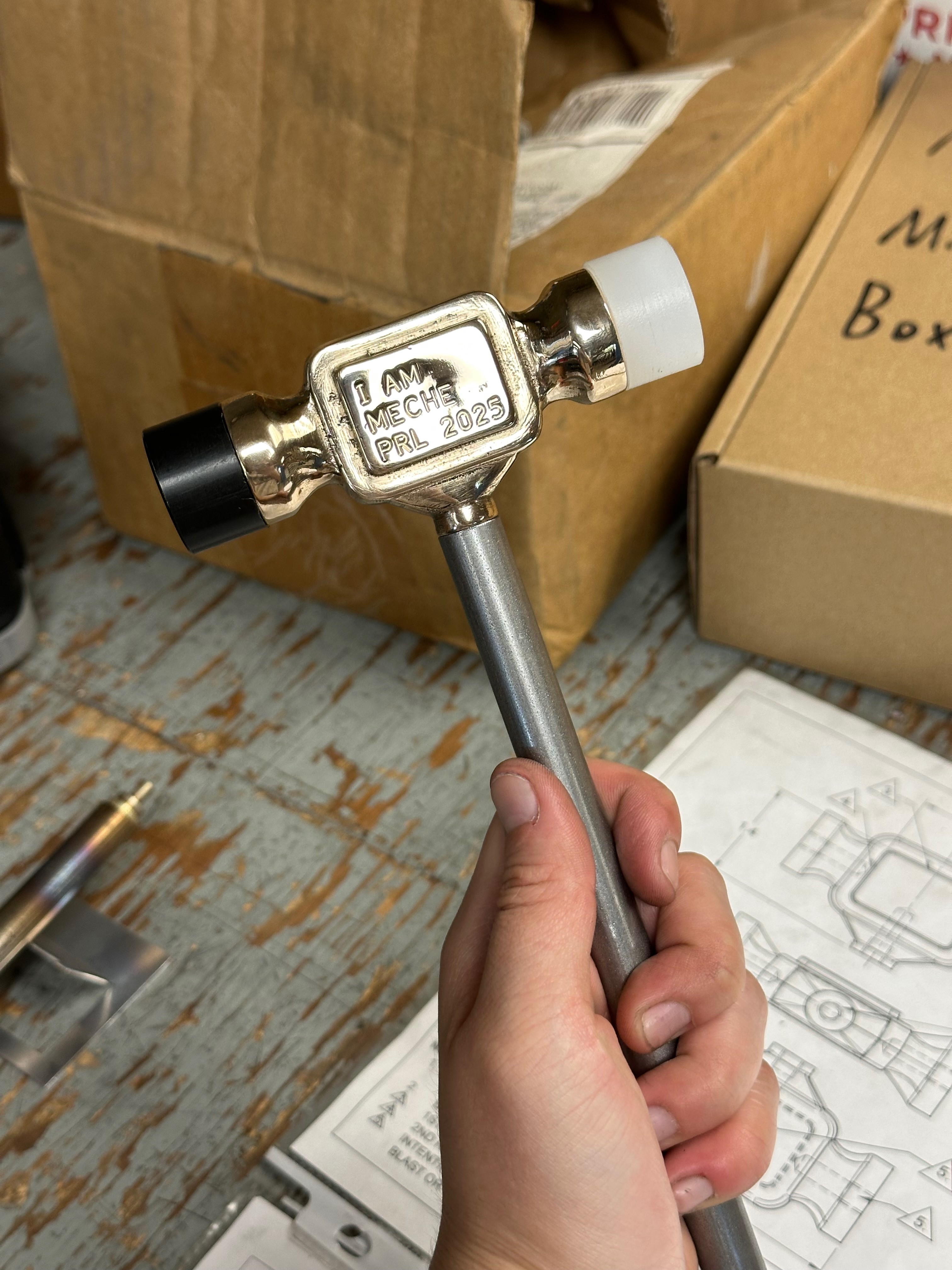
A custom hammer made of 4 unique materials — stainless steel, bronze, and two types of machinable plastic.
Challenge
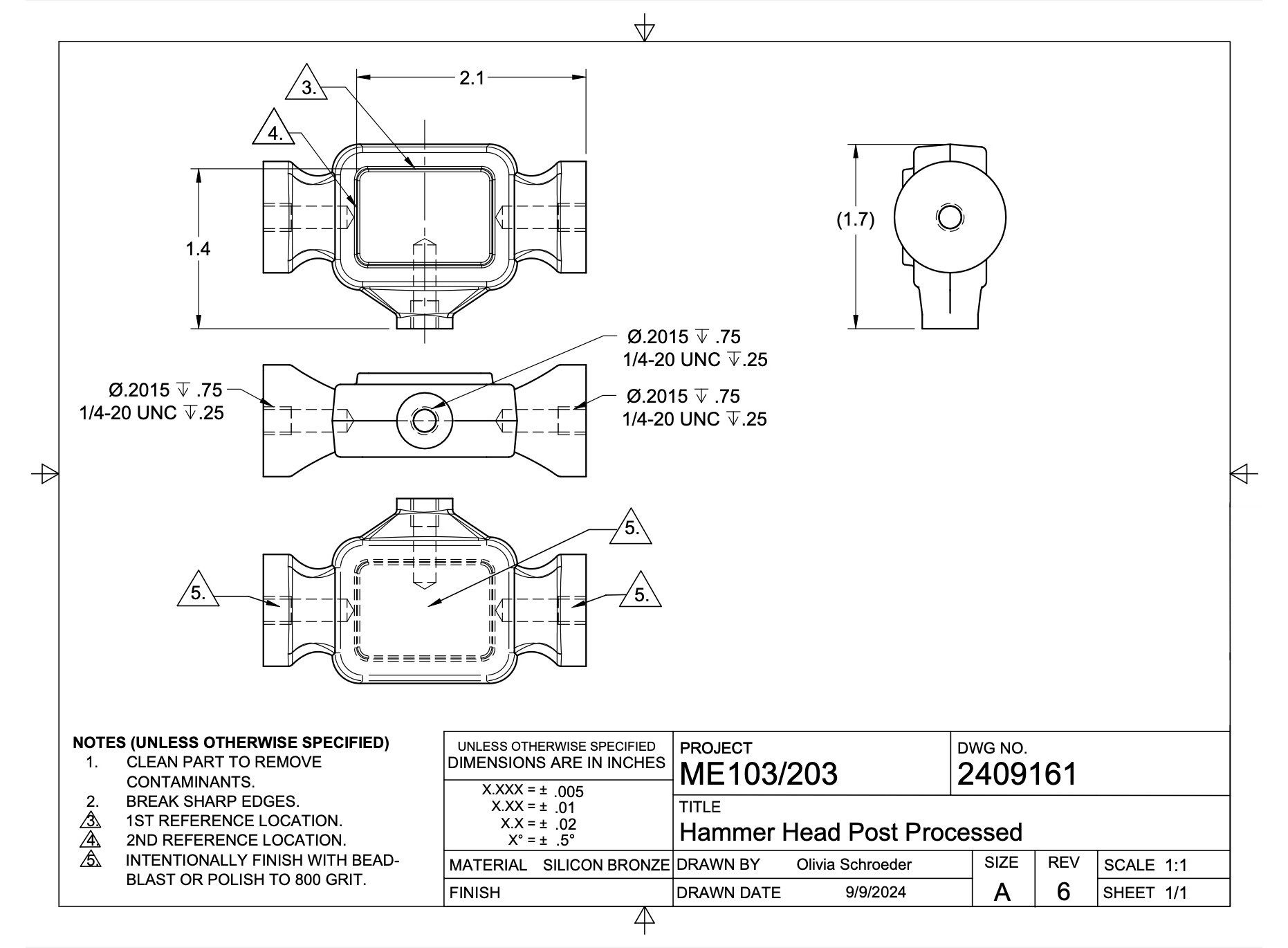
Mechanic's Hammer was a challenge to recreate a multi-material hammer from an engineering drawing. This hammer was fabricated using a combination of manufacturing processes, including milling, turning (lathe), and casting.
Below is the engineering drawing that the hammer is based on:
Turning (Lathe)
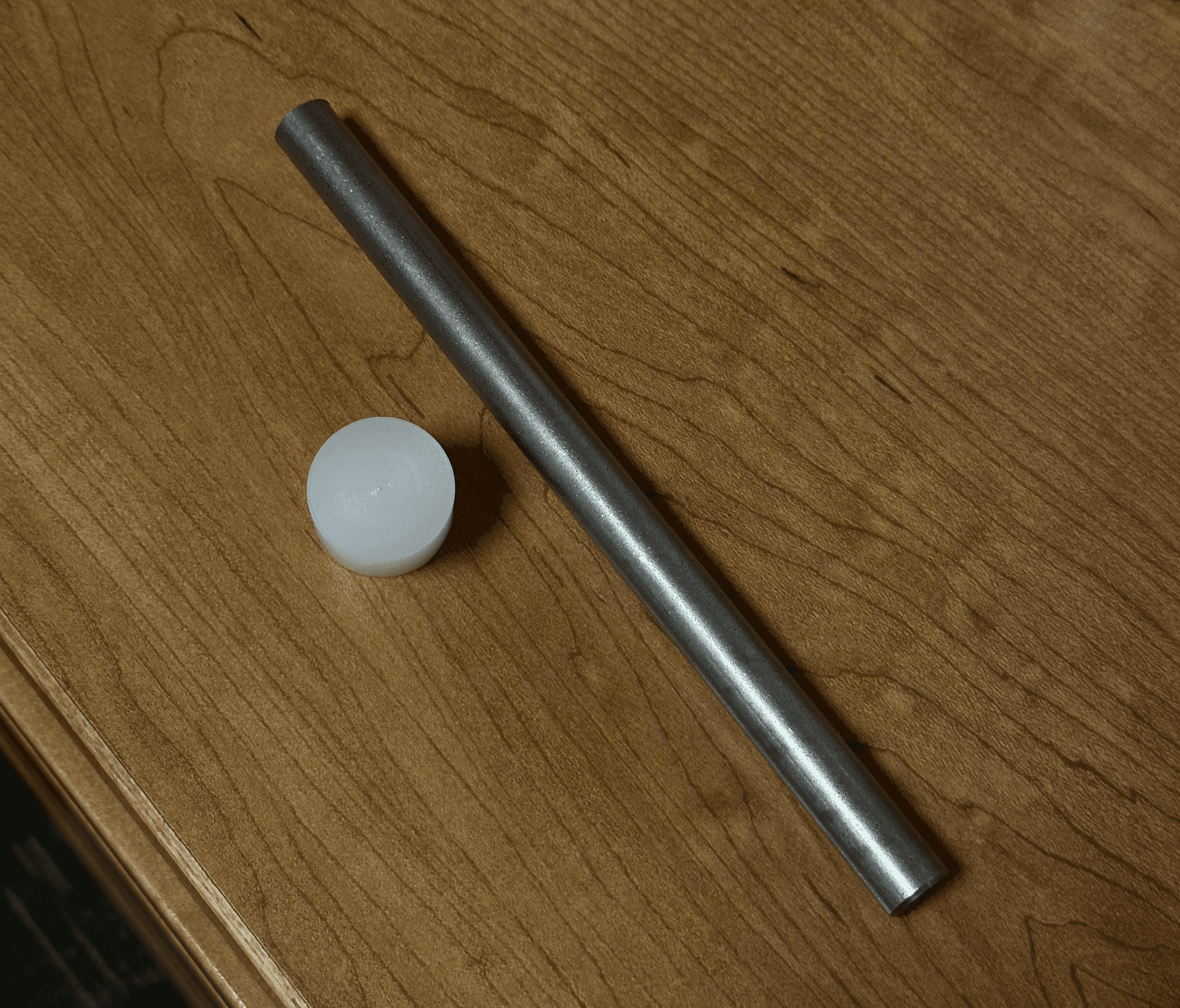
I utilized a manual lathe to face down the handle (Stainless Steel 304). I then used a parting tool to cut down the stock for the hammer faces (two different plastics) and faced down both sides.
I then drilled and tapped one end of the handle and chamfered the other end. Finally, I drilled holes in the centers of each of the hammer faces and chamfered the opposite faces.
Casting
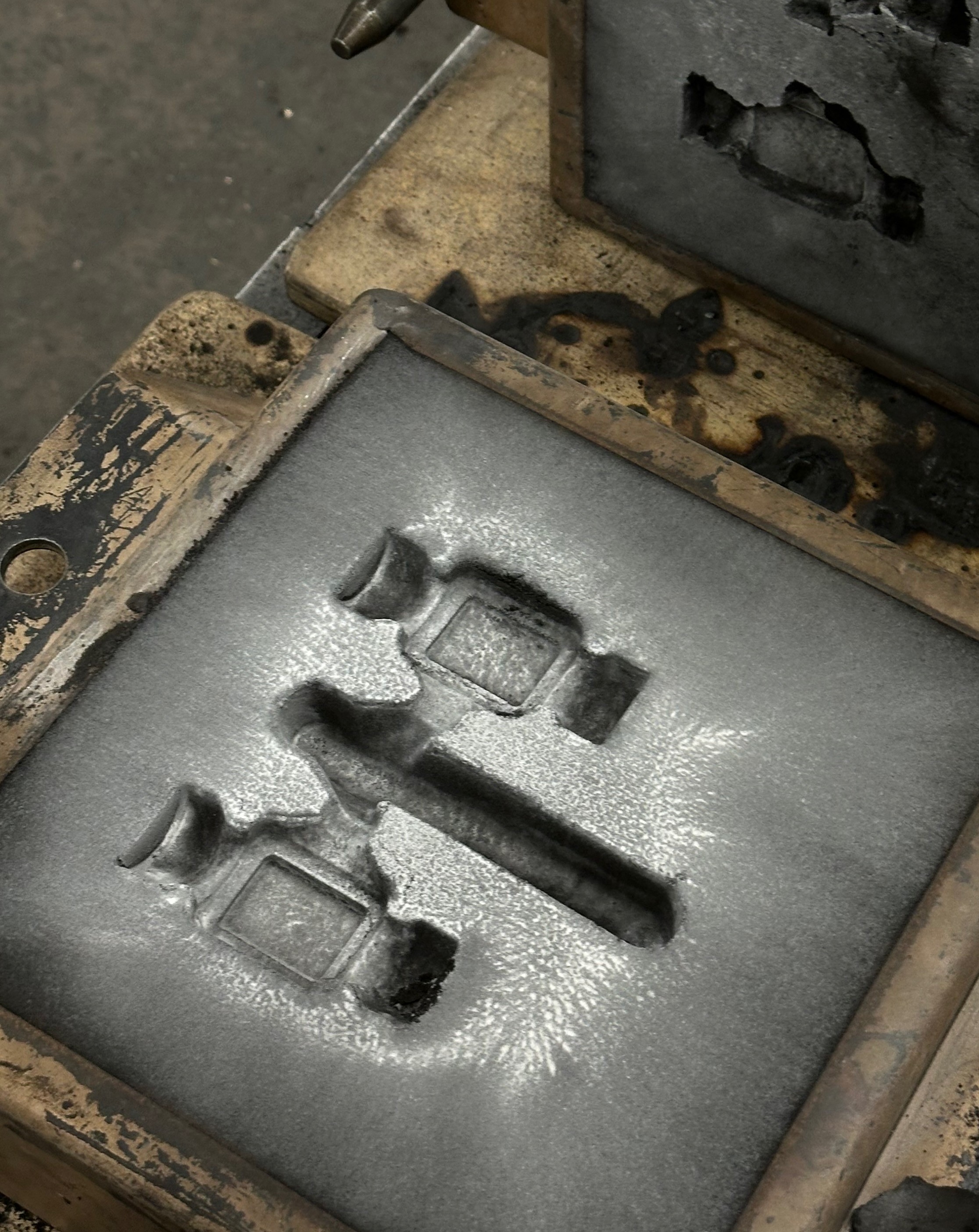
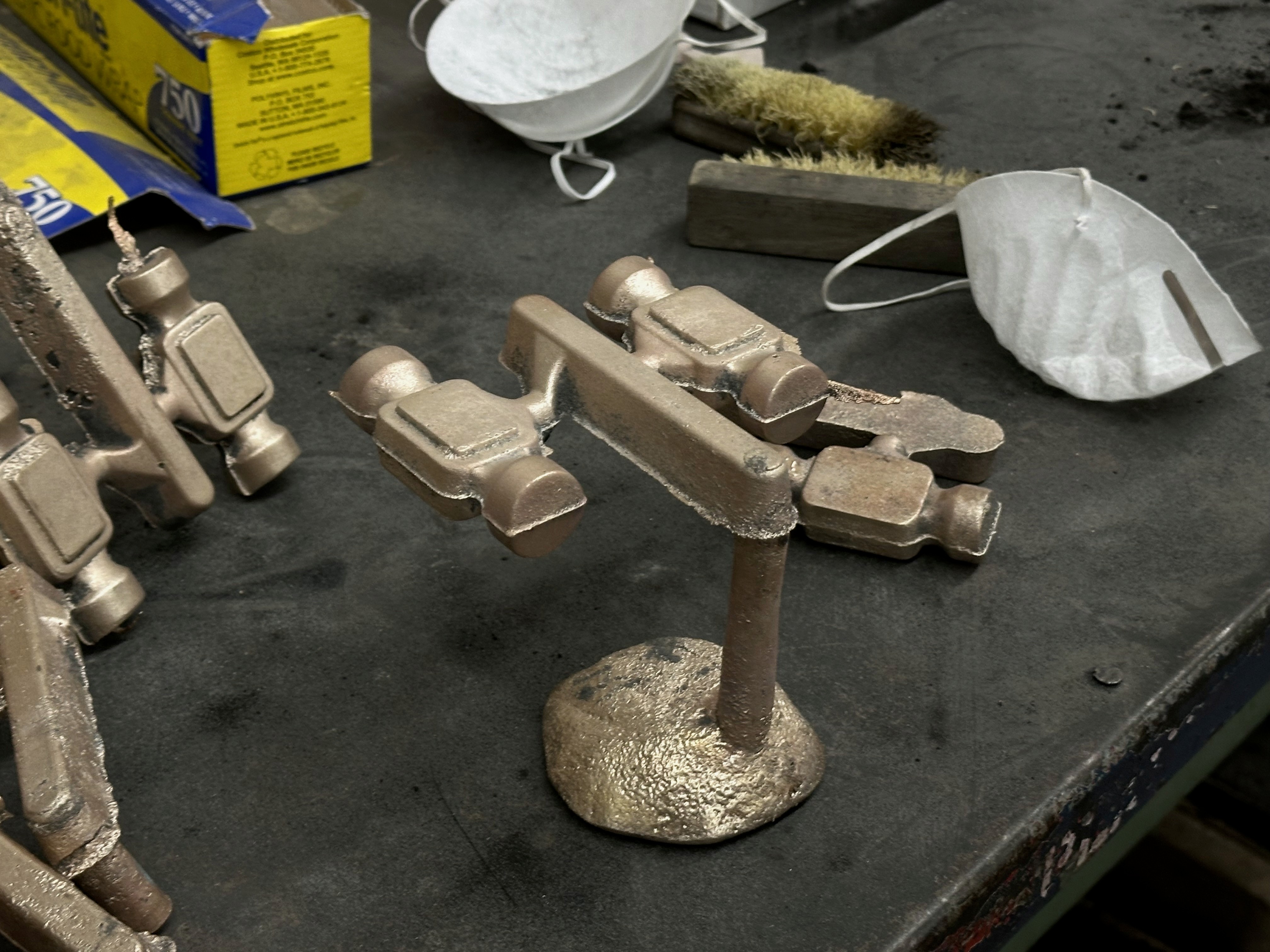
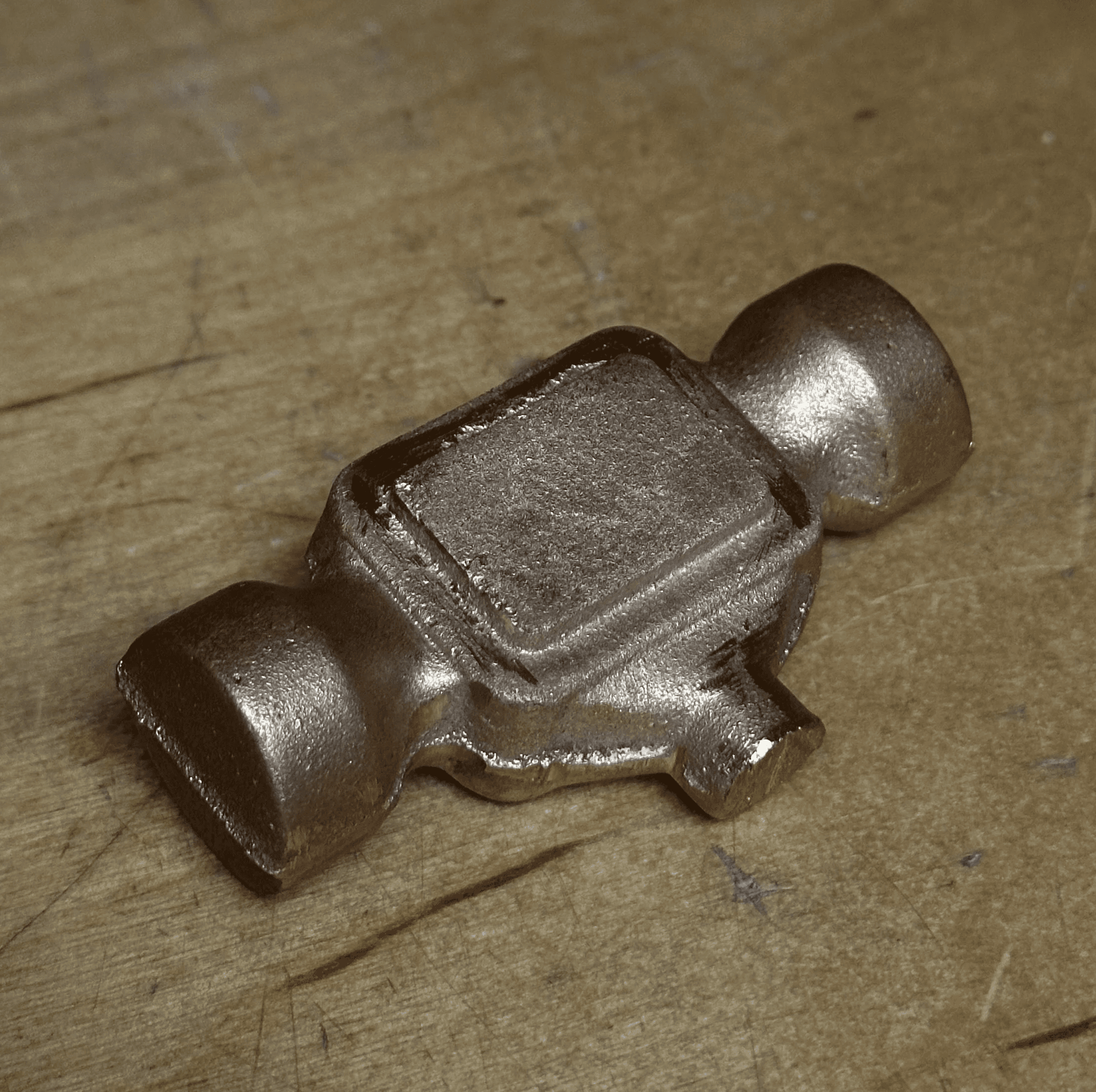
In the foundry, I rammed up the pattern board for the hammer head and carefully cut a sprue to connect to the gate and runner. The hammer head was then cast using molten bronze. After this cooled, I used a hacksaw to cut off the gate and runner.
Milling
I secured the hammer head in a manual mill using soft jaws. I then faced off the base of the hammer head and drilled and tapped a hole in the center of each face to create attachment points for the turned components.
CNC
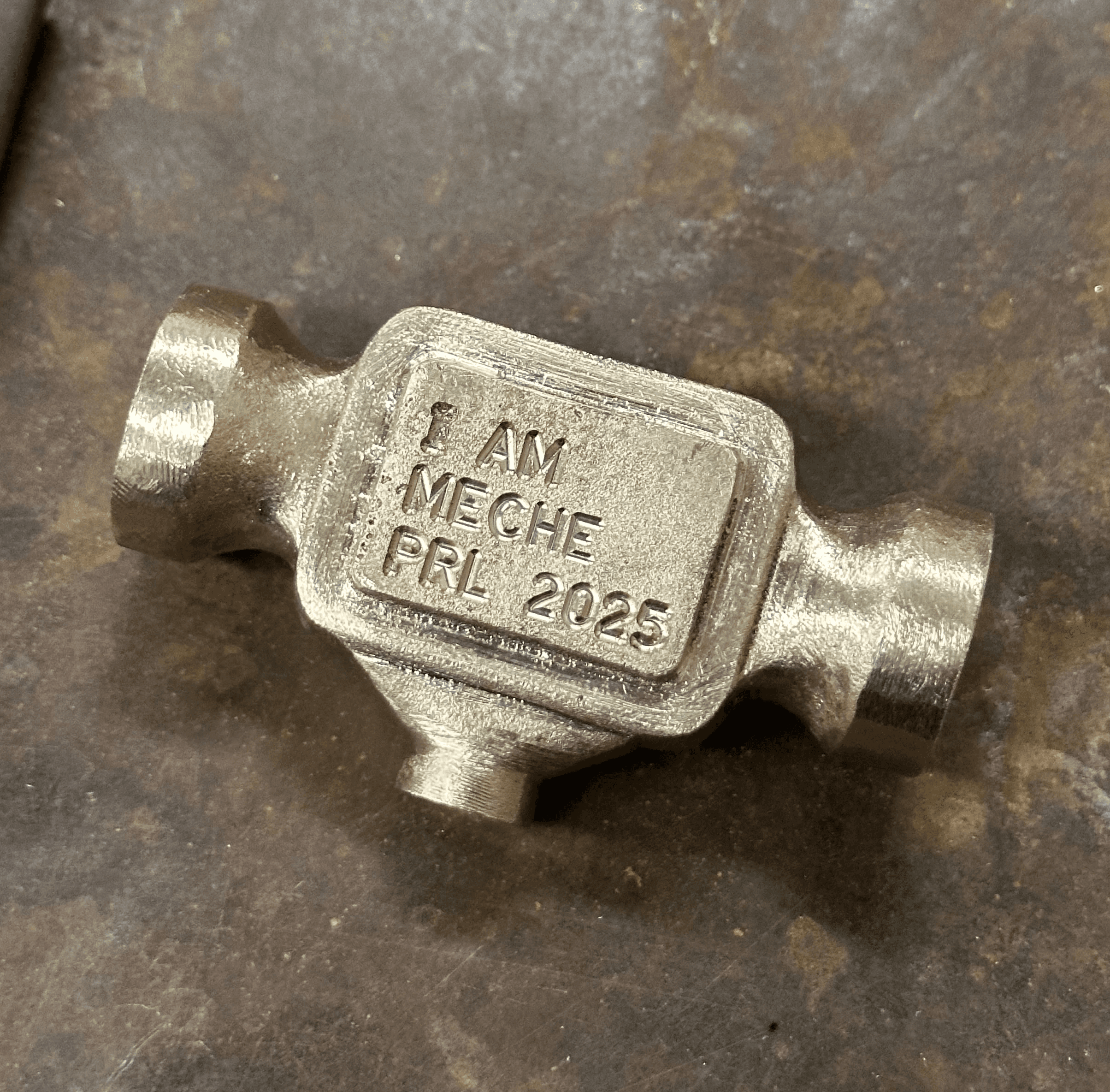
I utilized CNC to add a custom engraving on the top surface of the hammer head.
Finishing + Assembly
I used various files to remove the casting flash until the hammer head was relatively smooth. I then used 200, 400, 600, 800, 1000, and 1200 grit sandpaper to sand down the surface. Finally, I used buffing compound and a polishing wheel to bring the hammerhead to a mirror finish.
To assemble the hammer, I used a hot tool to embed heat-set inserts into each of the plastic hammer faces. I then attached the hammer head, faces, and handle together using set screws.
Final Product
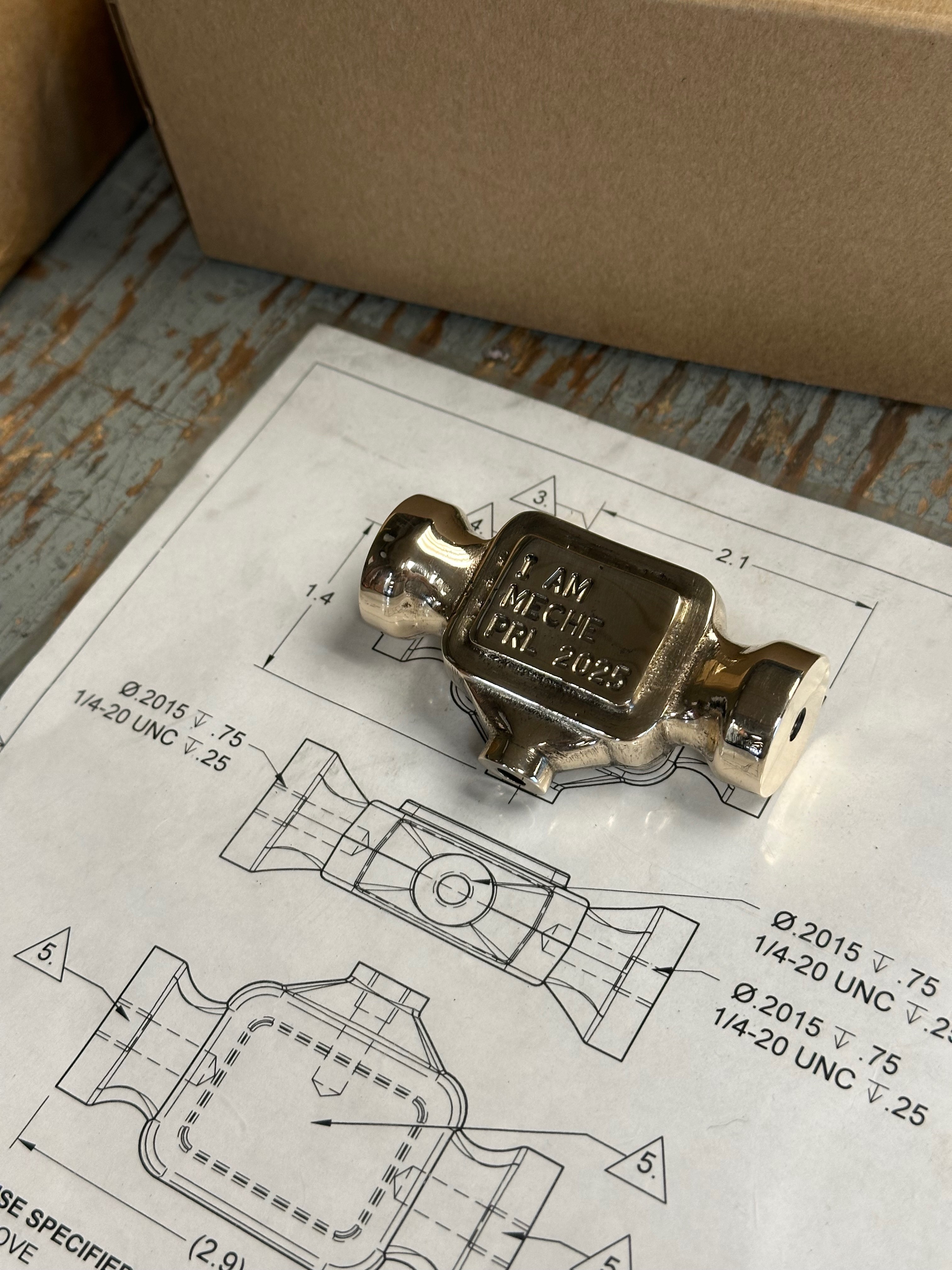
The final hammer met all design specifications and tolerances.
Contact:
Go home